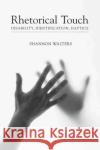
Rhetorical Touch argues for an understanding of touch as a rhetorical art by approaching the sense of touch through the kinds of bodies and minds that rhetorical history and theory have tended to exclude. In resistance to a rhetorical tradition focused on shaping able bodies and neurotypical minds, Shannon Walters explores how people with various disabilities--psychological, cognitive, and physical--employ touch to establish themselves as communicators and to connect with disabled and nondisabled audiences. In doing so, she argues for a theory of rhetoric that understands and values touch as...
Rhetorical Touch argues for an understanding of touch as a rhetorical art by approaching the sense of touch through the kinds of bodies and minds that...
Robert E. Terrill argues that, in order to invent a robust manner of addressing one another as citizens, Americans must learn to draw on the delicate indignities of racial exclusion that have stained citizenship since its inception. In Double-Consciousness and the Rhetoric of Barack Obama, Terrill demonstrates how President Barack Obama's public address models such a discourse.
Robert E. Terrill argues that, in order to invent a robust manner of addressing one another as citizens, Americans must learn to draw on the delicate ...
Scientific arguments--and indeed arguments in most disciplines--depend on visuals and other nontextual elements; however, most models of argumentation typically neglect these important resources. In Assembling Arguments, Jonathan Buehl offers a concentrated study of scientific argumentation that is sensitive to both the historical and theoretical possibilities of multimodal persuasion as it advances two related claims. First, rhetorical theory--when augmented with methods for reading nonverbal representations--can provide the analytical tools needed to understand and appreciate multimodal...
Scientific arguments--and indeed arguments in most disciplines--depend on visuals and other nontextual elements; however, most models of argumentation...
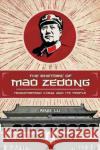
Mao Zedong fundamentally transformed China from a Confucian society characterized by hierarchy and harmony into a socialist state guided by communist ideologies of class struggle and radicalization. It was a transformation made possible largely by Mao's rhetorical ability to attract, persuade, and mobilize millions of Chinese people. Xing Lu's book, Rhetoric of Mao Zedong, analyzes Mao's speeches and writings over a span of sixty years, tracing the sources and evolution of Mao's discourse, analyzing his skills as a rhetor and mythmaker, and assessing his symbolic power and...
Mao Zedong fundamentally transformed China from a Confucian society characterized by hierarchy and harmony into a socialist state guided by communi...
How did rhetoric begin and what was it before it was called "rhetoric"? Must art have a name to be considered art? What is the difference between eloquence and rhetoric? And what were the differences among poets, philosophers, sophists, and rhetoricians before Plato emphasized--or perhaps invented--their differences? In Logos without Rhetoric: The Arts of Language before Plato, Robin Reames attempts to intervene in these and other questions by examining the status of rhetorical theory in texts that predate Plato's coining of the term "rhetoric" (c. 380 B.C.E.). From Homer and...
How did rhetoric begin and what was it before it was called "rhetoric"? Must art have a name to be considered art? What is the difference between e...
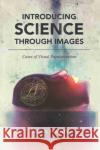
The practice of merging art and imagery with science has been gaining traction in the scientific community. While images have been used with greater frequency in recent years, their value is often viewed as superficial. To the contrary, Maria E. Gigante posits in this volume, the value of imagery goes far beyond mere aestheticsuvisual elements are powerful communication vehicles.
The practice of merging art and imagery with science has been gaining traction in the scientific community. While images have been used with greater f...
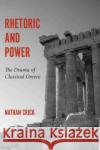
Explores the history of rhetoric by explaining its origin and development in classical Greece, beginning with the oral displays of Homeric eloquence in a time of kings, following its ascent to power during the age of Pericles and the Sophists, and ending with its transformation into a rational discipline with Aristotle in a time of literacy and empire.
Explores the history of rhetoric by explaining its origin and development in classical Greece, beginning with the oral displays of Homeric eloquence i...