The period from 1200 to 1500 laid the intellectual and institutional foundations for the Scientific Revolution that would occur in the seventeenth century. During this time, the spirit of inquiry motivated natural philosophers more than did substantive content or arguments. Natural philosophers posed hundreds of questions about nature and weighed the pros and cons of each. In the process, they developed a philosophical approach to nature that may be characterized as 'probing and poking around' - they used their imaginations guided by reason. In this volume, distinguished scholar Edward Grant...
The period from 1200 to 1500 laid the intellectual and institutional foundations for the Scientific Revolution that would occur in the seventeenth cen...
Natural law is a controversial subject but one of great significance in the ongoing and increasingly important discussion about the foundations of moral reasoning. The essays of this volume examine natural moral law, different natural law theories, and the role that natural law can and should play in our contemporary society. While some essays explore systematically the metaphysical and moral foundations of natural law, others focus on questions related to the application of natural law in the political, medical, or legal realm, or discuss historical questions that are closely related to the...
Natural law is a controversial subject but one of great significance in the ongoing and increasingly important discussion about the foundations of mor...
This volume gathers studies by prominent scholars and philosophers about the question: how have major figures from the history of philosophy, and some contemporary philosophers, addressed the ultimate why question: why is there anything at all rather than nothing whatsoever? The authors take this question seriously, striving to go beyond accounting for the present state of reality as distinguished from a prior or subsequent state, to the more profound question of discerning why anything whatsoever exists.
This volume gathers studies by prominent scholars and philosophers about the question: how have major figures from the history of philosophy, and some...
Gregory T. Doolan, assistant professor of philosophy at the Catholic University of America, is editor of Aquinas on the Divine Ideas as Exemplar Causes, published by CUA Press.
Gregory T. Doolan, assistant professor of philosophy at the Catholic University of America, is editor of Aquinas on the Divine Ideas as Exemplar Cause...
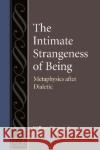
This book explores the contested place of metaphysics since Kant and Hegel, arguing for a renewed metaphysical thinking about the intimate strangeness of being. There is a mysterious strangeness to being at all, and yet there is also something intimate. Without the intimacy, argues William Desmond, we become strangers in being; without the mystery, we take being for granted. The book locates the origin of metaphysics contested place in recessed equivocations in Kantian critique and Hegelian
This book explores the contested place of metaphysics since Kant and Hegel, arguing for a renewed metaphysical thinking about the intimate strangeness...
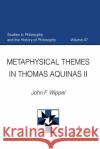
This volume contains eleven articles and book chapters written by John Wippel since the publication of his Metaphysical Themes in Thomas Aquinas in 1984. Many of them have also been published since the completion of his The Metaphysical Thought of Thomas Aquinas: From Finite Being to Uncreated Being. It is intended to serve as a complement to but not as a substitute for those volumes. The essays considered in this volume range widely over many different topics such as the possibility of a Christian philosophy from a Thomistic perspective, the Latin Avicenna as a source for Aquinas's...
This volume contains eleven articles and book chapters written by John Wippel since the publication of his Metaphysical Themes in Thomas Aquinas in 19...
How do we understand the notions of the beautiful, the true, and the good, and how do they help us to know, to understand? Philosopher Robert E. Wood considers appeals respectively to the heart, to the intellect, and to the will. In our minds, their interplay beckons each of us to assimilate one's past, and look forward towards further endeavours.
How do we understand the notions of the beautiful, the true, and the good, and how do they help us to know, to understand? Philosopher Robert E. Wood ...
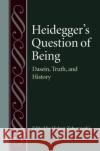
The contributions to this volume, written by leading scholars in the field of Heidegger research, offer close readings of Heidegger's texts and provide sound orientation in the field of contemporary Heidegger research. They show how the different trajectories of Heidegger's thought all converge at one point: the question of Being.
The contributions to this volume, written by leading scholars in the field of Heidegger research, offer close readings of Heidegger's texts and provid...