How should liberal democratic governments respond to citizens as religious believers whose values, norms and practices might lie outside the cultural mainstream? Some of the most challenging political questions arising today focus on the adequacy of a policy of 'live and let live' liberal toleration in contexts where disputes about the metaphysical truth of conflicting world-views abound. Does liberal toleration fail to give all citizens their due? Do citizens of faith deserve a more robust form of accommodation from the state in the form of 'recognition'. This issue is far from settled....
How should liberal democratic governments respond to citizens as religious believers whose values, norms and practices might lie outside the cultur...
Substate nationalism, especially in the past fifteen years, has noticeably affected the political and territorial stability of many countries, both democratic and democratizing. Norms exist to limit the behavior of collective agents in relation to individuals; the set of universally accepted human rights provides a basic framework. There is a lacuna in international law, however, in the regulation of the behavior of groups toward other groups, with the exception of relations among states. The book offers a normative approach to moderate minority nationalism that treats minorities and...
Substate nationalism, especially in the past fifteen years, has noticeably affected the political and territorial stability of many countries, both...
Wim Vandekerckhove and Stan van Hooft The philosopher, Diogenes the Cynic, in the fourth century BCE, was asked where he came from and where he felt he belonged. He answered that he was a "citi- 1 zen of the world" (kosmopolites) . This made him the rst person known to have described himself as a cosmopolitan. A century later, the Stoics had developed that concept further, stating that the whole cosmos was but one polis, of which the order was logos or right reason. Living according to that right reason implied showing goodness to all of human kind. Through early Christianity, cosmopolitanism...
Wim Vandekerckhove and Stan van Hooft The philosopher, Diogenes the Cynic, in the fourth century BCE, was asked where he came from and where he felt h...
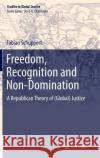
This book offers an original account of a distinctly republican theory of social and global justice. The book starts by exploring the nature and value of Hegelian recognition theory. It shows the importance of that theory for grounding a normative account of free and autonomous agency. It is this normative account of free agency which provides the groundwork for a republican conception of social and global justice, based on the core-ideas of freedom as non-domination and autonomy as non-alienation. As the author argues, republicans should endorse a sufficientarian account of social...
This book offers an original account of a distinctly republican theory of social and global justice. The book starts by exploring the nature and va...
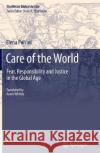
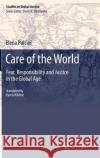
This book proposes a philosophy of care in a global age. It discusses the distinguishing and opposing pathologies produced by globalization: unlimited individualism or self-obsession, manifested as (Promethean) omnipotence and (narcissistic) indifference, and endogamous communitarianism or an 'us'-obsession that results in conflict and violence. The polarization between a lack and an excess of pathos is reflected in the distorted forms taken on by fear. The book advocates a metamorphosis of fear, which may restore in the subject an awareness of vulnerability and become the precondition for...
This book proposes a philosophy of care in a global age. It discusses the distinguishing and opposing pathologies produced by globalization: unlimi...
This book proposes a philosophy of care in a global age. It discusses the distinguishing and opposing pathologies produced by globalization: unlimited individualism or self-obsession, manifested as (Promethean) omnipotence and (narcissistic) indifference, and endogamous communitarianism or an 'us'-obsession that results in conflict and violence. The polarization between a lack and an excess of pathos is reflected in the distorted forms taken on by fear. The book advocates a metamorphosis of fear, which may restore in the subject an awareness of vulnerability and become the precondition for...
This book proposes a philosophy of care in a global age. It discusses the distinguishing and opposing pathologies produced by globalization: unlimi...
The concept of religious freedom is the favoured modern human rights concept, with which the modern world hopes to tackle the phenomenon of religious pluralism, as our modern existence in an electronically shrinking globe comes to be increasingly characterised by this phenomenon. To begin with, the concept of religious freedom, as embodied in Article 18 of the Universal Declaration of Human Rights, seems self-evident in nature. It is the claim of this book, however, that although emblematic on the one hand, the concept is also problematic on the other, and the implications of the concept...
The concept of religious freedom is the favoured modern human rights concept, with which the modern world hopes to tackle the phenomenon of religio...
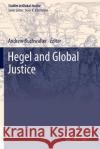
Hegel and Global Justice details the relevance of the thought of G.W.F. Hegel for the burgeoning academic discussions of the topic of global justice. Against the conventional view that Hegel has little constructive to offer to these discussions, this collection, drawing on the expertise of distinguished Hegel scholars and internationally recognized political and social theorists, explicates the contribution both of Hegel himself and his "dialectical" method to the analysis and understanding of a wide range of topics associated with the concept of global justice, construed very...
Hegel and Global Justice details the relevance of the thought of G.W.F. Hegel for the burgeoning academic discussions of the topic of glob...
This book offers an original account of a distinctly republican theory of social and global justice. The book starts by exploring the nature and value of Hegelian recognition theory. It shows the importance of that theory for grounding a normative account of free and autonomous agency. It is this normative account of free agency which provides the groundwork for a republican conception of social and global justice, based on the core-ideas of freedom as non-domination and autonomy as non-alienation. As the author argues, republicans should endorse a sufficientarian account of social...
This book offers an original account of a distinctly republican theory of social and global justice. The book starts by exploring the nature and va...
This book assesses the rapid transformation of the political agency of religious groups within transnational civil society under the conditions of globalization that have weakened the sovereign nation-state. It offers a comprehensive synthesis of the parallel resurgences of Jasper's axial thesis from the distinct lines of research initiated by Eisenstadt, Habermas, Taylor, Bellah, and others. It explores the concept of cosmoipolitanism from the combined perspectives of sociology of religion, critical theory, secularization theory, and evolutionary cultural anthropology. At the theoretical...
This book assesses the rapid transformation of the political agency of religious groups within transnational civil society under the conditions of ...