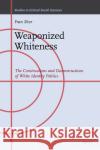
Weaponized Whiteness by Fran Shor interrogates the meanings and implications of white supremacy and, more specifically, white identity politics from historical and sociological perspectives. By analyzing the constructions and deconstructions of white identity politics throughout U.S. history and up through the present, these collected essays provide insight into the deep roots and resonances of white identity politics and the challenges that have emerged, in particular, since the 1960s.
Weaponized Whiteness by Fran Shor interrogates the meanings and implications of white supremacy and, more specifically, white identity politics from h...
This book intends to be a contribution to the “varieties of capitalism” paradigm. The theoretical background is Weber’s theory of legitimacy. Was communism ever “legitimate”? What kind of legitimacy claims were made in the transition from communism to capitalism? Central Europe was closer to the Western “liberal” model. Russia built capitalism in a patrimonial way. China followed its own unique way; some called it “socialism with Chinese characteristics”. Putin experiments with an innovation for post-communist capitalism. He confronts the “oligarchs” and reallocates...
This book intends to be a contribution to the “varieties of capitalism” paradigm. The theoretical background is Weber’s theory of legitimacy. Wa...
In Marx’s Experiments and Microscopes: Modes of Production, Religion, and the Method of Successive Abstractions, Paul B. Paolucci examines how Marx brought conventional scientific practice together with dialectical reason to produce his unique approach to sociological research. Though scholars often interpret his work through either a dialectical framework or as an aspirant scientific contender, less common are demonstrations of how Marx brought these two forms of inquiry together in ways as familiar to the conventional scientist as they are to the experienced Marxian scholar. The book...
In Marx’s Experiments and Microscopes: Modes of Production, Religion, and the Method of Successive Abstractions, Paul B. Paolucci examines how Marx ...
No Country for Migrants? Critical Perspectives on Asylum, Immigration, and Integration in Germany aims to critically contribute to ongoing debates about immigration, integration, and xenophobia in Germany. Set against the backdrop of Germany’s controversial political decision to open its borders to refugees in 2015, the book realigns this watershed with the broader historical narratives of migration to explain its exceptionality both as an event and transformative force on the migration/integration discourse. The book further uses critical theories to make sense of the shifting...
No Country for Migrants? Critical Perspectives on Asylum, Immigration, and Integration in Germany aims to critically contribute to ongoing debates abo...
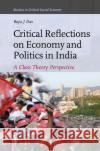
In this book, Das presents a class-based perspective on the economic and political situation in contemporary India in a globalizing world. It deals with the specificities of India’s capitalism and neoliberalism, as well as poverty/inequality, geographically uneven development, technological change, and export-oriented, nature-dependent production. The book also deals with Left-led struggles in the form of the Naxalite/Maoist movement and trade-union strikes, and presents a non-sectarian Left critique of the Left. It also discusses the politics of the Right expressed as fascistic...
In this book, Das presents a class-based perspective on the economic and political situation in contemporary India in a globalizing world. It deals wi...
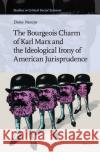
The Bourgeois Charm of Karl Marx & the Ideological Irony of American Jurisprudence employs a well-known body of work, Marx’s, to explain the inevitable limits of scholarship, in hopes to encourage academic boldness, and diversity, especially within American jurisprudence. While scholarly meaning-making has been addressed in specific academic areas, mostly linguistics and philosophy, it has never been addressed in a triangular relationship between the text (T1) and its instigator (S1), as well as its subsequent interpellator (S2). Furthermore, while addressed as a result of difference, it...
The Bourgeois Charm of Karl Marx & the Ideological Irony of American Jurisprudence employs a well-known body of work, Marx’s, to explain the inevita...
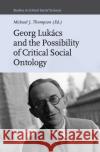
Georg Lukács was one of the most important intellectuals and philosophers of the 20th century. His last great work was an systematic social ontology that was an attempt to ground an ethical and critical form of Marxism. This work has only now begun to attract the interest of critical theorists and philosophers intent on reconstructing a critical theory of society as well as a more sophisticated framework for Marxian philosophy. This collection of essays explores the concept of critical social ontology as it was outlined by Georg Lukács and the ways that his ideas can help us construct a...
Georg Lukács was one of the most important intellectuals and philosophers of the 20th century. His last great work was an systematic social ontology ...
Together again for the first time, Marx and Durkheim join forces in the pages of Disintegration: Bad Love, Collective Suicide, and the Idols of Imperial Twilight for a dialectical exploration of the moral economy of neoliberalism, animated, as it is not only by the capitalist chase for surplus value, but also by an immortal vortex of sacred powers. Classical sociology and psychoanalysis are reconstituted within Hegelian social ontology and dialectical method that differentiates between the ephemeral and free and the eternal and fixed aspects of modern life.
Together again for the first time, Marx and Durkheim join forces in the pages of Disintegration: Bad Love, Collective Suicide, and the Idols of Imperi...
In The Critique of Religion and Religion’s Critique: On Dialectical Religiology, Dustin J. Byrd compiles numerous essays honouring the life and work of the Critical Theorist, Rudolf J. Siebert. His “dialectical religiology,” rooted in the critical theory of the Frankfurt School, especially Theodor Adorno, Max Horkheimer, Walter Benjamin, Herbert Marcuse, Erich Fromm, Leo Löwenthal, and Jürgen Habermas, is both a theory and method of understanding religion’s critique of modernity and modernity’s critique of religion. Born out of the Enlightenment and its most important thinkers,...
In The Critique of Religion and Religion’s Critique: On Dialectical Religiology, Dustin J. Byrd compiles numerous essays honouring the life and work...
In A Companion to Antonio Gramsci some of the most important Italian scholars of Gramsci’s thought realize an intellectual account of the Gramscian historiography. The volume is organized into five parts. In the first, an updated reconstruction of his biographical events is offered. The second part provides three different perspectives permitting an analysis of the ideas and theories of history which emerge from Gramsci’s writings. In the third section as well as the fourth section, the most explicitly political themes are considered. Finally, in the last part the timelines of twentieth...
In A Companion to Antonio Gramsci some of the most important Italian scholars of Gramsci’s thought realize an intellectual account of the Gramscian ...