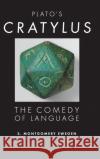
Plato's dialogue Cratylus focuses on being and human dependence on words, or the essential truths about the human condition. Arguing that comedy is an essential part of Plato's concept of language, S. Montgomery Ewegen asserts that understanding the comedic is key to an understanding of Plato's deeper philosophical intentions. Ewegen shows how Plato's view of language is bound to comedy through words and how, for Plato, philosophy has much in common with playfulness and the ridiculous. By tying words, language, and our often uneasy relationship with them to comedy, Ewegen frames a new...
Plato's dialogue Cratylus focuses on being and human dependence on words, or the essential truths about the human condition. Arguing that comedy is...
Working from newly available texts in Heidegger's Complete Works, Krzysztof Ziarek presents Heidegger at his most radical and demonstrates how the thinker's daring use of language is an integral part of his philosophical expression. Ziarek emphasizes the liberating potential of language as an event that discloses being and amplifies Heidegger's call for a transformative approach to poetry, power, and ultimately, philosophy.
Working from newly available texts in Heidegger's Complete Works, Krzysztof Ziarek presents Heidegger at his most radical and demonstrates how the ...
Jacques Derrida's final seminars were devoted to animal life and political sovereignty--the connection being that animals slavishly adhere to the law while kings and gods tower above it and that this relationship reveals much about humanity in the West. David Farrell Krell offers a detailed account of these seminars, placing them in the context of Derrida's late work and his critique of Heidegger. Krell focuses his discussion on questions such as death, language, and animality. He concludes that Heidegger and Derrida share a commitment to finding new ways of speaking and thinking about...
Jacques Derrida's final seminars were devoted to animal life and political sovereignty--the connection being that animals slavishly adhere to the l...
What are the challenges that Nietzsche's philosophy poses for contemporary phenomenology? Elodie Boublil, Christine Daigle, and an international group of scholars take Nietzsche in new directions and shed light on the sources of phenomenological method in Nietzsche, echoes and influences of Nietzsche within modern phenomenology, and connections between Nietzsche, phenomenology, and ethics. Nietzsche and Phenomenology offers a historical and systematic reconsideration of the scope of Nietzsche's thought.
What are the challenges that Nietzsche's philosophy poses for contemporary phenomenology? Elodie Boublil, Christine Daigle, and an international gr...
Through these broad and sprawling notebooks, Heidegger offers fascinating opinions on Holderlin, Nietzsche, Wagner, Wittgenstein, Pascal, and many others. The importance of the Black Notebooks transcends Heidegger's relationship with National Socialism. These personal notebooks contain reflections on technology, art, Christianity, the history of philosophy, and Heidegger's attempt to move beyond that history into another beginning.
Through these broad and sprawling notebooks, Heidegger offers fascinating opinions on Holderlin, Nietzsche, Wagner, Wittgenstein, Pascal, and many ...
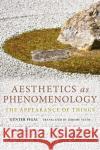
Connecting aesthetic experience with our experience of nature or with other cultural artifacts, Aesthetics as Phenomenology focuses on what art means for cognition, recognition, and affect--how art changes our everyday disposition or behavior. Gunter Figal engages in a penetrating analysis of the moment at which, in our contemplation of a work of art, reaction and thought confront each other. For those trained in the visual arts and for more casual viewers, Figal unmasks art as a decentering experience that opens further possibilities for understanding our lives and our world.
Connecting aesthetic experience with our experience of nature or with other cultural artifacts, Aesthetics as Phenomenology focuses on what art mea...
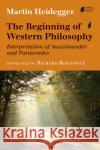
Volume 35 of Heidegger's Complete Works comprises a lecture course given at the University of Freiburg in 1932, five years after the publication of Being and Time. During this period, Heidegger was at the height of his creative powers, which are on full display in this clear and imaginative text. In it, Heidegger leads his students in a close reading of two of the earliest philosophical source documents, fragments by Greek thinkers Anaximander and Parmenides. Heidegger develops their common theme of Being and non-being and shows that the question of Being is indeed the origin of Western...
Volume 35 of Heidegger's Complete Works comprises a lecture course given at the University of Freiburg in 1932, five years after the publication of...
Observing that humans often deal with the past in problematic ways, Jerome Veith looks to philosopher Hans-Georg Gadamer and his hermeneutics to clarify these conceptions of history and to present ways to come to terms with them. Veith fully engages Truth and Method as well as Gadamer's entire work and relationships with other German philosophers, especially Kant, Hegel, and Heidegger in this endeavor. Veith considers questions about language, ethics, cosmopolitanism, patriotism, self-identity, and the status of the humanities in the academy in this very readable application of Gadamer's...
Observing that humans often deal with the past in problematic ways, Jerome Veith looks to philosopher Hans-Georg Gadamer and his hermeneutics to cl...
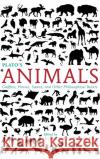
Plato's Animals examines the crucial role played by animal images, metaphors, allusions, and analogies in Plato's Dialogues. These fourteen lively essays demonstrate that the gadflies, snakes, stingrays, swans, dogs, horses, and other animals that populate Plato's work are not just rhetorical embellishments. Animals are central to Plato's understanding of the hierarchy between animals, humans, and gods and are crucial to his ideas about education, sexuality, politics, aesthetics, the afterlife, the nature of the soul, and philosophy itself. The volume includes a comprehensive annotated...
Plato's Animals examines the crucial role played by animal images, metaphors, allusions, and analogies in Plato's Dialogues. These fourteen lively ...
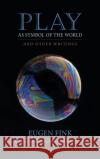
Eugen Fink is considered one of the clearest interpreters of phenomenology and was the preferred conversational partner of Edmund Husserl and Martin Heidegger. In Play as Symbol of the World, Fink offers an original phenomenology of play as he attempts to understand the world through the experience of play. He affirms the philosophical significance of play, why it is more than idle amusement, and reflects on the movement from "child's play" to "cosmic play." Well-known for its nontechnical, literary style, this skillful translation by Ian Alexander Moore and Christopher Turner invites...
Eugen Fink is considered one of the clearest interpreters of phenomenology and was the preferred conversational partner of Edmund Husserl and Marti...