Uranus occupies a unique niche in the history of western thought; for while the planets from Mercury to Saturn had been known since pre-antiquity, Uranus was the first to be discovered, in 1781, through scientific investigation. Contemporary investigation of Uranus culminated in the Voyager 2 encounter in 1986. The results of that achievement, as well of concurrent research on the planet, are reviewed by 84 international authorities in this massive volume. Because Uranus' remoteness has prevented its being studied as intensively by earth-based observation as have other members of the...
Uranus occupies a unique niche in the history of western thought; for while the planets from Mercury to Saturn had been known since pre-antiqui...
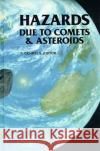
In 1993, the U.S. Department of Defense declassified information dealing with frequent explosions in the upper atmosphere caused by meteoric impact. It is estimated that impacts have occurred of a magnitude equivalent to the atomic bomb detonated at Hiroshima. Not all such space voyagers meet their end in the atmosphere, however; huge craters attest to the bombardment of earth over millions of years, and a major impact may have resulted in the extinction of dinosaurs. An impact in Siberia near the beginning of this century proves that such events are not confined to geologic time. Hazards...
In 1993, the U.S. Department of Defense declassified information dealing with frequent explosions in the upper atmosphere caused by meteoric impact. I...
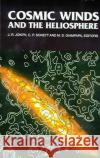
Until the advent of space physics, astrophysical plasmas could be studied only using ground-based observations. Although observational methods have advanced over recent decades, the merging of heliospheric physics with astrophysics is far from complete due to the vastly different techniques employed by astronomers and space physicists. That astrophysical plasmas can be studies directly is a major advance in astrophysical research. The solar wind from the Sun is only one of many examples of solar winds, but it provides scientists with a basis for understanding how these formerly...
Until the advent of space physics, astrophysical plasmas could be studied only using ground-based observations. Although observational methods...
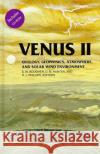
The final orbit of Venus by the Magellan spacecraft in October 1994 brought to a close an exciting period of Venus reconnaissance and exploration. The scientific studies resulting from data collected by the Magellan, Galileo, and Pioneer missions are unprecedented in their detail for any planet except Earth. Venus II re-evaluates initial assessments of Venus in light of these and other spacecraft missions and ground-based observations conducted over the past 30 years. More than a hundred contributors summarize our current knowledge of the planet, consider points of disagreement in...
The final orbit of Venus by the Magellan spacecraft in October 1994 brought to a close an exciting period of Venus reconnaissance and exploration. The...
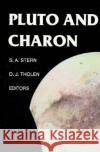
For five decades after its discovery in 1930, the planet Pluto remained an enigma. However, several events during the last two decades have helped to lift the veil of mystery surrounding the ninth planet. The discovery of its satellite, Charon, in 1978 permitted occultation observations that allowed scientists to determine the size of both bodies. Astronomers also detected the presence of an atmosphere, and the Hubble Space Telescope provided views in unprecedented detail. In addition to these two fortuitous events, advances in telescopic instrumentation and computational methods led to...
For five decades after its discovery in 1930, the planet Pluto remained an enigma. However, several events during the last two decades have helped to ...
Click here for the online version of this book This title, out of print in 2008, is now available free of charge, in it's entirety, online through the University of Arizona Press Both a textbook and a status report for every facet of research into the formation of stars and planets, "Protostars and Planets IV" brings together 167 authors who report on the most significant advances in the field since the publication of the previous volume in 1993. "Protostars and Planets IV" reflects improvements in observational techniques and the availability of new facilities such as the Infrared...
Click here for the online version of this book This title, out of print in 2008, is now available free of charge, in it's entirety, online throug...
The study of comets is a field that has seen tremendous advances in recent years, far surpassing the knowledge reflected in the original Comets volume published as part of the Space Science Series in 1982. This new volume, with more than seventy contributing authors, represents the first complete overview of comet science in more than a decade and contains the most extensive collection of knowledge yet assembled in the field.
Comets II situates comet science in the global context of astrophysics for the first time by beginning with a series of chapters that describe...
The study of comets is a field that has seen tremendous advances in recent years, far surpassing the knowledge reflected in the original Com...
Increasing discoveries of new planets beyond our solar system are invigorating the quest for new knowledge and understanding of the birth of stars and planets. This new volume in the Space Science Series, with 249 contributing authors, builds on the latest results from recent advances in ground and space-based astronomy and in numerical computing techniques to offer the most detailed and up-to-date picture of star and planet formation, including the formation of our own solar system. This book emphasizes the cross-disciplinary aspects of the field, with a particular focus on the early...
Increasing discoveries of new planets beyond our solar system are invigorating the quest for new knowledge and understanding of the birth of stars and...
The early development of life, a fundamental question for humankind, requires the presence of a suitable planetary climate. Our understanding of how habitable planets come to be begins with the worlds closest to home. Venus, Earth, and Mars differ only modestly in their mass and distance from the Sun, yet their current climates could scarcely be more divergent. Only Earth has abundant liquid water, Venus has a runaway greenhouse, and evidence for life-supporting conditions on Mars points to a bygone era. In addition, an Earth-like hydrologic cycle has been revealed in a surprising place:...
The early development of life, a fundamental question for humankind, requires the presence of a suitable planetary climate. Our understanding of how h...
The revolutionary discovery of thousands of confirmed and candidate planets beyond the solar system brings forth the most fundamental question: How do planets and their host stars form and evolve? Protostars and Planets VI brings together more than 250 contributing authors at the forefront of their field, conveying the latest results in this research area and establishing a new foundation for advancing our understanding of stellar and planetary formation. Continuing the tradition of the Protostars and Planets series, this latest volume uniquely integrates the...
The revolutionary discovery of thousands of confirmed and candidate planets beyond the solar system brings forth the most fundamental question: Ho...