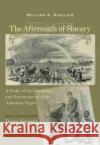
William Albert Sinclair, born a slave in 1858, grew up in South Carolina during the tumultuous years of the Civil War and Reconstruction. Influenced by his childhood experiences, Sinclair spent his life fighting for the rights of African Americans and was an active member of the Constitution League, and their successor, the National Association for the Advancement of Colored People. Inspired by the scholarship and activism of T. Thomas Fortune and W. E. B. Du Bois, Sinclair published The Aftermath of Slavery: A Study of the Condition and Environment of the American Negro, one of the most...
William Albert Sinclair, born a slave in 1858, grew up in South Carolina during the tumultuous years of the Civil War and Reconstruction. Influenced b...
James De Veaux (1812-1844) was a promising young South Carolina-born artist who began his career painting portraits up and down the East Coast and throughout his native state. First published by Robert W. Gibbes in 1846, A Memoir of James De Veaux, of Charleston, S.C. is a biography and selected edition of the artist's letters and diary entries. It is also the first work published in South Carolina devoted solely to the state's visual arts. Although De Veaux's life and career were tragically brief, he produced a considerable body of work, mostly portraits, and availed himself of the best...
James De Veaux (1812-1844) was a promising young South Carolina-born artist who began his career painting portraits up and down the East Coast and thr...
Ralph McGill (1898-1969) was the editor in chief of the Atlanta Constitution during the turbulent years of the civil rights movement that followed Brown v. Board of Education, and he became an outspoken advocate for integration and racial tolerance in the South. In this Southern Classics edition, Angie Maxwell offers a new critical introduction that analyzes McGill's as an activist and advocate for social change.The editorials that compose A Church, a School marked McGill's emergence as a prolific advocate of nonviolence and social responsibility and evidenced the progressive values of the...
Ralph McGill (1898-1969) was the editor in chief of the Atlanta Constitution during the turbulent years of the civil rights movement that followed Bro...
A stirring firsthand account of lowcountry race relations during a turbulent period in civil rights history In 1966, as a seminarian at the Virginia Theological Seminary, William H. Barnwell undertook a summer's missionary work at St. John's Episcopal Mission Center in his native city of Charleston, South Carolina. His supervisor was an African American priest, and Barnwell's duties ran the gamut from managing the recreation room to crisis intervention among the mission's clients and neighbors. In Richard's World is based on letters and journal entries that Barnwell kept throughout 1966, a...
A stirring firsthand account of lowcountry race relations during a turbulent period in civil rights history In 1966, as a seminarian at the Virginia T...
Slavery in Mississippi, first published in 1933, is a deeply researched and tightly argued social and economic study of slave life in Mississippi by Charles S. Sydnor (1898-1954). Inspired by Ulrich B. Phillips's American Negro Slavery (1918) and Life and Labor in the Old South (1929), Sydnor strived to test Phillips's contention that slavery was simultaneously a benign institution for African American slaves and an unprofitable one for their masters. Sydnor included pathbreaking chapters on such broad scholarly topics as slave labor, slave trading, and the profitability of slavery, but he...
Slavery in Mississippi, first published in 1933, is a deeply researched and tightly argued social and economic study of slave life in Mississippi by C...
John Andrew Rice's autobiography, first published to critical acclaim in 1942, is a remarkable tour through late-nineteenth- and early-twentieth-century America. When the book was suppressed by the publisher soon after its appearance because of legal threats by a college president described in the book, the nation lost a rich first-person historical account of race and class relations during a critical period--not only during the days of Rice's youth, but at the dawn of the civil rights movement. I Came Out of the Eighteenth Century begins with Rice's childhood on a South Carolina...
John Andrew Rice's autobiography, first published to critical acclaim in 1942, is a remarkable tour through late-nineteenth- and early-twentieth-centu...
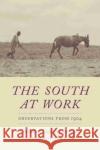
In 1904 William Garrott Brown traveled the American South, investigating the region's political, economic, and social conditions. Using the pen name "Stanton," Brown published twenty epistles in the Boston Evening Transcript detailing his observations. The South at Work is a compilation of these newspaper articles, providing a valuable snapshot of the South as it was simultaneously emerging from post-Civil War economic depression and imposing on African Americans the panoply of Jim Crow laws and customs that sought to exclude them from all but the lowest rungs of Southern society. A...
In 1904 William Garrott Brown traveled the American South, investigating the region's political, economic, and social conditions. Using the pen name "...