Imagine a society that exists solely in cinema -- this book explores exactly that.
Using a half-century of films from the archival collection of the National Film Board, NFB Kids: Portrayals of Children by the National Film Board of Canada, 1939-1989 overcomes a long-standing impasse about what films may be credibly said to document. Here they document not "reality," but social images preserved over time -- the "NFB Society" -- an evolving, cinematic representation of Canadian families, schools and communities.
During the postwar era, this society-in-cinema underwent a...
Imagine a society that exists solely in cinema -- this book explores exactly that.
Using a half-century of films from the archival collec...
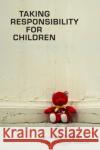
What do we as a society, and as parents in particular, owe to our children? Each chapter in Taking Responsibility for Children offers part of an answer to that question. Although they vary in the approaches they take and the conclusions they draw, each contributor explores some aspect of the moral obligations owed to children by their caregivers. Some focus primarily on the responsibilities of parents, while others focus on the responsibilities of society and government.
The essays reflect a mix of concern with the practical and the philosophical aspects of taking...
What do we as a society, and as parents in particular, owe to our children? Each chapter in Taking Responsibility for Children offers part ...
The Social Origins of the Welfare State traces the evolution of the first universal laws for Quebec families, passed during the Second World War. In this translation of her award-winning Aux origines sociales de lEtat-providence, Dominique Marshall examines the connections between political initiatives and Quebecois families, in particular the way family allowances and compulsory schooling primarily benefited teenage boys who worked on family farms and girls who stayed home to help with domestic labour. She demonstrates that, while the promises of a minimum of welfare and...
The Social Origins of the Welfare State traces the evolution of the first universal laws for Quebec families, passed during the Second Worl...
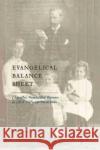
Using the journals of W. Norman Rudolf (1835-1886), a Victorian merchant, Evangelical Balance Sheet: Character, Family, and Business in Mid-Victorian Nova Scotia explores the important role of character ideals and evangelicalism in mid-Victorian culture. Rudolf's diary, with its daily weather observations, its account of family matters, of social and business happenings, and of his own experiences, as well as occasional literary or naturalistic forays, attempts to follow a disciplined regime of writing, but also has elements of a Bildungsroman. The diary reveals an obvious...
Using the journals of W. Norman Rudolf (1835-1886), a Victorian merchant, Evangelical Balance Sheet: Character, Family, and Business in Mid-Vic...
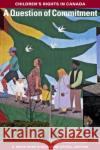
In 1991, the Government of Canada ratified the United Nations Convention on the Rights of the Child, requiring governments at all levels to ensure that Canadian laws and practices safeguard the rights of children. A Question of Commitment: Children's Rights in Canada is the first book to assess the extent to which Canada has fulfilled this commitment.
The editors, R. Brian Howe and Katherine Covell, contend that Canada has wavered in its commitment to the rights of children and is ambivalent in the political culture about the principle of children's rights. A Question...
In 1991, the Government of Canada ratified the United Nations Convention on the Rights of the Child, requiring governments at all levels to ensure...