Many of Texas' most beautiful and interesting historic homes were built from designs published in magazines, books, and catalogues. "Texas Houses Built by the Book" provides an introduction to the use of published designs in Texas, examining how homeowners, carpenters, contractors, developers, and even architects took advantage of the unprecedented wealth of these designs available during the nineteenth and early twentieth centuries. Few examples of Texas houses based on published designs can be found in previous publications about architectural history or Texas architecture. Margaret...
Many of Texas' most beautiful and interesting historic homes were built from designs published in magazines, books, and catalogues. "Texas Houses Buil...
Dr. Mavis Kelsey's career spanned some of the most astounding years ever in the development of medicine as a profession. Medical research and technological developments fundamentally transformed the treatment of patients during those years, but perhaps as important was the transformation of what has come to be called the patient-care delivery system. One of the pioneers of multi-specialty clinics, Kelsey was a founder of the prominent Kelsey-Seybold Clinic in Houston. His story is quintessentially the story of how medicine developed from a single-doctor, home-visit practice to the...
Dr. Mavis Kelsey's career spanned some of the most astounding years ever in the development of medicine as a profession. Medical research and technolo...
In a 1963 novel, Edna Ferber compared the city of Galveston to Miss Havisham, the gray, mournful abandoned bride of Dickens Great Expectations. A thriving port city in the nineteenth century, Galveston suffered catastrophe in the twentieth as a deadly hurricane and shifting economics dropped a pall over its waterfront and Victorian mansions.
Originally conceived as a requiem for the faded city, The Galveston That Was (developed by the Museum of Fine Arts, Houston, and funded by Jean and Dominique de Menil) instead helped resurrect the city. Architect-author Howard Barnstone, renowned...
In a 1963 novel, Edna Ferber compared the city of Galveston to Miss Havisham, the gray, mournful abandoned bride of Dickens Great Expectations. A t...
We all retain memories of places. They help to identify who we are as individuals. At the same time, they tie us to networks of people, culture, and society. Even through time they reach into the past to people whose lives and experiences were as real as ours and into the future to those whose lives we can only imagine. As a designer, Frances Downing has searched for ways to express or explain why images of place were meaningful to her design life. The reasons are interwoven and complex. Transcending personal experiences by using them to imagine other people and places, to discover...
We all retain memories of places. They help to identify who we are as individuals. At the same time, they tie us to networks of people, culture, and s...
Atlee B. Ayres was one of the most prominent Texas architects of the early twentieth century. In a career spanning more than seventy years, Ayres was involved in more than five hundred architectural projects, principally in San Antonio and South Texas, but also in Kansas, Oklahoma, and New York. His architectural successes include distinguished public buildings such as San Antonio's first skyscraper, the Smith Young Tower, as well as private homes, businesses, churches, and five buildings on the campus of the University of Texas at Austin. However, it was in the houses he designed that...
Atlee B. Ayres was one of the most prominent Texas architects of the early twentieth century. In a career spanning more than seventy years, Ayres was ...
For centuries Texas has fired the imagination of artists as well as explorers and settlers. Before modern photography, engravings were the principal type of illustration used by artists to portray images of the state. Now, in this extensive catalogue, authors Mavis P. Kelsey Sr., and Robin Brandt Hutchison have surveyed all engraved illustrations about Texas published before 1900. "Engraved Prints of ""Texas"," 1554-1900" presents the whole range of early Texas history as portrayed in published engravings: from the first printed representation of a buffalo in 1554 to a 1900 view of the...
For centuries Texas has fired the imagination of artists as well as explorers and settlers. Before modern photography, engravings were the principal t...
In the early 1920s, architect John F. Staub, a native of Knoxville, Tennessee, who had studied at MIT and worked in New York, came to the burgeoning city of Houston as an assistant to nationally prominent architect Harrie T. Lindeberg. Staub was charged with administering construction of three houses designed by Lindeberg for members of the city s rapidly emerging elite. He would go on to establish one of the most influential architectural practices in Houston, where he would remain until his death in 1981. Over four decades, Staub designed grand houses in such communities as Shadyside,...
In the early 1920s, architect John F. Staub, a native of Knoxville, Tennessee, who had studied at MIT and worked in New York, came to the burgeoning c...
Glenwood Cemetery has long offered a serene and pastoral final resting place for many of Houston's civic leaders and historic figures. In "Houston's Silent Garden", Suzanne Turner and Joanne Seale Wilson reveal the story of this beautifully wooded and landscaped preserve's development - a story that is also very much entwined with the history of Houston. In 1871, recovering from Reconstruction, a group of progressive citizens noticed that Houston needed a new cemetery at the edge of the central city. Embracing the picturesque aesthetic that had swept through the Eastern Seaboard, the founders...
Glenwood Cemetery has long offered a serene and pastoral final resting place for many of Houston's civic leaders and historic figures. In "Houston's S...
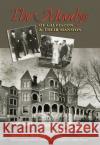
In 1900, just a few months after the deadly hurricane of September, W. L. Moody Jr. and his family moved into the four-story mansion at the corner of Broadway and Twenty-sixth Street in Galveston. For the next eight decades, the Moody family occupied the 28,000-square-foot home: raising a family, creating memories, building business empires, and contributing their considerable wealth and influence for the betterment of their beloved city. In 1983, Hurricane Alicia damaged the mansion, and Mary Moody Northen, eldest child of W. L. Moody Jr., moved out so a major restoration could begin. When...
In 1900, just a few months after the deadly hurricane of September, W. L. Moody Jr. and his family moved into the four-story mansion at the corner of ...
In their willingness to leave home and country to create a new city and a new nation, the first Houstonians were a special breed. They were adventurers and builders; they were citizens of the world. This is the story of these people, their descendants and like-minded successors, and their city, up to the end of the Second World War. It is a history marked by murder, mutiny, and the ironies of war, by comedy and high jinks, by heroism and a remarkable generosity. This fascinating social history grew out of Marguerite Johnston's forty years of friendship with the city and its people. It...
In their willingness to leave home and country to create a new city and a new nation, the first Houstonians were a special breed. They were adventurer...