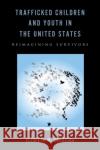
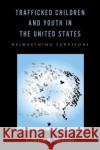
Trafficked children are portrayed by the media--and even by child welfare specialists--as hapless victims who are forced to migrate from a poor country to the United States, where they serve as sex slaves. But as Elzbieta M. Gozdziak reveals in Trafficked Children in the United States, the picture is far more complex. Basing her observations on research with 140 children, most of them girls, from countries all over the globe, Gozdziak debunks many myths and uncovers the realities of the captivity, rescue, and rehabilitation of trafficked children. She shows, for instance, that none of...
Trafficked children are portrayed by the media--and even by child welfare specialists--as hapless victims who are forced to migrate from a poor countr...
Trafficked children are portrayed by the media--and even by child welfare specialists--as hapless victims who are forced to migrate from a poor country to the United States, where they serve as sex slaves. But as Elzbieta M. Gozdziak reveals in Trafficked Children in the United States, the picture is far more complex. Basing her observations on research with 140 children, most of them girls, from countries all over the globe, Gozdziak debunks many myths and uncovers the realities of the captivity, rescue, and rehabilitation of trafficked children. She shows, for instance, that none of...
Trafficked children are portrayed by the media--and even by child welfare specialists--as hapless victims who are forced to migrate from a poor countr...
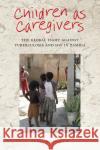
In Zambia, due to the rise of tuberculosis and the closely connected HIV epidemic, a large number of children have experienced the illness or death of at least one parent. Children as Caregivers examines how well intentioned practitioners fail to realize that children take on active caregiving roles when their guardians become seriously ill and demonstrates why understanding children's care is crucial for global health policy.
Using ethnographic methods, and listening to the voices of the young as well as adults, Jean Hunleth makes the caregiving work of children visible....
In Zambia, due to the rise of tuberculosis and the closely connected HIV epidemic, a large number of children have experienced the illness or death of...
Complicated Lives focuses on the lives of sixty-five drug-using girls in the juvenile justice system (living in group homes, a residential treatment center, and a youth correctional facility) who grew up in families characterized by parental drug use, violence, and child maltreatment. Vera Lopez situates girls' relationships with parents who fail to live up to idealized parenting norms and examines how these relationships change over time, and ultimately contribute to the girls' future drug use and involvement in the justice system.
While Lopez's subjects express concerns...
Complicated Lives focuses on the lives of sixty-five drug-using girls in the juvenile justice system (living in group homes, a residential trea...
Complicated Lives focuses on the lives of sixty-five drug-using girls in the juvenile justice system (living in group homes, a residential treatment center, and a youth correctional facility) who grew up in families characterized by parental drug use, violence, and child maltreatment. Vera Lopez situates girls' relationships with parents who fail to live up to idealized parenting norms and examines how these relationships change over time, and ultimately contribute to the girls' future drug use and involvement in the justice system.
While Lopez's subjects express concerns...
Complicated Lives focuses on the lives of sixty-five drug-using girls in the juvenile justice system (living in group homes, a residential trea...
Life After Guns explores how ex-combatants and other post-war youth negotiated a depleted and difficult social and cultural landscape in the years following Liberia's fourteen-year bloody civil war. Unlike others who study child soldiers, Abby Hardgrove's ethnography looks at both former combatants and also the youth who were not recruited to fight. She focuses on the structural constraints and household and family organizations that either helped or limited opportunities as these young men grew into adulthood. Whether young men fought or not, and whether they had cultural capital...
Life After Guns explores how ex-combatants and other post-war youth negotiated a depleted and difficult social and cultural landscape in the ye...
Life After Guns explores how ex-combatants and other post-war youth negotiated a depleted and difficult social and cultural landscape in the years following Liberia's fourteen-year bloody civil war. Unlike others who study child soldiers, Abby Hardgrove's ethnography looks at both former combatants and also the youth who were not recruited to fight. She focuses on the structural constraints and household and family organizations that either helped or limited opportunities as these young men grew into adulthood. Whether young men fought or not, and whether they had cultural capital...
Life After Guns explores how ex-combatants and other post-war youth negotiated a depleted and difficult social and cultural landscape in the ye...
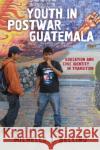
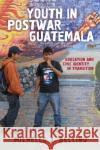
In the aftermath of armed conflict, how do new generations of young people learn about peace, justice, and democracy? Michelle J. Bellino describes how, following Guatemala's civil war, adolescents at four schools in urban and rural communities learn about their country's history of authoritarianism and develop civic identities within a fragile postwar democracy.
Through rich ethnographic accounts, Youth in Postwar Guatemala, traces youth experiences in schools, homes, and communities, to examine how knowledge and attitudes toward historical injustice traverse public and...
In the aftermath of armed conflict, how do new generations of young people learn about peace, justice, and democracy? Michelle J. Bellino describes ho...
In Zambia, due to the rise of tuberculosis and the closely connected HIV epidemic, a large number of children have experienced the illness or death of at least one parent. Children as Caregivers examines how well intentioned practitioners fail to realize that children take on active caregiving roles when their guardians become seriously ill and demonstrates why understanding children's care is crucial for global health policy.
Using ethnographic methods, and listening to the voices of the young as well as adults, Jean Hunleth makes the caregiving work of children visible....
In Zambia, due to the rise of tuberculosis and the closely connected HIV epidemic, a large number of children have experienced the illness or death of...
In the aftermath of armed conflict, how do new generations of young people learn about peace, justice, and democracy? Michelle J. Bellino describes how, following Guatemala's civil war, adolescents at four schools in urban and rural communities learn about their country's history of authoritarianism and develop civic identities within a fragile postwar democracy.
Through rich ethnographic accounts, Youth in Postwar Guatemala, traces youth experiences in schools, homes, and communities, to examine how knowledge and attitudes toward historical injustice traverse public and...
In the aftermath of armed conflict, how do new generations of young people learn about peace, justice, and democracy? Michelle J. Bellino describes ho...