This book investigates the architectural history of China in the Mao era (1949–1976), focusing on the rise of modernism in the last seven years of the Cultural Revolution from 1969 to 1976. It highlights the new architecture of this period, exemplified by three clusters of buildings for foreign affairs, namely buildings for foreign diplomacy in Beijing, buildings for foreign trade in Guangzhou and China’s foreign aid projects overseas. The emergence of new architecture in the early 1970s is closely associated with China’s political and diplomatic shift of the time, from a radical...
This book investigates the architectural history of China in the Mao era (1949–1976), focusing on the rise of modernism in the last seven years of t...
The spaces of science are understudied by the spatial disciplines and studies of science and technology. This book examines this multidisciplinary overlap through a comparative study of four of the world’s most important radio telescopes.
The spaces of science are understudied by the spatial disciplines and studies of science and technology. This book examines this multidisciplinary ove...
Perspective as Logic offers an architectural examination of the filmic screen as an ontologically unique element in the discipline’s repertoire. This book determines the screen’s conditions of possibility by critically asking not what a screen means, but how it can mean anything of architectural significance.
Perspective as Logic offers an architectural examination of the filmic screen as an ontologically unique element in the discipline’s repertoire. Thi...
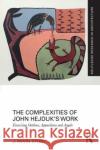
This book traces the development of John Hejduk’s architectural career, using the idea of "exorcism" to uncover his thought process when examining architectural designs. His work encouraged profound questioning on what, why and how we build, which allowed for more open discourse and enhance the phenomenology found in architectural experiences.
Three distinct eras in his architectural career are applied to analogies of outlines, apparitions and angels throughout the book across seven chapters. Using these thematic examples, the author investigates the progression of thought and depth...
This book traces the development of John Hejduk’s architectural career, using the idea of "exorcism" to uncover his thought process when examining a...
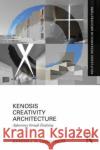
Kenosis Creativity Architecture locates and explores creativity’s grounding in the concept of kenosis, an ‘emptying’, that allows the space for creativity to take place. It will be a fascinating enquiry for researchers and postgraduates in architecture, philosophy and theological thought.
Kenosis Creativity Architecture locates and explores creativity’s grounding in the concept of kenosis, an ‘emptying’, that allows the space for ...
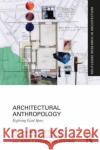
This book prompts architects and anthropologists to think and act together. In order to fully grasp the relationship between human beings and their built environments and design more livable and sustainable buildings and cities in the future, we need new cross-disciplinary approaches combining anthropology and architecture. This is neither anthropology of architecture, nor ethnography for architects, but a new approach beyond these positions: Architectural Anthropology.
The anthology gathers contributions from leading researchers from various Nordic universities, architectural schools, and...
This book prompts architects and anthropologists to think and act together. In order to fully grasp the relationship between human beings and their bu...
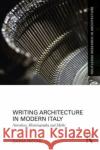
Writing Architecture in Modern Italy tells the history of an intellectual group connected to the small but influential Italian Einaudi publishing house between the 1930s and 1950s.
Writing Architecture in Modern Italy tells the history of an intellectual group connected to the small but influential Italian Einaudi publishing hous...