In industrialized societies the needs of people living in remote and sparsely populated areas are easily overlooked, whilst in developing countries the needs of the rural population are at once so obvious and so enormous that our practical concern is blunted. In this volume it is clearly demonstrated that the relationship between environment and schooling is no less pertinent in rural areas than urban areas, although most recent attention has been directed towards the latter. Roy Nash seeks to redress the balance and in this wide-ranging and comprehensive analysis he examines the educational...
In industrialized societies the needs of people living in remote and sparsely populated areas are easily overlooked, whilst in developing countries th...
This book explores the complex social assumptions and values that underlie research programmes about schools. The analysis of educational research draws upon American and European scholarships in the sociology of knowledge, social philosophy and the history and sociology of science. The discussion considers first the communal, crafts and social characteristics of educational research. Three research models empirical-analytic, symbolic or linguistic and critical sciences are given attention. The discussion of the three research models is to illuminate how the constellation of commitments,...
This book explores the complex social assumptions and values that underlie research programmes about schools. The analysis of educational research dra...
To many education students, Russian and/or Chinese education is at the same time their introduction to Marxism, and many students go no further. This book sets the record straight by giving a thorough introduction to the writings of Marx himself as they relate to education. It shows what Marxism implies for education, as aim, method and content. It then proceeds to compare educational developments in the former USSR and China in the light of this analysis, attempting to answer the question as to how Marxist this has been, in the schools and outside them.
To many education students, Russian and/or Chinese education is at the same time their introduction to Marxism, and many students go no further. This ...
This book describes the attempts that have been made to achieve an educational policy relevant to those most disadvantaged in our society; examines the different ways in which sociologists have conceptualized the related problems; and evaluates the success of the policy. He suggests that we are in need both of a more realistically defined view of what schools can do and a concerted official approach to compensatory policy.
This book describes the attempts that have been made to achieve an educational policy relevant to those most disadvantaged in our society; examines th...
The problems this book discusses are the same now as they were 25 years ago: unemployment, poor housing, inadequate facilities, poverty, racism, violence. What is the function of a school in such a situation? Although many schools hold reformist ideals, their practice is constrained by organisational demands. School organisation is based upon a coercive theory of social control which is intolerant of expressions of individuality by teachers and pupils. Needs for individuality may be mistaken for deviance, and deviance is at least in part produced by, or exacerbated by, school organisation....
The problems this book discusses are the same now as they were 25 years ago: unemployment, poor housing, inadequate facilities, poverty, racism, viole...
In this ethnographic study of a secondary school in the UK, the author presents an incisive account of school life from the various points of view of the pupils, teachers and parents. He describes and analyses major areas of experience and methods of adapting to school for both the children and their teachers; school experience is shown to be widely varying from boredom, despair and humiliation, to gaiety, exultation and comradeship some of it officially and some of it unofficially sponsored. The description reveals a number of marked and interpenetrating divisions within schools: between...
In this ethnographic study of a secondary school in the UK, the author presents an incisive account of school life from the various points of view of ...
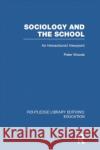
This is an introduction to interactionist work in education during the 1970s and 80s. The interactionist viewpoint concentrates on how people construct meanings in the ebb and flow of everyday life - what they think and do, how they react to one another - and has in recent years established itself as one of the leading approaches in education. It has generated illuminating research studies which, by being firmly based in the real world of teaching and dealing with the fine-grained details of school life, have helped to break down the barriers between teacher and researcher. This volume...
This is an introduction to interactionist work in education during the 1970s and 80s. The interactionist viewpoint concentrates on how people construc...
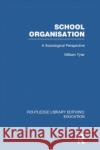
The internal organisation of the school touches on many areas of contemporary debate. Is there such a thing as a 'good school'? Are large urban comprehensives necessarily impersonal? Are the charges of indiscipline, conflict and declining standards in modern schools based on a failure to understand schools as institutions? At the time this book was first published sociological analysis had neglected to consider schools as organisational entities, preferring to see them as either the sites for negotiated encounters between teachers and pupils or else as agencies of class reproduction. The...
The internal organisation of the school touches on many areas of contemporary debate. Is there such a thing as a 'good school'? Are large urban compre...
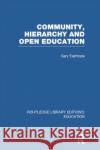
The book describes the English school, especially the secondary school, as a hierarchical community in which the head-teacher (principal) is an autocratic ruler. After explaining how that particular organisation of the school developed historically from the market situation faced by the English public (i.e. private) schools in the developing industrial society of the nineteenth century it provides empirical evidence demonstrating that the hierarchies of knowledge, teachers and students that developed then were still in place when the book was published in 1975. They are still present today....
The book describes the English school, especially the secondary school, as a hierarchical community in which the head-teacher (principal) is an autocr...
This book argues that politics, in the sense of the government of our social structure, holds the key to the resolution of educational problems in the early twentieth century; that the teacher will only be relieved of his or her sense of frustration through government and ultimately socialist action. The author looks at the inequality of British education in the early twentieth century and the failure of capitalist education. She suggests measures to change the situation and discusses the aims and methods of socialist education.
This book argues that politics, in the sense of the government of our social structure, holds the key to the resolution of educational problems in the...