What the plantation has been to the history and literature of the American South, the hacienda has been to Mexico and the American Southwest. In "Remembering the Hacienda", Vincent Perez makes the case that the hacienda offers the emblem of an "antebellum," agrarian social order that predates the United States. It is the site in which the Mexican American community's "heroic," genteel forebears lived in dignity and pride, and it is the heritage from which they were cast out as "orphans," both in mother Mexico by the Revolution and in the American Southwest when the wars of 1836 and 1846-48...
What the plantation has been to the history and literature of the American South, the hacienda has been to Mexico and the American Southwest. In "Reme...
Americo Paredes (1915-99) is one of the seminal figures in Mexican American studies. With this first book-length biography of Paredes, author Jose R. Lopez Morin offers fresh insight into the life and work of this influential scholar, as well as the close relationship between his experience and his thought. Morin shows how Mexican literary traditions--particularly the performance contexts of oral "literature"--shaped Paredes's understanding of his people and his critique of Anglo scholars' portrayal of Mexican American history, character, and cultural expressions. Although he surveys...
Americo Paredes (1915-99) is one of the seminal figures in Mexican American studies. With this first book-length biography of Paredes, author Jose R. ...
What the plantation has been to the history and literature of the American South, the hacienda has been to Mexico and the American Southwest. In "Remembering the Hacienda", Vincent Perez makes the case that the hacienda offers the emblem of an "antebellum," agrarian social order that predates the United States. It is the site in which the Mexican American community's "heroic," genteel forebears lived in dignity and pride, and it is the heritage from which they were cast out as "orphans," both in mother Mexico by the Revolution and in the American Southwest when the wars of 1836 and 1846-48...
What the plantation has been to the history and literature of the American South, the hacienda has been to Mexico and the American Southwest. In "Reme...
In late 2003, Texas State Senator Leticia Van de Putte led ten other Texas Senate Democrats to New Mexico as part of a protest against a Republican redistricting plan. The walkout of the "Texas Eleven" made national headlines; it also deprived the state senate of a quorum and temporarily froze all legislative action. As Sharon A. Navarro shows in Latina Legislator, the dramatic boycott is a fitting image for Van de Putte's life and career. Though she initially ran for office on a shoestring budget, Senator Van de Putte has successfully authored and sponsored legislation that has reformed...
In late 2003, Texas State Senator Leticia Van de Putte led ten other Texas Senate Democrats to New Mexico as part of a protest against a Republican re...
Many of us have multiple identities, says Edwina Barvosa. We may view ourselves according to ethnicity, marital or family roles, political affiliation, sexuality, or any of several other "identities" we may use to organize our behavior and self-understanding at any given time. Various domains have offered nuggets of insight regarding the characteristics and political implications of seeing the self as made up of multiple identities, but many questions remain. In Wealth of Selves, Edwina Barvosa constructs an ambitious interdisciplinary blend of these insights and crafts them into an...
Many of us have multiple identities, says Edwina Barvosa. We may view ourselves according to ethnicity, marital or family roles, political affiliation...
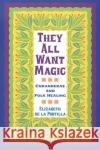
Curanderas-traditional healers in Mexican culture-bridge the gaps between multiple planes of existence-spiritual and material, modern and pre-modern-dispensing medicinal herbs, prayers, and instruction. Elizabeth de la Portilla writes of the world and practices of San Antonio curanderas. As a scholar, an ethnographer, and a curandera in training, her parallel perspectives uniquely aid readers in understanding this subordinated culture. Retelling the stories various healers have shared, interpreting their answers to her probing questions, and describing the herbs and recipes they use in their...
Curanderas-traditional healers in Mexican culture-bridge the gaps between multiple planes of existence-spiritual and material, modern and pre-modern-d...
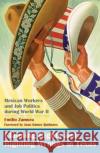
In Claiming Rights and Righting Wrongs in Texas, Emilio Zamora traces the experiences of Mexican workers on the American home front during World War II as they moved from rural to urban areas and sought better-paying jobs in rapidly expanding industries. Contending that discrimination undermined job opportunities, Zamora investigates the intervention by Mexico in the treatment of workers, the U.S. State Department's response, and Texas' emergence as a key site for negotiating the application of the Good Neighbor Policy. He examines the role of women workers, the evolving political struggle,...
In Claiming Rights and Righting Wrongs in Texas, Emilio Zamora traces the experiences of Mexican workers on the American home front during World War I...
In "Claiming Rights and Righting Wrongs in Texas," Emilio Zamora traces the experiences of Mexican workers on the American home front during World War II as they moved from rural to urban areas and sought better-paying jobs in rapidly expanding industries. Contending that discrimination undermined job opportunities, Zamora investigates the intervention by Mexico in the treatment of workers, the U.S. State Department's response, and Texas' emergence as a key site for negotiating the application of the Good Neighbor Policy. He examines the role of women workers, the evolving political struggle,...
In "Claiming Rights and Righting Wrongs in Texas," Emilio Zamora traces the experiences of Mexican workers on the American home front during World War...
"Curanderas"--traditional healers in Mexican culture--bridge the gaps between multiple planes of existence--spiritual and material, modern and pre-modern--dispensing medicinal herbs, prayers, and instruction. Elizabeth de la Portilla writes of the world and practices of San Antonio curanderas. As a scholar, an ethnographer, and a curandera in training, her parallel perspectives uniquely aid readers in understanding this subordinated culture. Retelling the stories various healers have shared, interpreting their answers to her probing questions, and describing the herbs and recipes they use in...
"Curanderas"--traditional healers in Mexican culture--bridge the gaps between multiple planes of existence--spiritual and material, modern and pre-mod...