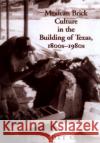
Although brickmaking was one of the pioneering non-agricultural manufacturing industries in the Rio Grande Valley, as well as in other areas of the lower Rio Grande region, this is the first ethnographic study of the industry. The many and important connections between brickmaking in Mexico and Texas lead author Scott Cook to consider many core issues in the interdisciplinary field of border cultural studies, even as he gives a clear picture of the development and decline of the binational industry. Drawing largely on oral testimonies from living informants and from ten years of fieldwork...
Although brickmaking was one of the pioneering non-agricultural manufacturing industries in the Rio Grande Valley, as well as in other areas of the lo...
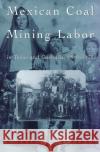
The years 1880 to 1930 mark the period in time in Texas' coal mining history known as the handloading era, during which the system of mining for coal by hand was both established and eliminated, giving way to a new era of advancing technologies and methods used in mines on both sides of the Texas-Mexico border. The contributions of the large immigrant population who worked the mines, however, have long been overlooked by historians. Departing from the standard studies of Texas or Mexican mining which remain lodged within the nation-state, in "Mexican Coal Mining Labor in Texas and...
The years 1880 to 1930 mark the period in time in Texas' coal mining history known as the handloading era, during which the system of mining for coal ...
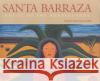
Santa Barraza paints bold representations of Nepantla, the Land Between. Her work depicts the historical, emotional, and spiritual land between Mexico and Texas, between the familiar and the sacred, between present reality and the mythic world of the ancient Aztecs and Mayas. More than thirty of her most powerful and characteristic works are offered in full color and considered in this ground-breaking study of a nationally important Tejana artist. Over the last twenty-five years of her career as a visual artist, Barraza has explored what it is to be a Chicana and a mestiza in this...
Santa Barraza paints bold representations of Nepantla, the Land Between. Her work depicts the historical, emotional, and spiritual land between Mexico...
The premature death of Ricardo Sanchez in 1995 marked the passing of an almost legendary figure in Chicano literature and in the Chicano political movement. A troubadour of Chicano Movement poetry, he established an anti-aesthetic that became the norm. Sanchez's autobiographical poetry forges a link between genres of the past and present and establishes him as the first great tragic figure of contemporary Chicano literature.In a body of work that spanned spatial, temporal, and cultural boundaries, Sanchez dealt with issues of power and of linguistic and cultural barriers between Anglo, Native...
The premature death of Ricardo Sanchez in 1995 marked the passing of an almost legendary figure in Chicano literature and in the Chicano political mov...
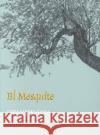
The open country of Texas between the Nueces River and the Rio Grande was sparsely settled through the nineteenth century, and most of the settlers who did live there had Hispanic names that until recently were rarely admitted into the pages of Texas history. In 1935, however, a descendant of one of the old Spanish land-grant families in the region--a woman, no less--found an ingenious way to publish the history of her region at a time when neither Tejanos nor women had much voice. She told the story from the perspective of an ancient mesquite tree, under whose branches much South Texas...
The open country of Texas between the Nueces River and the Rio Grande was sparsely settled through the nineteenth century, and most of the settlers wh...
The open country of Texas between the Nueces River and the Rio Grande was sparsely settled through the nineteenth century, and most of the settlers who did live there had Hispanic names that until recently were rarely admitted into the pages of Texas history. In 1935, however, a descendant of one of the old Spanish land-grant families in the region--a woman, no less--found an ingenious way to publish the history of her region at a time when neither Tejanos nor women had much voice. She told the story from the perspective of an ancient mesquite tree, under whose branches much South Texas...
The open country of Texas between the Nueces River and the Rio Grande was sparsely settled through the nineteenth century, and most of the settlers wh...
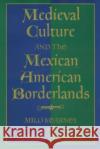
The land along the U.S.-Mexican border is often portrayed as the place where two separate cultures meet--or indeed collide. Yet this is not the first meeting of the two cultures, not their first collision, and not their first confluence. Their respective ancestral cultures in England and Spain, argue scholars Milo Kearney and Manuel Medrano, had common roots in medieval Europe, and both their conflicts and the shared understandings that may form the basis for their cooperation trace back to those days. Kearney and Medrano explore three interlinking themes. First, they assert that Mexican...
The land along the U.S.-Mexican border is often portrayed as the place where two separate cultures meet--or indeed collide. Yet this is not the first ...
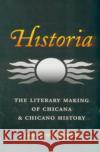
The nature of ethnic identity has been a major issue in the Mexican American community for decades now. "Historia: ""The"" Literary Making of Chicana and Chicano History" makes a superb contribution to the multidisciplinary exploration of ways Mexican Americans have chosen to present their past through both "factual" and "fictional" narratives. Whereas history has offered frameworks for interpreting generational changes in the understanding of identity, literature has been particularly rich in exploring themes of power and domination and of intragroup complexities, Louis Gerard Mendoza argues...
The nature of ethnic identity has been a major issue in the Mexican American community for decades now. "Historia: ""The"" Literary Making of Chicana ...
It can come as no surprise that the ethnic makeup of the American population is rapidly changing. In this volume, John Francis Burke offers a "mestizo" theory of democracy and traces its implications for public policy.
Mestizo, meaning "mixture, " is a term from the Mexican socio-political experience. It represents a blend of indigenous, African, and Spanish genes and cultures in Latin America. This mixture is not a "melting pot" experience; rather, the influences of the different cultures remain identifiable but influence each other in dynamic ways.
Burke analyzes democratic theory and...
It can come as no surprise that the ethnic makeup of the American population is rapidly changing. In this volume, John Francis Burke offers a "mestizo...
"Literally, "chilaquiles" are a breakfast I grew up eating: fried corn tortillas with tomato-chile sauce. Symbolically, they are the culinary metaphor for how working-class women speak with the seasoning of their food."--from the Introduction Through the ages and across cultures, women have carved out a domain in which their cooking allowed them to express themselves, strengthen family relationships, and create a world of shared meanings with other women. In "Voices in the Kitchen, "Meredith E. Abarca features the voices of her mother and several other family members and friends, seated...
"Literally, "chilaquiles" are a breakfast I grew up eating: fried corn tortillas with tomato-chile sauce. Symbolically, they are the culinary metaphor...