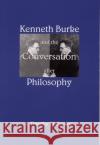
This study of Kenneth Burke's writings traces the critic's commitment and contribution to philosophy prior to 1945. The author contends that rather than belonging to the late-modernist tradition, Burke actually starts from a position closely akin to such postmodern figures as Michel Foucault.
This study of Kenneth Burke's writings traces the critic's commitment and contribution to philosophy prior to 1945. The author contends that rather th...
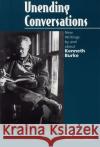
Previously unpublished writings by and about Kenneth Burke plus essays by such Burkean luminaries as Wayne C. Booth, William H. Rueckert, Robert Wess, Thomas Carmichael, and Michael Feehan make the publication of "Unending Conversations "a significant event in the field of Burke studies and in the wider field of literary criticism and theory.
Editors Greig Henderson and David Cratis Williams have divided their material into three parts: Dialectics of Expression, Communication, and Transcendence, Criticism, Symbolicity, and Tropology, and Transcendence and the Theological Motive.
In...
Previously unpublished writings by and about Kenneth Burke plus essays by such Burkean luminaries as Wayne C. Booth, William H. Rueckert, Robert We...
Originally published in English in 1980, "Rhetoric as Philosophy "has been out of print for some time. The reviews of that English edition attest to the importance of Ernesto Grassi s work.
By going back to the Italian humanist tradition and aspects of earlier Greek and Latin thought, Ernesto Grassi develops a conception of rhetoric as the basis of philosophy. Grassi explores the sense in which the first principles of rational thought come from the metaphorical power of the word. He finds the basis for his conception in the last great thinker of the Italian humanist tradition,...
Originally published in English in 1980, "Rhetoric as Philosophy "has been out of print for some time. The reviews of that English edition attest t...
In "Defining Reality, "Edward Schiappa argues that definitional disputes should be treated less as philosophical questions of is " "and more as sociopolitical questions of ought. Instead of asking What is X? he advocates that definitions be considered as proposals for shared knowledge and institutional norms, as in What should count as X in context Y, given our needs and interests? Covering a broad scope of argument in rhetorical theory, as well as in legal, medical, scientific, and environmental debates, Schiappa shows the act of defining to be a specialized and learned behavior, and...
In "Defining Reality, "Edward Schiappa argues that definitional disputes should be treated less as philosophical questions of is " "and more as sociop...