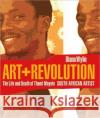
Thami Mnyele's life spanned the era of apartheid. He was born the same year the National Party won office and came of age in a time (the 1960s) and a place (Johannesburg) that offered a sensitive young black artist little encouragement. In 1985, in the waning days of apartheid, he was killed by South African Special Forces operatives in Gaborone, Botswana, where he had joined the banned African National Congress. Although reticent by nature, he played a vanguard role in efforts to throw open the doors of South African culture.
Thami Mnyele's story sheds light on this tumultuous era from...
Thami Mnyele's life spanned the era of apartheid. He was born the same year the National Party won office and came of age in a time (the 1960s) and...
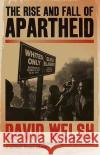
On his way into Parliament on February 2, 1990, F. W. de Klerk turned to his wife Marike and said, referring to his forthcoming speech: -South Africa will never be the same again after this.- Did white South Africa crack, or did its leadership yield sufficiently and just in time to avert a revolution? The transformation has been called a miracle, belying gloomy predictions of race war in which the white minority circled the wagons and fought to the last drop of blood. Why did it happen?
In The Rise and Fall of Apartheid, David Welsh views the topic against the backdrop of a long...
On his way into Parliament on February 2, 1990, F. W. de Klerk turned to his wife Marike and said, referring to his forthcoming speech: -South Afri...
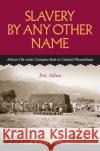
Based on documents from a long-lost and unexplored colonial archive, Slavery by Any Other Name tells the story of how Portugal privatized part of its empire to the Mozambique Company. In the late nineteenth and twentieth centuries, the company governed central Mozambique under a royal charter and built a vast forced labor regime camouflaged by the rhetoric of the civilizing mission.
Oral testimonies from more than one hundred Mozambican elders provide a vital counterpoint to the perspectives of colonial officials detailed in the archival records of the Mozambique Company....
Based on documents from a long-lost and unexplored colonial archive, Slavery by Any Other Name tells the story of how Portugal privatized pa...
From the beginning of the nineteenth century through to 1960, Protestant missionaries were the most important intermediaries between South Africa's ruling white minority and its black majority. The Equality of Believers reconfigures the narrative of race in South Africa by exploring the pivotal role played by these missionaries and their teachings in shaping that nation's history.
The missionaries articulated a universalist and egalitarian ideology derived from New Testament teachings that rebuked the racial hierarchies endemic to South African society. Yet white settlers,...
From the beginning of the nineteenth century through to 1960, Protestant missionaries were the most important intermediaries between South Africa's...
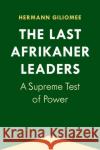
In his latest book, renowned historian Hermann Giliomee challenges the conventional wisdom on the downfall of white rule and the end of apartheid. Instead of impersonal forces, or the resourcefulness of an indomitable resistance movement, he emphasizes the role of Nationalist leaders and of their outspoken critic Frederick van Zyl Slabbert. What motivated each of the last Afrikaner leaders, from Verwoerd to de Klerk? How did each try to reconcile economic growth, white privilege, and security with the demands of an increasingly assertive black...
Finalist for the Alan Paton Award
In his latest book, renowned historian Hermann Giliomee challenges the conventional wisdom on the down...
The politics of black education has long been a key issue in southern African studies, but despite rich debates on the racial and class dimensions of schooling, historians have neglected their distinctive gendered dynamics. A World of Their Own is the first book to explore the meanings of black women's education in the making of modern South Africa. Its lens is a social history of the first high school for black South African women, Inanda Seminary, from its 1869 founding outside of Durban through the recent past.
Employing diverse archival and oral historical sources, Meghan...
The politics of black education has long been a key issue in southern African studies, but despite rich debates on the racial and class dimensions ...
In Imagining a Nation, Ruramisai Charumbira analyzes competing narratives of the founding of Rhodesia/Zimbabwe constructed by political and cultural nationalists both black and white since occupation in 1890. The book uses a wide array of sources--including archives, oral histories, and a national monument--to explore the birth of the racialized national memories and parallel identities that were in vigorous contention as memory sought to present itself as history. In contrast with current global politics plagued by divisions of outsider and insider, patriot and traitor, Charumbira...
In Imagining a Nation, Ruramisai Charumbira analyzes competing narratives of the founding of Rhodesia/Zimbabwe constructed by political and...
Provides a vivid history of a middle-sized South African town in the years when segregation gradually emerged, preceding the rapid and rigorous implementation of apartheid. Although the author was born and raised in Cradock, he avoids sentimentality and offers an ambitious treatment of the racial themes that dominate recent South African history through the details of one emblematic community.
Provides a vivid history of a middle-sized South African town in the years when segregation gradually emerged, preceding the rapid and rigorous implem...
In this eloquent memoir, already widely read and praised in the author's native South Africa, Hermann Giliomee weaves together the story of his own life with that of his country - a nation that continues to absorb and inspire him, both despite and because of its tortuous history.
In this eloquent memoir, already widely read and praised in the author's native South Africa, Hermann Giliomee weaves together the story of his own li...