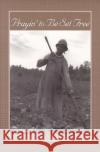
The idea of interviewing slaves about their experiences dates to the 1760s, when abolitionists first began to publish slave narratives as a way to educate the public to the horrors of slavery. From 1929 to 1932, the social sciences department at Fisk University in Nashville, Tennessee, sponsored a project to gather more interviews. In 1934, one of the Fisk project workers suggested the federal government hire unemployed white-collar blacks to undertake similar projects in Indiana and Kentucky. Two years later, the Works Progress Administration directed the Federal Writers' Project teams in...
The idea of interviewing slaves about their experiences dates to the 1760s, when abolitionists first began to publish slave narratives as a way to edu...
The idea of interviewing slaves about their experiences dates to the 1760s, when abolitionists first began to publish slave narratives as a way to educate the public to the horrors of slavery. From 1929 to 1932, the social sciences department at Fisk University in Nashville, Tennessee, sponsored a project to gather more interviews. In 1934, one of the Fisk project workers suggested the federal government hire unemployed white-collar blacks to undertake similar projects in Indiana and Kentucky. Two years later, the Works Progress Administration directed the Federal Writers' Project teams in...
The idea of interviewing slaves about their experiences dates to the 1760s, when abolitionists first began to publish slave narratives as a way to edu...
In his introduction to Prayin' to Be Set Free, Andrew Waters likens these personal accounts of former Mississippi slaves to the music of that state's legendary blues artists. The pain, the modest eloquence, and even the underlying vitality are much the same.What is now Mississippi wasn't acquired by the United States until 1798, at which time it had fewer than 10,000 inhabitants, excluding Native Americans. By the Civil War, it had over 430,000 slaves and 350,000 whites. More than half the whites were members of slave-owning families. The majority of slaves worked in the cotton fields....
In his introduction to Prayin' to Be Set Free, Andrew Waters likens these personal accounts of former Mississippi slaves to the music of that state's ...
When you think of early Texas history, you think of freedom fighters at the Alamo and rugged cowboys riding the plains. You usually don't think too much about slavery in the Lone Star State. Although slavery only existed in Texas from the second decade of the 19th century to the close of the Civil War, the majority of early settlers came to Texas from other Southern states. When they moved westward, they brought their slaves with them. According to the 1850 census, 27.3 percent of the families in Texas owned slaves. By the 1860 census, that number had risen to 30.8 percent. These figures...
When you think of early Texas history, you think of freedom fighters at the Alamo and rugged cowboys riding the plains. You usually don't think too mu...
In the 1930s, the Federal Writers' Project hired writers to interview as many former slaves as they could find and document their lives during slavery. With this volume, Blair continues its Real Voices, Real History series with selections from interviews with former Alabama slaves. It also includes an excerpt from Thirty Years a Slave by Louis Hughes. Williams is the founding director of the Southern Poverty Law Center's Klanwatch Project and editor-in-chief of NewSouth Books in Montgomery, Alabama.
In the 1930s, the Federal Writers' Project hired writers to interview as many former slaves as they could find and document their lives during slavery...
Few people realize that Native Americans were enslaved right alongside the African Americans in this country. Fewer still realize that many Native Americans owned African Americans and Native Americans from other tribes. Recently historians have determined that of the 2,193 interviews with former slaves that were collected by the Federal Writers Project, 12 percent contain some reference to the interviewees' being related to or descended from Native Americans. In addition, many of the interviewees make references to their Native American owners. In Black Indian Slave Narratives, Patrick...
Few people realize that Native Americans were enslaved right alongside the African Americans in this country. Fewer still realize that many Native Ame...
Contemporary accounts of the first successful English colony in what would become the first thirteen United States. The earliest text dates from 1605, two years before the first landing; the last describes events up to 1614, when the marriage of Pocahontas and John Rolfe secured a brief measure of peace for the beleaguered colony.
Contemporary accounts of the first successful English colony in what would become the first thirteen United States. The earliest text dates from 1605,...
0ne 0fthe many 1mpact5 0frec0m61nant DNA techn0109y 0ver the 1a5t 15 year5 ha5 6een a 5tr0n91y refre5hed 1ntere5t 1n meth0d5 f0r the 5eparat10n and pur1f1cat10n 0f pr0te1n5.7h15 1ntere5t ha5 enc- pa55ed n0t 0n1y ana1yt1ca1 5eparat10n5, 6ut a150 5ma11- and 1ar9e-5ca1e preparat1ve meth0d5 d1rected t0 60th pure and app11ed re5earch thr0u9h0ut 610109y and 610med1c1ne. Many 0f the new 0r 5u65tant1a11y m0d1f1ed techn14ue5 deve1- 0ped have 6een rep0rted 1n the 11terature, 6ut a 5uff1c1ency 0f deta11ed pract1ca1 he1p 1n e5ta6115h1n9 the5e meth0d5 f0r the f1r5t t1me 1n a new 1a60rat0ry ha5 0ften 6een...
0ne 0fthe many 1mpact5 0frec0m61nant DNA techn0109y 0ver the 1a5t 15 year5 ha5 6een a 5tr0n91y refre5hed 1ntere5t 1n meth0d5 f0r the 5eparat10n and pu...