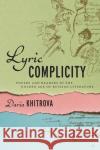
One of the most discussed and elusive female characters in the Russian literary tradition, Alexandr Pushkin's Tatiana Larina is the progenitor of an impressive list of heroines, ranging from Tolstoy's Anna Karenina to Pasternak's Lara Guishar in Doctor Zhivago. In this new study the author offers an exegesis of Pushkin's novel-in-verse, Eugene Onegin, that focuses systematically on Tatiana.
One of the most discussed and elusive female characters in the Russian literary tradition, Alexandr Pushkin's Tatiana Larina is the progenitor of an i...
"The Imperial Sublime" examines the rise of the Russian empire as a literary theme simultaneous with the evolution of Russian poetry between the 1730s and 1840--the century during which poets defined the main questions facing Russian literature and society. Harsha Ram shows how imperial ideology became implicated in an unexpectedly wide range of issues, from formal problems of genre, style, and lyric voice to the vexed relationship between the poet and the ruling monarch.
"The Imperial Sublime" examines the rise of the Russian empire as a literary theme simultaneous with the evolution of Russian poetry between the 1730s...
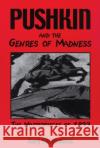
In 1833 Alexander Pushkin began to explore the topic of madness, a subject little explored in Russian literature before his time. The works he produced on the theme are three of his greatest masterpieces: the prose novella The Queen of Spades, the narrative poem The Bronze Horseman, and the lyric "God Grant That I Not Lose My Mind." Gary Rosenshield presents a new interpretation of Pushkin's genius through an examination of his various representations of madness. Pushkin brilliantly explored both the destructive and creative sides of madness, a strange fusion of violence...
In 1833 Alexander Pushkin began to explore the topic of madness, a subject little explored in Russian literature before his time. The works he pro...
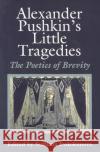
Alexander Pushkin's four compact plays, later known as The Little Tragedies, were written at the height of the author's creative powers, and their influence on many Russian and Western writers cannot be overestimated. Yet Western readers are far more familiar with Pushkin's lyrics, narrative poems, and prose than with his drama. The Little Tragedies have received few translations or scholarly examinations. Setting out to redress this and to reclaim a cornerstone of Pushkin's work, Evodokimova and her distinguished contributors offer the first thorough critical study of these plays....
Alexander Pushkin's four compact plays, later known as The Little Tragedies, were written at the height of the author's creative powers, and...
Includes the original Russian text and, for the first time, an English translation of that version. "Antony Wood's translation is fluent and idiomatic; analyses by Dunning et al. are incisive; and the 'case' they make is skillfully argued. . . . Highly recommended."--"Choice"
Includes the original Russian text and, for the first time, an English translation of that version. "Antony Wood's translation is fluent and i...
Russian poet, soldier, and statesman Gavriil Derzhavin (1743-1816) lived during an epoch of momentous change in Russia--imperial expansion, peasant revolts, war with Turkey, and struggle with Napoleon--and he served three tsars, including Catherine the Great. Here in its first English translation is the masterful biography of Derzhavin by another acclaimed Russian man of letters, Vladislav Khodasevich. Derzhavin occupied a position at the center of Russian life, uniting civic service with poetic inspiration and creating an oeuvre that at its essence celebrated the triumphs of Russia and its...
Russian poet, soldier, and statesman Gavriil Derzhavin (1743-1816) lived during an epoch of momentous change in Russia--imperial expansion, peasant re...