From the initial signs of life in the Precambrian period to the end of the Cambrian period about 488 million years ago, Early Life explores the development of early life that culminated in one of the most extraordinary periods in the evolution of life on Earth.
From the initial signs of life in the Precambrian period to the end of the Cambrian period about 488 million years ago, Early Life explores the develo...
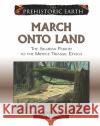
This full-color volume depicts life's migration from the sea to the land and the rise of the first terrestrial organisms. Following the appearance of the first land plants and terrestrial invertebrates, some animals with backbones ventured out of the water--and grew in number and diversity to become the most important large-bodied organisms on the planet. By the Middle Triassic period, the evolutionary stage was set for the rise of many new and distinct species, including mammals and dinosaurs.
This full-color volume depicts life's migration from the sea to the land and the rise of the first terrestrial organisms. Following the appearance of ...
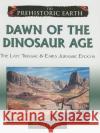
This title presents the first act in the drama that would become the Mesozoic era, the Age of Reptiles. It explores the roots of the dinosaur family tree and the lifestyle and radiation of the first carnivorous and herbivorous dinosaurs. The first dinosaurs, after living in the shadows of larger, more dominant reptilian kin, took advantage of major mass extinctions at the end of the Triassic period and quickly radiated to widespread geographic ranges. The Late Triassic and Early Jurassic periods were a time of experimentation in dinosaur evolution as the earliest herbivorous and predaceous...
This title presents the first act in the drama that would become the Mesozoic era, the Age of Reptiles. It explores the roots of the dinosaur family t...
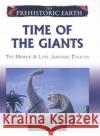
The Middle and Late Jurassic periods saw the largest land animals ever to walk the Earth--the sauropods, along with predatory dinosaurs and plated and armored herbivores. At the other end of the size scale, some small meat-eating dinosaurs developed powered flight and gave rise to birds. This fully illustrated book also examines the scientific view of dinosaurs as living creatures. Once considered docile and inactive--like their distant cold-blooded reptile relatives--dinosaurs are now thought to have been active, energetic creatures that used a variety of methods to maintain a constant body...
The Middle and Late Jurassic periods saw the largest land animals ever to walk the Earth--the sauropods, along with predatory dinosaurs and plated and...
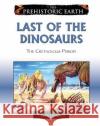
Last of the Dinosaurs explores the theories for what may have caused the mass extinction that ended the reign of the dinosaurs and many other terrestrial and marine creatures of the time. The non-dinosaurian reptiles of the Mesozoic era are also examined.
Last of the Dinosaurs explores the theories for what may have caused the mass extinction that ended the reign of the dinosaurs and many other terrestr...
The Rise of Mammals details the pattern of bird and mammal evolution prior to the Cenozoic era as well as the critical first 10-million-year span of the Cenozoic known as the Paleocene epoch, during which mammals and birds rapidly adapted to the new ecological conditions.
The Rise of Mammals details the pattern of bird and mammal evolution prior to the Cenozoic era as well as the critical first 10-million-year span of t...
The Age of Mammals explains how mammals and birds increased their collective footprint to dominate the Earth, and how they evolved to present-day form.
The Age of Mammals explains how mammals and birds increased their collective footprint to dominate the Earth, and how they evolved to present-day form...
The richly illustrated Primates and Human Ancestors tells the story of 50 million years of primate evolution during the Pliocene epoch, from their origins in Africa to their spread to the New World and origin of the human species.
The richly illustrated Primates and Human Ancestors tells the story of 50 million years of primate evolution during the Pliocene epoch, from their ori...
Early Humans traces the beginnings of the human species, its success and adaptability, and the development of such innovations as human language and culture. In exploring human origins, provocative questions arise concerning the human species: how are we different from each other, is there a biological basis for race, and what does the future hold for human evolution?
Early Humans traces the beginnings of the human species, its success and adaptability, and the development of such innovations as human language and c...