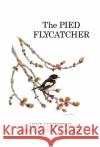
The Pied Flycatcher is one of Europe's best-studied species. The first detailed work on it was begun in the 1930s by German ornithologists, but it was Lars von Haartman's Finnish study that both established long-term research on the species and founded many of the central themes of modern ornithology. Soon after, in the late 1940s, Bruce Campbell set up an intensive project in southwest England, which also still runs to this day. Many other eminent ornithologists followed and in 1979 Arne Lundberg and Rauno Alatalo started their own work in Sweden, Finland and latterly the north of England. ...
The Pied Flycatcher is one of Europe's best-studied species. The first detailed work on it was begun in the 1930s by German ornithologists, but it was...
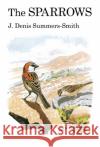
Denis Summers-Smith first took up the study of the House Sparrow in 1947, thinking that the difficulties of travel in post-war Britain would best suit the study of a species always close at hand. The humble House Sparrow, common everywhere, was surprisingly poorly researched and his work soon provided interesting insights into this successful and adaptable little bird. As new opportunities to travel opened up, his interest blossomed to take in the genus Passer as a whole. His travels would ultimately lead to his study of all but one of the group, found only in deepest Turkestan, and to the...
Denis Summers-Smith first took up the study of the House Sparrow in 1947, thinking that the difficulties of travel in post-war Britain would best suit...
This companion volume to The Atlas of Wintering Birds in Britain and Ireland (see back flap) is derived from yearly surveys of breeding birds in Britain and Ireland during 1968-72, organised by the British Trust for Ornithology and the Irish Wildbird Conservancy. Each of the 3,862 10-km squares of Britain and Ireland was visited during the five years and the resulting records (over 285,000) are summarised in the maps. The full-page maps plot the known distribution of all but 11 of the 229 breeding species located during the survey period. Each map has an accompanying text which describes the...
This companion volume to The Atlas of Wintering Birds in Britain and Ireland (see back flap) is derived from yearly surveys of breeding birds in Brita...
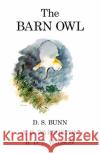
In the classic monograph mould, this study of Tyto alba is the product of almost 40 years field work by its authors and complementary observations by other dedicated ornithologists in Britain, the USA and Europe. The result is a detailed, balanced account based on intimate knowledge of the Barn Owl in varying habitats in Britain, comparing, as appropriate, this race's behaviour with that of sub-species in other areas of the world. There are major chapters on breeding and general behaviour, feeding, distribution, etc, but voice is rightly given a full treatment. The text is graced by Ian...
In the classic monograph mould, this study of Tyto alba is the product of almost 40 years field work by its authors and complementary observations by ...
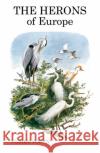
Although the majority of the world's Herons live in the tropics and subtropics, Europe is home to nine species, some large, some small, some colonial, some solitary breeders. Highly specialized birds, they exhibit many interesting differences in their behaviour and ecology and are a favourite group for many ornithologists. Voisin begins her book with a general description of the family before going on to treat each species in more detail. The species accounts summarize such topics as field characters, distribution, population size, breeding and feeding ecology and behaviour.
Although the majority of the world's Herons live in the tropics and subtropics, Europe is home to nine species, some large, some small, some colonial,...
The Ruff is a fascinating species whose elaborate breeding behaviour has captivated ornithologists for decades. Their communal display grounds, or leks, provide an extreme example of a social system widespread in birds and other animals, in which brilliantly plumaged males seemingly compete for the attention of passing females. In this book, Johan van Rhijn explores this complex and intricate drama, both to lay bare the details of the players' private lives, and to provide a means of exploring the wider variety of wader breeding systems. Strands of evidence for all aspects of the Ruffs life,...
The Ruff is a fascinating species whose elaborate breeding behaviour has captivated ornithologists for decades. Their communal display grounds, or lek...
Arctic birds have long held a fascination for Richard Vaughan, whose trips to the region, watching and photographing birds, have provided the raw material for a number of previous publications. Here, he focuses on the historical aspects of Arctic ornithology, bringing to life not only the birds but the activities of those who have lived with them, or explored in search of them. A general introduction to the Arctic and the forces that shape its bird populations and their biology is followed by sections on native peoples, whaling and discovery ships, and the famous ornithologists who have...
Arctic birds have long held a fascination for Richard Vaughan, whose trips to the region, watching and photographing birds, have provided the raw mate...
Birdwatching has become an increasingly popular pastime in Ireland as elsewhere. Nor is all of the birdwatching done by the Irish. Many professional ornithologists from Britain and Western Europe find good reason to study Ireland's birds, as do the numerous birdwatching visitors each year. Clive Hutchinson, a leading Irish ornithologist, has compiled this comprehensive review of birds in the Republic and Northern Ireland to coincide with the 21st anniversary year of the Irish Wildbird Conservancy's foundation and he has had the IWC's active support throughout. The book is timely for other...
Birdwatching has become an increasingly popular pastime in Ireland as elsewhere. Nor is all of the birdwatching done by the Irish. Many professional o...
Desmond Nethersole-Thompson has been studying his favourite bird, the greenshank Tringa nebularia, since May 1932. This book, published in 1976, owes much to the interest, almost an obsession, of the Nethersole-Thompson family. The two girls and four boys, as well as both parents, now work as a team in the wild and beautiful north-west Highlands of Scotland. Greenshanks has drawn heavily on the team's field notebooks. In the gneiss country of Sutherland, so different from the forest bogs of Spey Valley, Fennoscandia and the Soviet Union, they have particularly concentrated on the greenshank's...
Desmond Nethersole-Thompson has been studying his favourite bird, the greenshank Tringa nebularia, since May 1932. This book, published in 1976, owes ...
For many people, watching and studying birds is exclusively a day time activity. However, for many birds twilight and night time are not a barrier to useful activity. It is true that very few birds are exclusively nocturnal, but many birds which are active by day also conduct limited, and often crucial, activities after dusk. This book examines many examples of the nocturnal behaviour of birds; from the occasional night feeding of wildfowl and shorebirds to the night singing and night migration of certain passerines, and from the location of nest sites by sea birds to the nocturnal foraging...
For many people, watching and studying birds is exclusively a day time activity. However, for many birds twilight and night time are not a barrier to ...