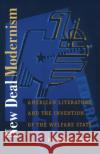
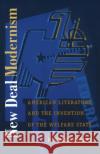
In New Deal Modernism Michael Szalay examines the effect that the rise of the welfare state had on American modernism during the 1930s and 1940s, and, conversely, what difference this revised modernism made to the New Deal's famed invention of "Big Government." Szalay situates his study within a liberal culture bent on security, a culture galvanized by its imagined need for private and public insurance. Taking up prominent exponents of social and economic security--such as Franklin Delano Roosevelt, John Maynard Keynes, and John Dewey--Szalay demonstrates how the New Deal's...
In New Deal Modernism Michael Szalay examines the effect that the rise of the welfare state had on American modernism during the 1930s and 1940...
This innovative study of the works of Robert Musil opens a new window on the history of modern identity in western culture. Stefan Jonsson argues that Musil's Austria was the first postimperial state in modern Europe. Prior to its destruction in 1918, the Austro-Hungarian Empire had ruled over a vast array of nationalities and, in the course of its demise as well as after, Austria was beset by nationalism, racism, and other forms of identity politics that ultimately led to the triumph of Nazism. It was to this society that Musil responded in his great work "The Man Without Qualities."...
This innovative study of the works of Robert Musil opens a new window on the history of modern identity in western culture. Stefan Jonsson argues that...
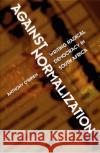
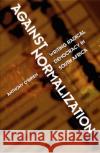
At the end of apartheid, under pressure from local and transnational capital and the hegemony of Western-style parliamentary democracy, South Africans felt called upon to normalize their conceptions of economics, politics, and culture in line with these Western models. In "Against Normalization," however, Anthony O'Brien examines recent South African literature and theoretical debate which take a different line, resisting this neocolonial outcome, and investigating the role of culture in the formation of a more radically democratic society. O'Brien brings together an unusual array of...
At the end of apartheid, under pressure from local and transnational capital and the hegemony of Western-style parliamentary democracy, South Africans...
In New Deal Modernism Michael Szalay examines the effect that the rise of the welfare state had on American modernism during the 1930s and 1940s, and, conversely, what difference this revised modernism made to the New Deal's famed invention of "Big Government." Szalay situates his study within a liberal culture bent on security, a culture galvanized by its imagined need for private and public insurance. Taking up prominent exponents of social and economic security--such as Franklin Delano Roosevelt, John Maynard Keynes, and John Dewey--Szalay demonstrates how the New Deal's...
In New Deal Modernism Michael Szalay examines the effect that the rise of the welfare state had on American modernism during the 1930s and 1940...
"Lucchesi and The Whale" is an unusual work of fiction by noted author and critic Frank Lentricchia. Its central character, Thomas Lucchesi Jr., is a college professor in the American heartland whose obsessions and compulsions include traveling to visit friends in their last moments of life--because grief alone inspires him to write--and searching for secret meaning in Herman Melville's "Moby-Dick. "Himself a writer of "stories full of violence in a poetic style," Lucchesi tells his students that he teaches "only because his] fiction is commercially untouchable" and to "never forget that."...
"Lucchesi and The Whale" is an unusual work of fiction by noted author and critic Frank Lentricchia. Its central character, Thomas Lucchesi Jr., is a ...
Theorizes the concept of the figural as a way to get beyond the long held aesthetic distinction between plastic and linguistic arts, a distinction that will not work for film and new media.
Theorizes the concept of the figural as a way to get beyond the long held aesthetic distinction between plastic and linguistic arts, a distinction tha...
In "Reading the Figural, or, Philosophy after the New Media" D. N. Rodowick applies the concept of "the figural" to a variety of philosophical and aesthetic issues. Inspired by the aesthetic philosophy of Jean-Francois Lyotard, the figural defines a semiotic regime where the distinction between linguistic and plastic representation breaks down. This opposition, which has been the philosophical foundation of aesthetics since the eighteenth century, has been explicitly challenged by the new electronic, televisual, and digital media. Rodowick--one of the foremost film theorists writing...
In "Reading the Figural, or, Philosophy after the New Media" D. N. Rodowick applies the concept of "the figural" to a variety of philosophical and aes...
Silviano Santiago has been a pioneer in the development of concepts crucial to the discourse of contemporary critical and cultural theory, especially postcolonial theory. The notions of "hybridity" and "the space in-between" have been so completely absorbed into current theory that few scholars even realize these terms began with Santiago. He was the first to introduce poststructuralist thought to Brazil--via his publication of the "Glossario de Derrida "and his role as a prominent teacher. "The Space In-Between "translates many of his seminal essays into English for the first time and, in...
Silviano Santiago has been a pioneer in the development of concepts crucial to the discourse of contemporary critical and cultural theory, especially ...