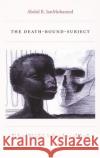
During the 1940s, in response to the charge that his writing was filled with violence, Richard Wright replied that the manner came from the matter, that the "relationship of the American Negro to the American scene was] essentially violent," and that he could deny neither the violence he had witnessed nor his own existence as a product of racial violence. Abdul R. JanMohamed provides extraordinary insight into Wright's position in this first study to explain the fundamental ideological and political functions of the threat of lynching in Wright's work and thought. JanMohamed argues that...
During the 1940s, in response to the charge that his writing was filled with violence, Richard Wright replied that the manner came from the matter, th...
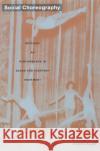
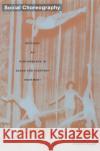
Through the concept of "social choreography" Andrew Hewitt demonstrates how choreography has served not only as metaphor for modernity but also as a structuring blueprint for thinking about and shaping modern social organization. Bringing dance history and critical theory together, he shows that ideology needs to be understood as something embodied and practiced, not just as an abstract form of consciousness. Linking dance and the aesthetics of everyday movement--such as walking, stumbling, and laughter--to historical ideals of social order, he provides a powerful exposition of Marxist...
Through the concept of "social choreography" Andrew Hewitt demonstrates how choreography has served not only as metaphor for modernity but also as a s...
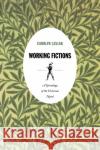
"Working Fictions" takes as its point of departure the common and painful truth that the vast majority of human beings toil for a wage and rarely for their own enjoyment or satisfaction. In this striking reconceptualization of Victorian literary history, Carolyn Lesjak interrogates the relationship between labor and pleasure, two concepts that were central to the Victorian imagination and the literary output of the era. Through the creation of a new genealogy of the "labor novel," Lesjak challenges the prevailing assumption about the portrayal of work in Victorian fiction, namely that it...
"Working Fictions" takes as its point of departure the common and painful truth that the vast majority of human beings toil for a wage and rarely for ...
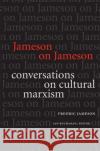
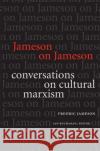
Fredric Jameson is one of the most influential literary and cultural critics writing today. He is a theoretical innovator whose ideas about the intersections of politics and culture have reshaped the critical landscape across the humanities and social sciences. Bringing together ten interviews conducted between 1982 and 2005, "Jameson on Jameson" is a compellingly candid introduction to his thought for those new to it, and a rich source of illumination and clarification for those seeking deeper understanding. Jameson discusses his intellectual and political preoccupations, most prominently...
Fredric Jameson is one of the most influential literary and cultural critics writing today. He is a theoretical innovator whose ideas about the inters...
Fredric Jameson is one of the most influential literary and cultural critics writing today. He is a theoretical innovator whose ideas about the intersections of politics and culture have reshaped the critical landscape across the humanities and social sciences. Bringing together ten interviews conducted between 1982 and 2005, "Jameson on Jameson" is a compellingly candid introduction to his thought for those new to it, and a rich source of illumination and clarification for those seeking deeper understanding. Jameson discusses his intellectual and political preoccupations, most prominently...
Fredric Jameson is one of the most influential literary and cultural critics writing today. He is a theoretical innovator whose ideas about the inters...
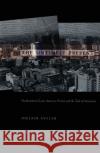
The Untimely Present examines the fiction produced in the aftermath of the recent Latin American dictatorships, particularly those in Argentina, Brazil, and Chile. Idelber Avelar argues that through their legacy of social trauma and obliteration of history, these military regimes gave rise to unique and revealing practices of mourning that pervade the literature of this region. The theory of postdictatorial writing developed here is informed by a rereading of the links between mourning and mimesis in Plato, Nietzsche s notion of the untimely, Benjamin s theory of allegory, and...
The Untimely Present examines the fiction produced in the aftermath of the recent Latin American dictatorships, particularly those in Argentina...
During the 1940s, in response to the charge that his writing was filled with violence, Richard Wright replied that the manner came from the matter, that the "relationship of the American Negro to the American scene was] essentially violent," and that he could deny neither the violence he had witnessed nor his own existence as a product of racial violence. Abdul R. JanMohamed provides extraordinary insight into Wright's position in this first study to explain the fundamental ideological and political functions of the threat of lynching in Wright's work and thought. JanMohamed argues that...
During the 1940s, in response to the charge that his writing was filled with violence, Richard Wright replied that the manner came from the matter, th...
Through the concept of "social choreography" Andrew Hewitt demonstrates how choreography has served not only as metaphor for modernity but also as a structuring blueprint for thinking about and shaping modern social organization. Bringing dance history and critical theory together, he shows that ideology needs to be understood as something embodied and practiced, not just as an abstract form of consciousness. Linking dance and the aesthetics of everyday movement--such as walking, stumbling, and laughter--to historical ideals of social order, he provides a powerful exposition of Marxist...
Through the concept of "social choreography" Andrew Hewitt demonstrates how choreography has served not only as metaphor for modernity but also as a s...
Through virtuoso readings of significant works of American film, television, and fiction, Phillip E. Wegner demonstrates that the period between the fall of the Berlin Wall in November 1989 and the terrorist attacks of September 11, 2001 fostered a unique consciousness and represented a moment of immense historical possibilities now at risk of being forgotten in the midst of the "war on terror." Wegner argues that 9/11 should be understood as a form of what Jacques Lacan called the "second death," an event that repeats an earlier "fall," in this instance the collapse of the Berlin Wall. By...
Through virtuoso readings of significant works of American film, television, and fiction, Phillip E. Wegner demonstrates that the period between the f...