Artworks potentially convey two kinds of knowledge. They obviously afford knowledge of art itself, and they also afford general empirical knowledge, especially knowledge of human psychology and value.
"Knowing Art" collects ten original essays written by leading philosophers who distill and build upon recent work at the intersection of aesthetics and epistemology. Specific topics addressed include the objectivity of critical knowledge, the quality of critical testimony, the roles of principles and perception in critical reasoning, phenomenal knowledge of what a work of art is like,...
Artworks potentially convey two kinds of knowledge. They obviously afford knowledge of art itself, and they also afford general empirical knowledge...
In the following chapters, I offer an evolutionary account of morality and from that extrapolate a version of contractarianism I call consent theory. Game theory helps to highlight the evolution of morality as a resolution of interpersonal conflicts under strategic negotiation. It is this emphasis on strategic negotiation that underwrites the idea of consent. Consent theory differs from other contractarian models by abandoning reliance on rational self-interest in favour of evolutionary adaptation. From this, more emphasis will be placed on consent as natural convergence rather than consent...
In the following chapters, I offer an evolutionary account of morality and from that extrapolate a version of contractarianism I call consent theory. ...
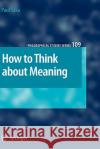
According to the dominant theory of meaning, truth-conditional semantics, to explain the meaning of a statement is to specify the conditions necessary and sufficient for its truth. Classical truth-conditional semantics is coming under increasing attack, however, from contextualists and inferentialists, who agree that meaning is located in the mind.
How to Think about Meaning develops an even more radical mentalist semantics, which it does by shifting the object of semantic inquiry. Whereas for classical semantics the object of analysis is an abstract sentence or utterance...
According to the dominant theory of meaning, truth-conditional semantics, to explain the meaning of a statement is to specify the conditions necess...
In this book I present what seem to me (at the moment) to be right an swers to some of the main philosophical questions about the topics men tioned in the title, and I argue for them where I can. I hope that what I say may be of interest both to those who have already studied these ques tions a lot and to those who haven't. There are several important topics in epistemology to which I give little or no attention here - such as the nature of a proposition, the major classifications of propositions (neces sary and contingent, a priori and a posteriori, analytic and synthetic, general and...
In this book I present what seem to me (at the moment) to be right an swers to some of the main philosophical questions about the topics men tioned in...
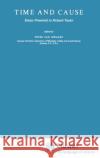
Richard Taylor was born in Charlotte, Michigan on 5 November 1919. He received his A. B. from the University of illinois in 1941, his M. A. from Oberlin College in 1947, and his Ph. D. from Brown University in 1951. He has been William H. P. Faunce Professor of Philosophy at Brown University, Professor of Philosophy (Graduate Faculties) at Columbia University, and Professor of Philosophy at the University of Rochester. He is the author of about fifty articles and of five philosophical books. This volume consists of essays presented to Richard Taylor on the occa- sion of his sixtieth birthday....
Richard Taylor was born in Charlotte, Michigan on 5 November 1919. He received his A. B. from the University of illinois in 1941, his M. A. from Oberl...
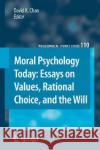
Moral Psychology Today David K. Chan Philosophers working in the ?eld of moral psychology concern themselves with issuesandquestionsthat straddleacrossmorethanonesub-disciplinein philosophy. The answers that they propose and the theories that they propound have impli- tions for moral philosophy, the philosophyof mind, epistemology and metaphysics. Philosophers with an interest in the will or the motivational psychology of human action dividebetween those investigatingpsychologicalandbehavioralconceptsfor their own sake, and those working on action theory for the sake of answering larger...
Moral Psychology Today David K. Chan Philosophers working in the ?eld of moral psychology concern themselves with issuesandquestionsthat straddleacros...
Artworks potentially convey two kinds of knowledge. They obviously afford knowledge of art itself, and they also afford general empirical knowledge, especially knowledge of human psychology and value.
"Knowing Art" collects ten original essays written by leading philosophers who distill and build upon recent work at the intersection of aesthetics and epistemology. Specific topics addressed include the objectivity of critical knowledge, the quality of critical testimony, the roles of principles and perception in critical reasoning, phenomenal knowledge of what a work of art is like,...
Artworks potentially convey two kinds of knowledge. They obviously afford knowledge of art itself, and they also afford general empirical knowledge...
This book derives from a 1993 National Endowment for the Humanities Summer Institute on Knowledge, Teaching, and Wisdom. The Institute took place at the University of California, Berkeley, and was co-directed by Keith Lehrer and Nicholas D. Smith. The aims of the Institute were several: we sought to reintroduce wisdom as a topic of discussion among contemporary philosophers, to undertake an historical investigation of how and when and why it was that wisdom faded from philosophical view, and to ask how contemporary epistemological theories might apply to the obviously related subjects of...
This book derives from a 1993 National Endowment for the Humanities Summer Institute on Knowledge, Teaching, and Wisdom. The Institute took place at t...
This book investigates central issues in the philosophy of memory. Does remembering require a causal process connecting the past representation to its subsequent recall and, if so, what is the nature of the causal process? Of what kind are the primary intentional objects of memory states? How do we know that our memory experiences portray things the way they happened in the past? Given that our memory is not only a passive device for reproducing thoughts but also an active device for processing stored thoughts, when are thoughts sufficiently similar to be memory-related?
The...
This book investigates central issues in the philosophy of memory. Does remembering require a causal process connecting the past representation to ...
One goal of epistemology is to refute the skeptic. Another, with an equally dist- guished if briefer pedigree, is to make sense of science as a knowledge-acquiring enterprise. The goals are incompatible, in that the latter presupposes that the skeptic is wrong. The incompatibility is not strict. One could have both goals, conditi- ing the latter upon success at the former. In fact, however, epistemologies aimed at the skeptic tend not to get anywhere near science. They've got all they can handle guring out how we can know we have hands. I come to epistemology from the philosophy of science,...
One goal of epistemology is to refute the skeptic. Another, with an equally dist- guished if briefer pedigree, is to make sense of science as a knowle...