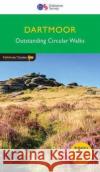
Much of central Dartmoor is an uninhabited wilderness almost free of villages, farms, trees and roads making it outstanding environmental value. From this mass rise Dartmoor's rivers, including the Lyd, Tavy, East and West Dart, Bovey, Teign, Taw and Okement, nearly all of which flow southwards to the English Channel. The large numbers of tors that dominate Dartmoor are the remnants of hard masses of granite, drastically reduced in size and moulded into their present shapes by millions of years of weatherings. Bowerman's Nose, Hound Tor and Haytor Rocks are famous examples included on these...
Much of central Dartmoor is an uninhabited wilderness almost free of villages, farms, trees and roads making it outstanding environmental value. From ...
Walkers coming to Cheshire and expecting an entirely flat county are in for a surprise. There are easy, undemanding walks that take you across characteristic, pastoral Cheshire landscapes, invariably passing through some of the attractive villages and by some of the county's outstanding churches and country houses. But you can also experience rough and challenging moorland hikes on the edge of the Peak District, plenty of attractive woodland walks along the sandstone ridge, or across parklands, or through the remnants of the medieval forests, a superb choice of peaceful canal walks and, on...
Walkers coming to Cheshire and expecting an entirely flat county are in for a surprise. There are easy, undemanding walks that take you across charact...
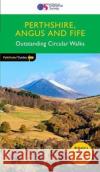
Approaching the eastern part of central Scotland, where the Grampians dominate the horizon, it appears at first glance to be mountain country. In fact much of the area is low-lying, with flat woodland and agricultural land bordered by gentle, rounded hills and an attractive North Sea coastline. Perthshire has enough lochs to vie with Cumbria's Lake District. Dunsinane Hill and the site of Macbeth's castle can be seen on the Sidlaw Hills in Strathmore, Angus, and there are also coastal walks around the Fife peninsula, with its waterfront villages, sheltered harbours and sandy beaches.
Approaching the eastern part of central Scotland, where the Grampians dominate the horizon, it appears at first glance to be mountain country. In fact...
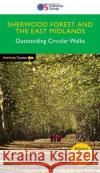
28 mapped walks ranging in length from 3.5 miles to 10 miles across the region comprising Nottinghamshire, Leicestershire, Rutland and Northamptonshire. Accompanying the route text of each walk is an OS Explorer map extract highlighting the route, GPS references of the main route waypoints, an introduction to the area covered on the walk and a key facts panel providing useful walk details.
28 mapped walks ranging in length from 3.5 miles to 10 miles across the region comprising Nottinghamshire, Leicestershire, Rutland and Northamptonshir...