Taken as a whole the essays in this volume illustrate the outstanding contribution made to French Revolutionary scholarship by British and American authors. Professor Johnson has selected essays which cover a wide spectrum of time, place and social class but are vitally concerned to describe and explain the social reality of revolution in its various phases. The essays fall into three main groups; the first sets the scene with studies of the social, economic and intellectual life of pre-Revolutionary France; the second studies the role of fate of certain social groups during the Revolution;...
Taken as a whole the essays in this volume illustrate the outstanding contribution made to French Revolutionary scholarship by British and American au...
Byzantine literature is often regarded as little more than an agglomeration of stereotyped forms and generic conventions which allows no scope for individual thought or expression. Accordingly, histories of Byzantine literature tend to focus on the history of genres. The essays in this book challenge the traditional view. They attempt to show the coherence and individuality not of the genre but of author. By careful analysis of all the works of a given author, regardless of genre, these studies aim to reach behind the facade of convention, to discover not only biographical facts but also the...
Byzantine literature is often regarded as little more than an agglomeration of stereotyped forms and generic conventions which allows no scope for ind...
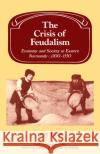
This is a collection of recent revisionist essays by Spanish historians on the economic and social history of seventeenth-century Castile. The major areas of current historiographical interest and debate are covered: demography, agriculture, pastoralism, the Indies trade, industrial decline, de-urbanization, taxation and the fiscal system, re-segneurialization, and the politics of redistribution. Developments in Castile are also related to the issue of the general crisis of the European economy in the seventeenth century.
This is a collection of recent revisionist essays by Spanish historians on the economic and social history of seventeenth-century Castile. The major a...
The history of crime is an exciting field, forming one aspect of a much wider increase in interest in social history as a whole. This book, based on a detailed study of court records in Essex between 1620 and 1680 combines a detailed study of fluctuations in crime and punishment in a seventeenth-century English county with an analysis of the social processes which lay behind prosecution. In so doing, it marks a major contribution to the field. Dr Sharpe's objective is to break away from older treatments of crime in the period, which have depended too much on an uncritical use of literary...
The history of crime is an exciting field, forming one aspect of a much wider increase in interest in social history as a whole. This book, based on a...
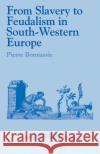
This book is first and foremost an extended examination and discussion of the enslavement of men and women by others of their society and in particular of the means and causes of the gradual end of slavery in early medieval Europe between 500 and 1200. Drawing upon a very wide range of primary and archival sources, Professor Bonnassie places fresh findings about subjection, servitude and lordship in relation to the prevailing understanding of social history which has developed since the work of Marc Bloch. The author explains how slavery long persisted in southern France and Spain, as part of...
This book is first and foremost an extended examination and discussion of the enslavement of men and women by others of their society and in particula...
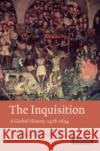
The Inquisition was the most powerful disciplinary institution in the early modern world, responsible for 300,000 trials and over 1.5 million denunciations. How did it root itself in different social and ethnic environments? Why did it last for three centuries? What cultural, social and political changes led to its abolition? In this first global comparative study, Francisco Bethencourt examines the Inquisition's activities in Spain, Italy, Portugal and overseas Iberian colonies. He demonstrates that the Inquisition played a crucial role in the Catholic Reformation, imposing its own members...
The Inquisition was the most powerful disciplinary institution in the early modern world, responsible for 300,000 trials and over 1.5 million denuncia...
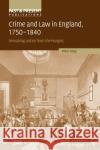
How was law made in England in the eighteenth and early nineteenth centuries? Through detailed studies of what the courts actually did, Peter King argues that parliament and the Westminster courts played a less important role in the process of law making than is usually assumed. Justice was often remade from the margins by magistrates, judges and others at the local level. His book also focuses on four specific themes - gender, youth, violent crime and the attack on customary rights. In doing so it highlights a variety of important changes - the relatively lenient treatment meted out to women...
How was law made in England in the eighteenth and early nineteenth centuries? Through detailed studies of what the courts actually did, Peter King arg...