The privatization of water supply is an emotive and controversial topic. The 'British model' of water privatization is unique: no other country has entirely privatized its water supply and sewerage systems. This book analyzes the socio-economic and environmental dimensions in privatization in England and Wales. It examines the implications of privatization for consumers, environmental management, and the water supply industry.
The privatization of water supply is an emotive and controversial topic. The 'British model' of water privatization is unique: no other country has en...
In this sequel to Kingston, Jamaica: Urban Development and Social Change, 1692 to 1962 (1975) Colin Clarke investigates the role of class, colour, race, and culture in the changing social stratification and spatial patterning of Kingston, Jamaica since independence in 1962. He also assesses the strains - created by the doubling of the population - on labour and housing markets, which are themselves important ingredients in urban social stratification. Special attention is also given to colour, class, and race segregation, to the formation of the Kingston ghetto, to the role of politics in the...
In this sequel to Kingston, Jamaica: Urban Development and Social Change, 1692 to 1962 (1975) Colin Clarke investigates the role of class, colour, rac...
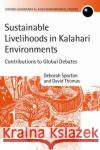
This collection provides a comprehensive overview of the dynamics of contemporary natural resource based livelihoods and implications for their sustainability in the context of the Kalahari environment of southern Africa, a region subject to marked spatial and temporal natural variability. Each chapter is written by an active Kalahari researcher and addresses, from an environmental or a social perspective, the implications of different policies for rural livelihoods and coping strategies.
This collection provides a comprehensive overview of the dynamics of contemporary natural resource based livelihoods and implications for their sustai...
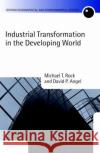
'Grow first, clean up later' environmental strategies in the developing economies of East Asia pose a critical regional and global sustainability challenge in this area of continuing rapid urban-based industrial growth which is the most polluted region in the world. Using detailed case studies and rigorous empirical analyses Rock and Angel show that East Asian governments have found institutionally unique ways to overcome the sustainability challenge, thus proving an important antidote to those who argue that poor countries cannot afford to clean up their environment whilst their economies...
'Grow first, clean up later' environmental strategies in the developing economies of East Asia pose a critical regional and global sustainability chal...