"I had an obsession with the Amish. Plan and simple. Objectively it made no sense. I, who worked hard at being special, fell in love with a people who valued being ordinary."
So begins Sue Bender's story, the captivating and inspiring true story of a harried urban Californian moved by the beauty of a display of quilts to seek out and live with the Amish. Discovering lives shaped by unfamiliar yet comforting ideas about time, work, and community, Bender is gently coaxed to consider, "Is there another way to lead a good life?"
Her journey begins in a New York men's clothing...
"I had an obsession with the Amish. Plan and simple. Objectively it made no sense. I, who worked hard at being special, fell in love with a peopl...
Invisible Giants is the Horatio Alger-esque tale of a pair of reclusive Cleveland brothers, Oris Paxton and Mantis James Van Sweringen, who rose from poverty to become two of the most powerful men in America. They controlled the country's largest railroad system--a network of track reaching from the Atlantic to Salt Lake City and from Ontario to the Gulf of Mexico. On the eve of the Great Depression they were close to controlling the country's first coast-to-coast rail system--a goal that still eludes us. They created the model upper-class suburb of Shaker Heights, Ohio, with its unique...
Invisible Giants is the Horatio Alger-esque tale of a pair of reclusive Cleveland brothers, Oris Paxton and Mantis James Van Sweringen, who rose fr...
This book s a profusely illustrated interpretation of life along Ohio's nineteenth-century canal system: the Miami & Erie Canal in the western part of the state, and the Ohio & Erie Canal with its multiple feeders in central and eastern Ohio.
An introduction by George W. Knepper, professor of history at The University of Akron and president of The Ohio Historical Society, places the state's canal system in national historic perspective and addresses such issues as the importance of the Ohio canal system in the state's economy and industrial development; the interrelationship between...
This book s a profusely illustrated interpretation of life along Ohio's nineteenth-century canal system: the Miami & Erie Canal in the western part...
In cooperation with Western Reserve Historical Society
Euclid Avenue, which runs through the heart of downtown Cleveland, was for 60 years one of the finest residential streets of any city in 19th century America. Showplace of America is the fascinating account of the rise and fall of this elegant promenade, including portrayals of the eminent architects who created its opulent residences and colorful details about the lives of the wealthy people who occupied them.
The families who resided within this linear, four-mile neighborhood epitomized...
In cooperation with Western Reserve Historical Society
Euclid Avenue, which runs through the heart of downtown Cleveland, was for 6...
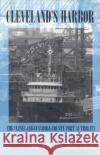
On July 22, 1796, General Moses Cleaveland established the mouth of the Cuyahoga River as the port of entry for the Ohio frontier. He could not have foretold the developments that would turn this hostile marsh into Thriving economic and community center. With its 200th anniversary, the port, now governed by the Cleveland-Cuyahoga County Port Authority, is home to the Rock & Roll Hall of Fame, the future Great Waters of the World Aquarium, and the Great Lakes Science Museum, as well as a Foreign Free-Trade Zone.
Cleveland's Harbor chronicles the challenges,...
On July 22, 1796, General Moses Cleaveland established the mouth of the Cuyahoga River as the port of entry for the Ohio frontier. He could not hav...
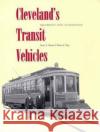
From the beginnings of the horse car era to the "sardine days" or World War II, Cleveland transit operators provided high quality service while introducing procedures and equipment that were widely copies elsewhere.
The social and political aspects of Cleveland's public transportation history are the subject of this companion volume to Horse Trails to Regional Rails. The focus here is on the technological aspects of the system.
From the start of street railway operations in 1859 until the end of the surface electric era in 1963, the city was crisscrossed with...
From the beginnings of the horse car era to the "sardine days" or World War II, Cleveland transit operators provided high quality service while int...
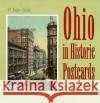
For a century Americans have been purchasing picture postcards. Ohio in Historic Postcards presents 208 examples of postcards from early twentieth-century Ohio and places them in their historical context. At the World's Columbian Exposition in Chicago in 1893, the first picture postcards portrayed a range of the fair's attractions. From that beginning postcards took the nation by storm. The efficiency of the Railway Mail Service together with the sparsity of telephones made the cards a cheap, reliable, and convenient form of communication.
The Golden Age of the picture...
For a century Americans have been purchasing picture postcards. Ohio in Historic Postcards presents 208 examples of postcards from early t...
"Bellamy writes with razor-edged wit and his own particular brand of charm." -- Medina County Gazette
The third book in this popular series delivers 25 more incredible but true stories of Cleveland crime and disaster, including:
- Crotchety old vigilante Jarvis Meach, who shot down robbers in cold blood with his beloved shotguns, "Old Bunty" and "Little Pet."
- Medina's Wickedest Stepmother, Mary Garrett, who locked her stepdaughters in their bedroom, set fire to the house, and did all she could to get the furniture out unharmed.
- The horrible Ashtabula Bridge Disaster, which...
"Bellamy writes with razor-edged wit and his own particular brand of charm." -- Medina County Gazette
"Fascinating and yes entertaining . . . often in a bizarre way that leaves the reader feeling guilty for being so entertained." -- Medina County Gazette
The fourth volume in John Stark Bellamy's classic Cleveland crime and disaster series features 26 more gruesome, horrible, tragic, and despicable--but true--tales, including:
- Love-crazed Clark Hill, who warmed up his teenage girlfriend with an overdose of Spanish Fly in her milk shake;
- The chilling Cuyahoga River scow disaster, in which 16 clinging, drowning men fought so desperately to stay afloat that they dragged each other...
"Fascinating and yes entertaining . . . often in a bizarre way that leaves the reader feeling guilty for being so entertained." -- Medina County Ga...
"You're not going to believe this, but . . ." is the beginning of most tales by Tom Hollatz. Ghost stories seem to grow from the pine-needle coated floor of the Northwoods. From haunted mansions on the shores of northern lakes to tales of the Wisconsin werewolf or a Minnesota town plagued by ghostly events, this book is full of tales sure to set any spine a tingle
"You're not going to believe this, but . . ." is the beginning of most tales by Tom Hollatz. Ghost stories seem to grow from the pine-needle coated fl...