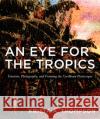
Images of Jamaica and the Bahamas as tropical paradises full of palm trees, white sandy beaches, and inviting warm water seem timeless. Surprisingly, the origins of those images can be traced back to the roots of the islands tourism industry in the 1880s. As Krista A. Thompson explains, in the late nineteenth century, tourism promoters, backed by British colonial administrators, began to market Jamaica and the Bahamas as picturesque tropical paradises. They hired photographers and artists to create carefully crafted representations, which then circulated internationally via postcards and...
Images of Jamaica and the Bahamas as tropical paradises full of palm trees, white sandy beaches, and inviting warm water seem timeless. Surprisingly, ...
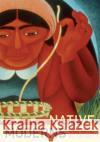
Between 1940 and 1960, many Native American artists made bold departures from what was considered the traditional style of Indian painting. They drew on European and other non-Native American aesthetic innovations to create hybrid works that complicated notions of identity, authenticity, and tradition. This richly illustrated volume focuses on the work of these pioneering Native artists, including Pueblo painters Jose Lente and Jimmy Byrnes, Ojibwe painters Patrick DesJarlait and George Morrison, Cheyenne painter Dick West, and Dakota painter Oscar Howe. Bill Anthes argues for recognizing the...
Between 1940 and 1960, many Native American artists made bold departures from what was considered the traditional style of Indian painting. They drew ...
Between 1940 and 1960, many Native American artists made bold departures from what was considered the traditional style of Indian painting. They drew on European and other non-Native American aesthetic innovations to create hybrid works that complicated notions of identity, authenticity, and tradition. This richly illustrated volume focuses on the work of these pioneering Native artists, including Pueblo painters Jose Lente and Jimmy Byrnes, Ojibwe painters Patrick DesJarlait and George Morrison, Cheyenne painter Dick West, and Dakota painter Oscar Howe. Bill Anthes argues for recognizing the...
Between 1940 and 1960, many Native American artists made bold departures from what was considered the traditional style of Indian painting. They drew ...
Comparative study of 19th-century representations of Ottoman harems that considers both the tradition of British paintings and writings about harems as well as the perspectives of Ottoman women who commissioned their own harem portraits.
Comparative study of 19th-century representations of Ottoman harems that considers both the tradition of British paintings and writings about harems a...
Until now, the notion of a cross-cultural dialogue has not figured in the analysis of harem paintings, largely because the Western fantasy of the harem has been seen as the archetype for Western appropriation of the Orient. In "Intimate Outsiders," the art historian Mary Roberts brings to light a body of harem imagery that was created through a dynamic process of cultural exchange. Roberts focuses on images produced by nineteenth-century European artists and writers who were granted access to harems in the urban centers of Istanbul and Cairo. As invited guests, these Europeans were "intimate...
Until now, the notion of a cross-cultural dialogue has not figured in the analysis of harem paintings, largely because the Western fantasy of the hare...
A study of how artists of diverse Asian heritages and generational backgrounds use their artwork to articulate complex notions of identity and identification as Asians living in the United States.
A study of how artists of diverse Asian heritages and generational backgrounds use their artwork to articulate complex notions of identity and identif...
A study of how artists of diverse Asian heritages and generational backgrounds use their artwork to articulate complex notions of identity and identification as Asians living in the United States.
A study of how artists of diverse Asian heritages and generational backgrounds use their artwork to articulate complex notions of identity and identif...
A historical ethnography of photographs as a colonial tool and as reappropriated by the indigenous population from the 1860s through the 1920s and in the present.
A historical ethnography of photographs as a colonial tool and as reappropriated by the indigenous population from the 1860s through the 1920s and in ...
Images of Jamaica and the Bahamas as tropical paradises full of palm trees, white sandy beaches, and inviting warm water seem timeless. Surprisingly, the origins of those images can be traced back to the roots of the islands tourism industry in the 1880s. As Krista A. Thompson explains, in the late nineteenth century, tourism promoters, backed by British colonial administrators, began to market Jamaica and the Bahamas as picturesque tropical paradises. They hired photographers and artists to create carefully crafted representations, which then circulated internationally via postcards and...
Images of Jamaica and the Bahamas as tropical paradises full of palm trees, white sandy beaches, and inviting warm water seem timeless. Surprisingly, ...
Following India s independence in 1947, Indian artists creating modern works of art sought to maintain a local idiom, an Indianness representative of their newly independent nation, while connecting to modernism, an aesthetic then understood as both universal and presumptively Western. These artists depicted India s precolonial past while embracing aspects of modernism s pursuit of the new, and they challenged the West s dismissal of non-Western places and cultures as sources of primitivist imagery but not of modernist artworks. In Art for a Modern India, Rebecca M. Brown explores the...
Following India s independence in 1947, Indian artists creating modern works of art sought to maintain a local idiom, an Indianness representative of ...