Ralph H. Nutter was the lead navigator for Eighth Air Force raids over Germany when he was assigned as Maj. Gen. Curtis "the Eagle" LeMay's group navigator. Later, as the strategic air war over Europe was winding down, the ace navigator was transferred to B-29 Superfortress duty with the Twentieth Air Force in the Pacific, where he was picked by Brigadier Gen. Haywood "Possum" Hansell to be his bomber navigator. After LeMay succeeded Hansell as bomber commander, Nutter returned to navigation duty with LeMay. Hansell and LeMay were two of our country's leading combat commanders in Europe...
Ralph H. Nutter was the lead navigator for Eighth Air Force raids over Germany when he was assigned as Maj. Gen. Curtis "the Eagle" LeMay's group navi...
James "Jim" Davis lived what he considered "an impossible dream" as he piloted a B-24, as part of the 8th Air Force, on nearly thirty missions in the European Theatre during World War II. In this memoir, Davis offers heart-wrenching detail concerning the difficulties of qualifying for the U.S. Army Air Forces pilot program, the strenuous nature of the pilot training program, the anxiety caused by a wartime marriage, and the dangers of flying combat missions over Nazi Germany. Few, if any, other memoirs provide the genuineness and honesty of his story. From his struggles to become a pilot, to...
James "Jim" Davis lived what he considered "an impossible dream" as he piloted a B-24, as part of the 8th Air Force, on nearly thirty missions in the ...
Featured in The Vietnam War PBS series by Ken Burns & Lynn Novick
In 1968 James T. Gillam was a poorly focused college student at Ohio University who was dismissed and then drafted into the Army. Unlike most African-Americans who entered the Army then, he became a Sergeant and an instructor at the Fort McClellan Alabama School of Infantry. In September 1968 he joined the First Battalion, 22nd Regiment of the 4th Infantry Division in Vietnam. Within a month he transformed from an uncertain sergeant--who tried to avoid combat--to an aggressive soldier, killing his first enemy and...
Featured in The Vietnam War PBS series by Ken Burns & Lynn Novick
In 1968 James T. Gillam was a poorly focused college student at Ohio Univers...
In early February of 1968, at the beginning of the Tet Offensive, Private First Class Gregory V. Short arrived in Vietnam as an eighteen-year-old U.S. Marine. Amid all of the confusion and destruction, he began his tour of duty as an 81mm mortarman with the 2nd Battalion, 1st Marine Regiment, which was stationed at Con Thien near the DMZ. While living in horrendous conditions reminiscent of the trenches in World War I, his unit was cut off and constantly being bombarded by the North Vietnamese heavy artillery, rockets, and mortars. Direct, honest, and brutal in his observations, Short holds...
In early February of 1968, at the beginning of the Tet Offensive, Private First Class Gregory V. Short arrived in Vietnam as an eighteen-year-old U.S...
She flew the swift P-51 and the capricious P-38, but the heavy, four-engine B-17 bomber and C-54 transport were her forte. This is the story of Nancy Harkness Love who, early in World War II, recruited and led the first group of twenty-eight women to fly military aircraft for the U.S. Army. Love was hooked on flight at an early age. At sixteen, after just four hours of instruction, she flew solo a rather broken down Fleet biplane that my barnstorming instructor imported from parts unknown. The year was 1930: record-setting aviator Jacqueline Cochran (and Love s future rival) had not yet...
She flew the swift P-51 and the capricious P-38, but the heavy, four-engine B-17 bomber and C-54 transport were her forte. This is the story of Nancy ...
Henry Martyn Lazelle (1832-1917) was the only cadet in the history of the US Military Academy to be suspended and sent back a year (for poor grades and bad behavior) and eventually return as Commandant of the Corps of Cadets. After graduating from West Point in 1855, he scouted with Kit Carson, was wounded by Apaches, and spent nearly a year as a "paroled" prisoner-of-war at the outbreak of the Civil War. Exchanged for a Confederate officer, he took command of a Union cavalry regiment, chasing Mosby's Rangers throughout northern Virginia. Lazelle's service was punctuated at times with...
Henry Martyn Lazelle (1832-1917) was the only cadet in the history of the US Military Academy to be suspended and sent back a year (for poor grades an...
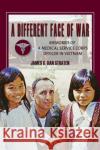
Selected by Major General Pat Sargent, Chief of the U.S. Army Medical Service Corps, for the Corps Chief s Reading List, May 2016. A Different Face of War is a riveting account of one American officer in the Medical Service Corps during the early years of the Vietnam War. Assigned as the senior medical advisor to the Army of the Republic of Vietnam in I Corps, an area close to the DMZ, James G. Van Straten traveled extensively and interacted with military officers and non-commissioned officers, peasant-class farmers, Buddhist bonzes, shopkeepers, scribes,...
Selected by Major General Pat Sargent, Chief of the U.S. Army Medical Service Corps, for the Corps Chief s Reading List, May 2016. A Di...
In 1940, native West Texan Roy H. Elrod joined the Marine Corps. A few years later his unit, the 8th Marine Regiment, went into the fight at Guadalcanal, where he commanded a platoon of 37 mm gunners. They endured Japanese attacks, malarial tropical weather, and starvation rations. His combat leadership earned him a Silver Star and a battlefield promotion. On D-Day at Tarawa his platoon waded their 37 mm cannons ashore, each weighing nearly 1,000 pounds, through half a mile of bullet-laced surf to get to an island where the killing never stopped. His was the only platoon to get its guns...
In 1940, native West Texan Roy H. Elrod joined the Marine Corps. A few years later his unit, the 8th Marine Regiment, went into the fight at Guadalcan...
In 1946, World War I veteran Gerald Howell finished a memoir of the experiences of his squad from the 39th Infantry Regiment, 4th Division, but never published it. Jeffrey Patrick discovered the memoir and edited it for publication, providing an introduction and annotations. Yesterday There Was Glory is an unpretentious account of men at war, from training camp to the occupation of Germany. It includes graphic descriptions of the battlefield, of shell fire, gas attacks, and lice. "Between the attacks the men would lay in their wet holes and pray for relief. But no relief came,"...
In 1946, World War I veteran Gerald Howell finished a memoir of the experiences of his squad from the 39th Infantry Regiment, 4th Division, but never ...
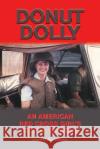
Puts you in the Vietnam War face down in the dirt under a sniper attack, inside a helicopter being struck by lightning, at dinner next to a commanding general, and slogging through the mud along a line of foxholes. You see the war through the eyes of one of the first women officially allowed in the combat zone.
Puts you in the Vietnam War face down in the dirt under a sniper attack, inside a helicopter being struck by lightning, at dinner next to a commanding...