In Reclaiming Difference, Carine Mardorossian examines the novels of four women writers--Jean Rhys (Dominica/UK), Maryse Conde (Guadeloupe/USA), Edwidge Danticat (Haiti/USA), and Julia Alvarez (Dominican Republic/USA)--showing how their writing has radically reformulated the meanings of the national, geographical, sexual, and racial concepts through which postcolonial studies has long been configuring difference. Coming from the anglophone, francophone, and hispanophone Caribbean, these writers all stage and identify with transcultural experiences that undermine the usual...
In Reclaiming Difference, Carine Mardorossian examines the novels of four women writers--Jean Rhys (Dominica/UK), Maryse Conde (Guadeloupe/U...
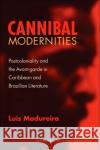
Unique in its inclusion of Brazil in a comparative study of literary texts and their engagement with Western modernity, Cannibal Modernities is the first postcolonial study to show how the -peripheral- replications of modernity in contemporary Caribbean and Latin American texts differ crucially from their European models.
Luis Madureira addresses issues that so many postcolonial theorists have struggled with, particularly the complx interactions and antagonisms between indigenous cultures and the imperial cultures imposed upon them and the effort to -provincialize the West.-...
Unique in its inclusion of Brazil in a comparative study of literary texts and their engagement with Western modernity, Cannibal Modernities...
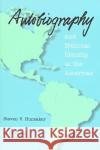
AUTOBIOGRAPHY AND NATIONAL IDENTITY in the Americas puts texts from English and French Canada, Guatemala, Nicaragua, Brazil, Bolivia, and the United States into a hemispheric dialogue on national and ethnic identity. Drawing on such materials as journals, personal essays, autobiography, and the testimonio, this ambitious book is as comprehensive in its treatment of autobiographical writing as in its geographical coverage.
Departing from Benedict Anderson's hopeful premise that the -imagined community- is fundamentally inclusive, Steven V. Hunsaker maintains that national identity is...
AUTOBIOGRAPHY AND NATIONAL IDENTITY in the Americas puts texts from English and French Canada, Guatemala, Nicaragua, Brazil, Bolivia, and the Unite...
Originally published in 1887 and never before reprinted, Juanita is a historical romance based on Mary Peabody Mann's experience of living on a Cuban slaveholder's plantation from 1833 to 1835. The novel centers on the extended visit of helen Wentworth, a New England teacher, to a childhood friend's plantation, where she witnesses African slaves' arrivals and their sale and gross mistreatment at the hands of coffee and sugar planters. Juanita is a beautiful mulatta slave with whom the plantation owner's son falls in love. Extending the tradition of Gothic fiction in the Americas, Mann's...
Originally published in 1887 and never before reprinted, Juanita is a historical romance based on Mary Peabody Mann's experience of living on a Cub...
James Clifford tells us that modernism has become a -traveling culture- because it reflects the -discrepant cosmopolitanism- of the twentieth century - that is, a world in which people are paradoxically migratory yet rooted, international yet local. Perhaps modernism has traveled so well because it has been transformed by its journey; this is the suggestion Charles Pollard makes in New World Modernisms, a fascinating first step in mapping the migration of modernism.
Pollard looks to recent Caribbean poetry as a means of reassessing modernism's cosmopolitanism; in particular, his book...
James Clifford tells us that modernism has become a -traveling culture- because it reflects the -discrepant cosmopolitanism- of the twentieth centu...
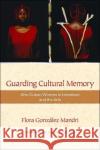
In Guarding Cultural Memory, Flora Gonzalez Mandri examines the vibrant and uniquely illuminating post-Revolutionary creative endeavors of Afro-Cuban women. Taking on the question of how African diaspora cultures practice remembrance, she reveals the ways in which these artists restage the confrontations between modernity and tradition.
Gonzalez Mandri considers the work of the poet and cultural critic Nancy Morejon, the poet Excilia Saldana, the filmmaker Gloria Rolando, and the artists Maria Magdalena Campos-Pons and Belkis Ayon. In their cultural representations these women...
In Guarding Cultural Memory, Flora Gonzalez Mandri examines the vibrant and uniquely illuminating post-Revolutionary creative endeavors of ...
Maryse Conde is a Guadeloupean writer and critic whose work has challenged the categories of race, language, gender, and geography that inform contemporary literary and critical debates. In Signs of Dissent, the first full-length study in English on Conde, Dawn Fulton situates this award-winning author's work in the context of current theories of cultural identity in order to foreground Conde's unique contributions to these discussions. Staging a dialogue between Conde's novels and the field of postcolonial studies, Fulton argues that Conde enacts a strategy of -critical...
Maryse Conde is a Guadeloupean writer and critic whose work has challenged the categories of race, language, gender, and geography that inform cont...
Since its demise in the nineteenth century, slavery has given rise to an outpouring of literatures that reflect the diversity of its hemispheric legacy, but the discipline of literary studies has been reluctant to admit commonalities among former slave societies in the New World. Examining major novels from the 1880s to the 1970s, George B. Handley shows how fiction from different nations shares what he calls textual simultaneity in revealing parallel narrative anxieties about genealogy, narrative authority, and racial difference.
In comparing these novels, Handley demonstrates the...
Since its demise in the nineteenth century, slavery has given rise to an outpouring of literatures that reflect the diversity of its hemispheric le...
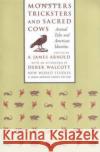
The 1992 Quincentennial of the encounter between the New World and the Old resulted in a veritable culture war- an extreme polarization of hardened ideological positions on different ideas of America. Monsters, Tricksters, and Sacred Cows brings a fresh perspective to the confusing question of American identity. It clears the minefields laid by the generals commanding the opposing camps, while demonstrating that both sides have been primarily interested in protecting and defending an idea of -Americanness- that cannot resist scrutiny. Some of the leading international scholars in...
The 1992 Quincentennial of the encounter between the New World and the Old resulted in a veritable culture war- an extreme polarization of hardened...
Arising in the heyday of the music recently made famous by the Buena Vista Social Club, afrocubanismo was an artistic and intellectual movement in Cuba in the 1920s and 1930s that tried to convey a national and racial identity. Through poetry, this movement was the first serious attempt on the part of mostly white Cuban intellectuals to produce a national literature that incorporated elements from the Afro-Cuban traditions of lower-class urban blacks. One of its main objectives was to project an image of Cuban identity as a harmonious process of fusion between black and white people and...
Arising in the heyday of the music recently made famous by the Buena Vista Social Club, afrocubanismo was an artistic and intellectual movement in ...