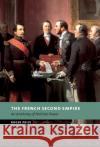
This thoroughly researched book on the Second Empire examines how Louis-Napoleon Bonaparte was able to secure election as President of the Republic and subsequently to launch a coup d'etat to establish a Second Empire. It considers the ways in which power was exercised by the new empire and how Napoleon III engaged in a difficult process of transition towards more liberal policies only to experience catastrophic defeat and the destruction of the regime because of war against Prussia.
This thoroughly researched book on the Second Empire examines how Louis-Napoleon Bonaparte was able to secure election as President of the Republic an...
This book seeks to explain the origins of the Catholic identity of the population of southwest Germany between 1550 and 1750. Many studies of this subject credit rulers and church leaders with creating and enforcing religious identity in Germany "from above." In contrast, this study argues that there were important local and religious reasons why people came to consider themselves loyal Catholics; and in order to understand the origins of Catholic identity, it examines the nature of "Baroque Catholicism"--including the significance of pilgrimages, processions, confraternities, and other...
This book seeks to explain the origins of the Catholic identity of the population of southwest Germany between 1550 and 1750. Many studies of this sub...
This book examines the overlooked topic of the influence of anti-Bolshevik, anti-Semitic Russian exiles on Nazism. White emigres contributed politically, financially, militarily, and ideologically to National Socialism. This work refutes the notion that Nazism developed as a peculiarly German phenomenon: it arose primarily from the cooperation between volkisch (nationalist/racist) Germans and vengeful White emigres. From 1920 1923, Adolf Hitler collaborated with a conspiratorial far right German-White emigre organization, Aufbau (Reconstruction). Aufbau allied with Nazis to overthrow the...
This book examines the overlooked topic of the influence of anti-Bolshevik, anti-Semitic Russian exiles on Nazism. White emigres contributed political...
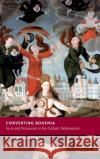
Prior to the Thirty Years War, almost all of Bohemia's population lay outside the Catholic fold, yet by the beginning of the eighteenth century the kingdom was clearly under Rome's influence. Few regions in Europe's history have ever experienced such a complete religious transformation; because of this, Bohemia offers a unique window for examining the Counter-Reformation and the nature of early modern Catholicism. Converting Bohemia presents a full assessment of the Catholic Church's re-establishment in the Czech lands, arguing that this complex phenomenon was less a product of violence and...
Prior to the Thirty Years War, almost all of Bohemia's population lay outside the Catholic fold, yet by the beginning of the eighteenth century the ki...
Twenty years after the collapse of the German Democratic Republic, historians still struggle to explain how an apparently stable state imploded with such vehemence. This book shows how 'national' identity was invented in the GDR and how citizens engaged with it. Jan Palmowski argues that it was hard for individuals to identify with the GDR amid the threat of Stasi informants and with the accelerating urban and environmental decay of the 1970s and 1980s. Since socialism contradicted its own ideals of community, identity and environmental care, citizens developed rival meanings of nationhood...
Twenty years after the collapse of the German Democratic Republic, historians still struggle to explain how an apparently stable state imploded with s...
Imperial Boundaries is a study of imperial expansion and local transformation on Russia's Don Steppe frontier during the age of Peter the Great. Brian Boeck connects the rivalry of the Russian and Ottoman empires in the northern Black Sea basin to the social history of the Don Cossacks, who were transformed from an open, democratic, multiethnic, male fraternity dedicated to frontier raiding into a closed, ethnic community devoted to defending and advancing the boundaries of the Russian state. He shows how by promoting border patrol, migration control, bureaucratic regulation of cross-border...
Imperial Boundaries is a study of imperial expansion and local transformation on Russia's Don Steppe frontier during the age of Peter the Great. Brian...
Twenty years after the collapse of the German Democratic Republic, historians still struggle to explain how an apparently stable state imploded with such vehemence. This book shows how 'national' identity was invented in the GDR and how citizens engaged with it. Jan Palmowski argues that it was hard for individuals to identify with the GDR amid the threat of Stasi informants and with the accelerating urban and environmental decay of the 1970s and 1980s. Since socialism contradicted its own ideals of community, identity and environmental care, citizens developed rival meanings of nationhood...
Twenty years after the collapse of the German Democratic Republic, historians still struggle to explain how an apparently stable state imploded with s...
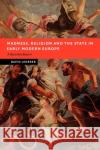
This major new study of psychiatry and psychology--during the sixteenth and seventeenth centuries--traces the struggle between politics and popular culture which influenced the scientific revolution. David Lederer explores the treatment of mental illness in society before the emergence of professional psychiatry, the use of spiritual remedies ('spiritual physic') to deal with physical and mental ailments from melancholy to demonic possession, how early modern people understood the soul and the impact of the Counter-Reformation on all these issues.
This major new study of psychiatry and psychology--during the sixteenth and seventeenth centuries--traces the struggle between politics and popular cu...
No group better embodied the traditional noble ideal in the late Holy Roman Empire than the pedigreed knights, Protestant and Catholic, of Electoral Mainz. This study traces the transnational "geocultural" landscape in which they thrived and its transformation by social, political and national revolution. It explores the comparative history of the knights who became divided between those who emigrated to the Habsburg Empire (where their geocultural landscape survived) and those who remained in Germany and forged a new identity as nobles in the cultural world of the "nation."
No group better embodied the traditional noble ideal in the late Holy Roman Empire than the pedigreed knights, Protestant and Catholic, of Electoral M...
The age of revolution challenged the ancien regime's political world, introducing Europeans to fresh ideals of citizenship. German society was no less affected. Following the Napoleonic era, a political culture of partisan choice undermined the official restoration of absolutism. Bourgeois and popular classes took part in the political landscape of civil society, producing an impressive social base for participatory politics by the 1830s. Because of severe restrictions on speech and assembly, ordinary Germans formed political opinions in irregular ways. This book looks at the sites and forms...
The age of revolution challenged the ancien regime's political world, introducing Europeans to fresh ideals of citizenship. German society was no less...