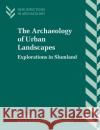
This exciting collection on a new movement in urban archaeology investigates the historical archaeology of urban slums. The "stuff" that is dug up--broken dinner plates, nails and plaster samples--will not quickly find its way into museum collections. But, properly interpreted, it yields evidence of lives and communities that have left little in the way of written records. Twelve case studies define a new field, which will attract the attention of a range of students and scholars outside archaeology, in particular, historical sociologists and historians.
This exciting collection on a new movement in urban archaeology investigates the historical archaeology of urban slums. The "stuff" that is dug up--br...
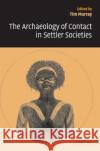
An international team of experts examines the historical archaeology of contact and its aftermath by considering the consequences of colonialism in settler societies from the sixteenth century to the present. This work's unique global vision constitutes an innovative exploration of issues which are assuming major social and political importance in the postcolonial world.
An international team of experts examines the historical archaeology of contact and its aftermath by considering the consequences of colonialism in se...
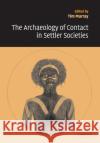
An international team of experts examines the historical archaeology of contact and its aftermath by considering the consequences of colonialism in settler societies from the sixteenth century to the present. This work's unique global vision constitutes an innovative exploration of issues which are assuming major social and political importance in the postcolonial world.
An international team of experts examines the historical archaeology of contact and its aftermath by considering the consequences of colonialism in se...
This book, a comparative study of specialized production in prehistoric societies, examines both adaptionist and political approaches to specialization and exchange using a worldwide perspective. What forms of specialization and exchange promote social stratification, political integration and institutional specialization? Can increases in specialization always be linked to improved subsistence strategies or are they more closely related to the efforts of political elites to strengthen coalitions and establish institutions of control? Are valuables as important as subsistence goods in the...
This book, a comparative study of specialized production in prehistoric societies, examines both adaptionist and political approaches to specializatio...
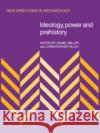
This book starts from the premise that methodology - the procedures for obtaining an 'objective' knowledge of the past - has always dominated archaeology to the detriment of broader social theory. It argues that social theory is archaeological theory, and that past failure to recognise this has resulted in disembodied archaeological theory and weak disciplinary practice. Ideology, Power and Prehistory therefore seeks to reinstate the primacy of social theory and the social nature of the past worlds that archaeologists seek to understand. The contributors to this book argue that past peoples,...
This book starts from the premise that methodology - the procedures for obtaining an 'objective' knowledge of the past - has always dominated archaeol...
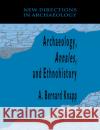
This collection considers the relevance of the Annales 'school' for archaeology. The Annales movement regarded orthodox history as too much concerned with events, too narrowly political, too narrative in form and too isolated from neighbouring disciplines. Annalistes attempted to construct a 'total' history, dealing with a wide range of human activity, and combining divergent material, documentary, and theoretical approaches to the past. Annales-oriented research utilizes the techniques and tools of various ancillary fields, and integrates temporal, spatial, material and behavioural analyses....
This collection considers the relevance of the Annales 'school' for archaeology. The Annales movement regarded orthodox history as too much concerned ...
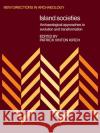
Concentrating their attention on the Pacific Islands, the contributors to this book show how the tightly focused social and economic systems of islands offer archaeologists a series of unique opportunities for tracking and explaining prehistoric change. From the 1950s onwards, excavations in such islands as Fiji, Palau and Hawaii revolutionised Oceanic archaeology and, as the major problems of cultural origins and island sequences were resolves, archaeologists came increasingly to study social change and to integrate newly acquired data on material culture with older ethnographic and...
Concentrating their attention on the Pacific Islands, the contributors to this book show how the tightly focused social and economic systems of island...
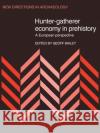
It has been said that for 99 per cent of their cultural history human societies have made their living through the collection of wild resources. It is therefore perhaps not surprising that the study of hunters and gatherers has become an increasingly popular and central topic of research. Within archaeology it has created an international focus for people working in many different areas of the world. At the same time it has provided a meeting ground for a range of disciplines, all concerned in one way or another with aspects of human behaviour. However, analysis of the prehistoric record has...
It has been said that for 99 per cent of their cultural history human societies have made their living through the collection of wild resources. It is...
Ranked societies are characterized by disparities in personal status which are often accompanied by the concentration of power and authority in the hands of a few dominant individuals.
Ranked societies are characterized by disparities in personal status which are often accompanied by the concentration of power and authority in the ha...