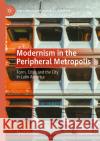
This book shows how Latin American writers and artists in the crisis-decades of the 1920s and 1930s used modernist techniques to explore national issues in relation to global capitalism. Drawing on a rich interdisciplinary archive of novels, poetry, essays, photography, and architecture, it includes chapters on major figures and the transformations that marked Latin American cities at the beginning of the twentieth century: the poet Manuel Maples Arce and Mexico City; the essayist José Carlos Mariátegui and Lima; the novelist Roberto Arlt and Buenos Aires; the novelist Patrícia...
This book shows how Latin American writers and artists in the crisis-decades of the 1920s and 1930s used modernist techniques to explore national issu...
This book explores the conceptualization of time in early twentieth-century literature and thought, based on a transnational and translational model of literary history, focusing on Turkish, French and German literary traditions. Each from different cultural backgrounds, these modernists provide a radical critique of modern time regimes, which calibrate time in singular temporal narratives. The book traces the philosophical strand of this critical chronometry from Henri Bergson’s theory of time, through Walter Benjamin’s ambivalence towards decay of tradition, and finally...
This book explores the conceptualization of time in early twentieth-century literature and thought, based on a transnational and translational mo...
This book links world-literary studies with anthropology and ethnography. It shows how ethnographic narratives can represent a compelling point of departure for world-literary explorations. The volume compares the travel writing and fiction of Robert Louis Stevenson and Rudyard Kipling as colonial ethnographic narratives; the militant writings of Carlo Levi and Mahasweta Devi; and the travelogues and ethnographic fiction of Amitav Ghosh and the literary journalism of Frank Westerman. Each of these readings focuses on a set of social, political and historical circumstances and relies on a...
This book links world-literary studies with anthropology and ethnography. It shows how ethnographic narratives can represent a compelling point of ...
This book links world-literary studies with anthropology and ethnography. It shows how ethnographic narratives can represent a compelling point of departure for world-literary explorations. The volume compares the travel writing and fiction of Robert Louis Stevenson and Rudyard Kipling as colonial ethnographic narratives; the militant writings of Carlo Levi and Mahasweta Devi; and the travelogues and ethnographic fiction of Amitav Ghosh and the literary journalism of Frank Westerman. Each of these readings focuses on a set of social, political and historical circumstances and relies on a...
This book links world-literary studies with anthropology and ethnography. It shows how ethnographic narratives can represent a compelling point of ...
This book shows how Latin American writers and artists in the crisis-decades of the 1920s and 1930s used modernist techniques to explore national issues in relation to global capitalism. Drawing on a rich interdisciplinary archive of novels, poetry, essays, photography, and architecture, it includes chapters on major figures and the transformations that marked Latin American cities at the beginning of the twentieth century: the poet Manuel Maples Arce and Mexico City; the essayist José Carlos Mariátegui and Lima; the novelist Roberto Arlt and Buenos Aires; the novelist Patrícia...
This book shows how Latin American writers and artists in the crisis-decades of the 1920s and 1930s used modernist techniques to explore national issu...
This book explores the conceptualization of time in early twentieth-century literature and thought, based on a transnational and translational model of literary history, focusing on Turkish, French and German literary traditions. Each from different cultural backgrounds, these modernists provide a radical critique of modern time regimes, which calibrate time in singular temporal narratives. The book traces the philosophical strand of this critical chronometry from Henri Bergson's theory of time, through Walter Benjamin's ambivalence towards decay of tradition, and finally to A.H. Tanpinar...
This book explores the conceptualization of time in early twentieth-century literature and thought, based on a transnational and translational model ...
The American Climate Emergency Narrative reveals how much of what has been called "climate fiction" casts ecological breakdown as an emergency for American capitalist modernity rather than for the planet. The book traces the origins of this narrative back to the arrival of settler capitalism in America, when the understanding of the planet and its people as extractable resources was established. Since then, this narrative has elided the violent history of the climate crisis while at the same time leveraging the military as a bulwark against the crises capitalism has caused, the...
The American Climate Emergency Narrative reveals how much of what has been called "climate fiction" casts ecological breakdown as an emerg...
This book analyses the impact of economic informality on the novel form across the modern world-system, looking specifically at works by Antonio de Almeida, Machado de Assis, Dany Laferrière, Ngũgĩ wa Thiong’o, Nadine Gordimer, and Masande Ntshanga. It sees the representation of informal economies as a structural homology of world-literature. In chapters on the figure of the agregado in the nineteenth-century Brazilian novel; sex work in Haitian fiction; the politics of the informal economy in the post-apartheid South African novel; and Ngugi’s representation African occult...
This book analyses the impact of economic informality on the novel form across the modern world-system, looking specifically at works by Antonio de...
This book explores the geopolitical and symbolic borders of Europe through the concept of the semi-periphery. Focusing on the North Atlantic island nations, Iceland and the Faroe Islands, and Turkey – a set of very different social and cultural landscapes – the book compares the semi-peripheral aesthetics of Halldór Laxness’s and William Heinesen’s novels with the semi-peripheral city and borderscapes in works by Orhan Pamuk and Latife Tekin. It offers new readings of texts such as Laxness’s The Atom Station and Pamuk’s Snow, and provides...
This book explores the geopolitical and symbolic borders of Europe through the concept of the semi-periphery. Focusing on the North Atlantic isl...