In a major new history of the dramatic and enduring changes in the daily family lives of poor European women in the nineteenth century, Rachel Fuchs powerfully conveys the extraordinary difficulties facing women in this period. She offers a fascinating study of their experience of birth, sex and death, as well as the changing responsibilities of individual family members and the transformations in society's responses to the problems of poverty. This accessible synthesis will be essential reading for students of women's and gender studies, urban history and social and family history.
In a major new history of the dramatic and enduring changes in the daily family lives of poor European women in the nineteenth century, Rachel Fuchs p...
A new edition of James Collins's acclaimed synthesis that challenged longstanding views of the origins of modern states and absolute monarchy through an analysis of early modern Europe's most important continental state. Incorporating recent scholarship on the French state and his own research, James Collins has revised the text throughout. He examines recent debates on 'absolutism'; presents a fresh interpretation of the Fronde and of French society in the eighteenth century; includes additional material on French colonies and overseas trade; and ties recent theoretical work into a new...
A new edition of James Collins's acclaimed synthesis that challenged longstanding views of the origins of modern states and absolute monarchy through ...
Medicine and Society in Early Modern Europe offers students a concise introduction to health and healing in Europe from 1500 to 1800. Bringing together the best recent research in the field, Mary Lindemann examines medicine from a social and cultural perspective, rather than a narrowly scientific one. Drawing on medical anthropology, sociology, and ethics as well as cultural and social history, she focuses on the experience of illness and on patients and folk healers as much as on the rise of medical science, doctors, and hospitals. This second edition has been updated and revised throughout...
Medicine and Society in Early Modern Europe offers students a concise introduction to health and healing in Europe from 1500 to 1800. Bringing togethe...
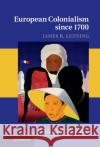
This masterful synthesis provides a much-needed, complete survey of European colonialism from 1700 to decolonization in the twentieth century. Written by an award-winning author, this advanced undergraduate and graduate level textbook bridges, for the first time, the early modern Atlantic empires and the later Asian and African empires of 'high imperialism'. Viewing colonialism as a phenomenon of contact between Europe and the rest of the world, the author takes an 'entangled histories' approach, considering the surprising ways in which the imperial powers of Spain, Portugal, Great Britain,...
This masterful synthesis provides a much-needed, complete survey of European colonialism from 1700 to decolonization in the twentieth century. Written...
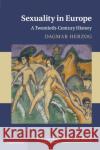
This original book brings a fascinating and accessible new account of the tumultuous history of sexuality in Europe from the waning of Victorianism to the collapse of Communism and the rise of European Islam. Although the twentieth century is often called the century of sex and seen as an era of increasing liberalization, Dagmar Herzog instead emphasizes the complexities and contradictions in sexual desires and behaviours, the ambivalences surrounding sexual freedom, and the difficulties encountered in securing sexual rights. Incorporating the most recent scholarship on a broad range of...
This original book brings a fascinating and accessible new account of the tumultuous history of sexuality in Europe from the waning of Victorianism to...
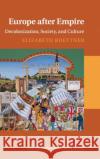
Europe after Empire is a pioneering comparative history of European decolonization from the formal ending of empires to the postcolonial European present. Elizabeth Buettner charts the long-term development of post-war decolonization processes as well as the histories of inward and return migration from former empires which followed. She shows that not only were former colonies remade as a result of the path to decolonization: so too was Western Europe, with imperial traces scattered throughout popular and elite cultures, consumer goods, religious life, political formations, and ideological...
Europe after Empire is a pioneering comparative history of European decolonization from the formal ending of empires to the postcolonial European pres...
Europe after Empire is a pioneering comparative history of European decolonization from the formal ending of empires to the postcolonial European present. Elizabeth Buettner charts the long-term development of post-war decolonization processes as well as the histories of inward and return migration from former empires which followed. She shows that not only were former colonies remade as a result of the path to decolonization: so too was Western Europe, with imperial traces scattered throughout popular and elite cultures, consumer goods, religious life, political formations, and ideological...
Europe after Empire is a pioneering comparative history of European decolonization from the formal ending of empires to the postcolonial European pres...