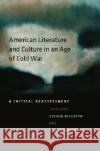
The time is right for a critical reassessment of Cold War culture both because its full cultural impact remains unprocessed and because some of the chief paradigms for understanding that culture confuse rather than clarify.A collection of the work of some of the best cultural critics writing about the period, "American Literature and Culture in an Age of Cold War" reveals a broad range of ways that American cultural production from the late 1940s to the present might be understood in relation to the Cold War. Critically engaging the reigning paradigms that equate postwar U.S. culture with...
The time is right for a critical reassessment of Cold War culture both because its full cultural impact remains unprocessed and because some of the ch...
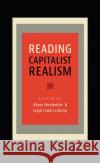
As the world has been reshaped since the 1970s by economic globalisation, neoliberalism, and financialisation, writers and artists have addressed the problem of representing the economy with a new sense of political urgency. Anxieties over who controls capitalism have thus been translated into demands upon literature, art, and mass media to develop strategies of representation that can account for capitalism's power.
Reading Capitalist Realism presents some of the latest and most sophisticated approaches to the question of the relation between capitalism and narrative form,...
As the world has been reshaped since the 1970s by economic globalisation, neoliberalism, and financialisation, writers and artists have addressed the ...
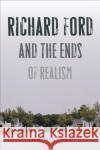
"Richard Ford and the Ends of Realism "examines the work of award-winning American novelist and short story writer Richard Ford, and places it firmly in the context of contemporary debates about the role and meaning of literary realism in a postmodern environment. In this fresh study of Ford s oeuvre, Ian McGuire argues that Ford s work is best understood as a form of pragmatic realism and thus positions him as part of a deeply rooted and ongoing American debate about the nature of realism and pragmatism. This debate, which reaches back to transcendentalist thinkers such as Ralph Waldo...
"Richard Ford and the Ends of Realism "examines the work of award-winning American novelist and short story writer Richard Ford, and places it firmly ...
During and just after World War II, an influential group of American writers and intellectuals projected a vision for literature that would save the free world. Novels, stories, plays, and poems, they believed, could inoculate weak minds against simplistic totalitarian ideologies, heal the spiritual wounds of global catastrophe, and just maybe prevent the like from happening again. As the Cold War began, high-minded and well-intentioned scholars, critics, and writers from across the political spectrum argued that human values remained crucial to civilization and that such values stood in dire...
During and just after World War II, an influential group of American writers and intellectuals projected a vision for literature that would save the f...
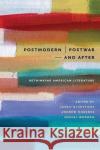
Within the past ten years, the field of contemporary American literary studies has changed significantly. Following the turn of the twenty-first century and mounting doubts about the continued explanatory power of the category of postmodernism, new organizations have emerged, book series have been launched, journals have been created, and new methodologies, periodizations, and thematics have redefined the field. "Postmodern/Postwar and After "aims to be a field-defining book a sourcebook for the new and emerging critical terrain that explores the postmodern/postwar period and what comes...
Within the past ten years, the field of contemporary American literary studies has changed significantly. Following the turn of the twenty-first centu...
He called the first atomic bomb technically sweet, yet as he watched its brilliant light explode over the New Mexico desert in 1945 in advance of the black horrors of Hiroshima and Nagasaki, he also thought of the line from the Hindu epic "The Bhagavad Gita" I am become Death, the destroyer of worlds. Physicist J. Robert Oppenheimer, the scientific director of the Manhattan Project, the single most recognizable face of the atomic bomb, and a man whose name has become almost synonymous with Cold War American nuclear science, was and still is a conflicted, controversial figure who has come to...
He called the first atomic bomb technically sweet, yet as he watched its brilliant light explode over the New Mexico desert in 1945 in advance of the ...
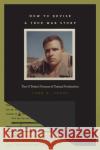
You can tell a true war story if you just keep on telling it, Tim O Brien writes in The Things They Carried. Widely regarded as the most important novelist to come out of the American war in Viet Nam, O Brien has kept on telling true war stories not only in narratives that cycle through multiple fictional and non-fictional versions of the war s defining experiences, but also by rewriting those stories again and again. Key moments of revision extend from early drafts, to the initial appearance of selected chapters in magazines, across typescripts and page proofs for first editions, and...
You can tell a true war story if you just keep on telling it, Tim O Brien writes in The Things They Carried. Widely regarded as the most import...
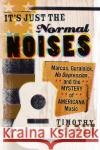
Roots rock, Americana, alt country: what are they and why do they matter? Americans have been trying to answer these questions for as long as the music bearing these labels has existed. Music can function as an escape from the outside world or as an explanation of that world. Listeners who identify with the music's message may shape their social understandings accordingly. Rock critics like Greil Marcus and Peter Guralnick, the titans of rock criticism, tap this fluid dichotomy, considering the personal appeal of roots music alongside national ideals of democracy and selfhood. So too do many...
Roots rock, Americana, alt country: what are they and why do they matter? Americans have been trying to answer these questions for as long as the musi...
After the second World War, the term "technology" came to signify both the anxieties of possible annihilation in a rapidly changing world and the exhilaration of accelerating cultural change. Technomodern Poetics examines how some of the most well-known writers of the era described the tensions between technical, literary, and media cultures at the dawn of the Digital Age.
After the second World War, the term "technology" came to signify both the anxieties of possible annihilation in a rapidly changing world and the exhi...