In Let the Cow Wander, the author argues that metaphors inform our conceptual spheres and are in turn informed by them. The book begins with a discussion of metaphor, model, and conceptual sphere, followed by an investigation into Vedic and Advaitic sacred texts and by generalizations on religious explanation and practice.
In Let the Cow Wander, the author argues that metaphors inform our conceptual spheres and are in turn informed by them. The book begins with a discuss...
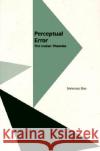
Over the centuries the nature of erroneous perception has been thoroughly discussed by Indian philosophers of nearly every school. This text aims to pursue important issues in the discussion of perceptual error. It sheds light on why Indian philosophers devoted so much attention to the problem of erroneous perception but also on why the ontological status of the object of error became such an important issue. The result is a history of the interactions among rival theories of perceptual error.
Over the centuries the nature of erroneous perception has been thoroughly discussed by Indian philosophers of nearly every school. This text aims to p...
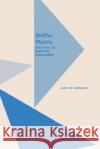
This title analyzes one of the most important ideas in Buddhist philosophy: the doctrine of skillful means. It presents an analysis of a familiar subject, thus providing a way of understanding Buddhist thought. It argues that Buddhism is best understood as a philosophy of practice - or a metapraxis - and that terms such as emptiness, non-self, and nirvana refer less to metaphysical principles than to skillful teachings that help people cultivate compassion and mindfulness. Each section of the book focuses on a debate over philosophical justification and the problem of trying to establish a...
This title analyzes one of the most important ideas in Buddhist philosophy: the doctrine of skillful means. It presents an analysis of a familiar subj...
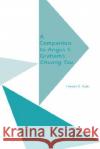
At the time of his death in 1991, Angus C. Graham was one of the world's premier authorities on classical Chinese philosophy. Of particular significance is his corpus of publications on Taoism, the most important of which was his groundbreaking translation of more than three-fourths of the Chuang Tzu, first published in 1981 and, until recently, out of print for almost a decade. The current volume gathers together for the first time Graham's writings on the textual criticism and philosophy of the Chuang Tzu, most of which have heretofore been published in obscure sources. The most important...
At the time of his death in 1991, Angus C. Graham was one of the world's premier authorities on classical Chinese philosophy. Of particular significan...
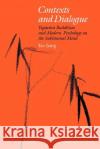
Are there Buddhist conceptions of the unconscious? If so, are they more Freudian, Jungian, or something else? If not, can Buddhist conceptions be reconciled with the Freudian, Jungian, or other models? These are some of the questions that have motivated modern scholarship to approach alayavijnana, the storehouse consciousness, formulated in Yogacara Buddhism as a subliminal reservoir of tendencies, habits, and future possibilities.
Tao Jiang argues convincingly that such questions are inherently problematic because they frame their interpretations of the Buddhist notion largely in...
Are there Buddhist conceptions of the unconscious? If so, are they more Freudian, Jungian, or something else? If not, can Buddhist conceptions be r...
This is a defense of the earlier, nihilist interpretation (NI) of the Madhyamaka against some of the leading non-nihilist interpretations (NNI) that have arisen to challenge it in recent times.
This is a defense of the earlier, nihilist interpretation (NI) of the Madhyamaka against some of the leading non-nihilist interpretations (NNI) that h...