In January 1919, following the defeat of the German-led Central Powers in World War I, delegates from the victorious Allied nations gathered in Paris to try to forge an enduring peace for the postwar world. The number and complexity of the issues confronting the Paris peacemakers in the wake of the deadliest and most disruptive war up to that time was daunting. The five separate treaties produced by the Peace Conference, and particularly the most famous one, the Treaty of Versailles with Germany, have been widely criticized over the years, primarily because they led to the rise of Nazi...
In January 1919, following the defeat of the German-led Central Powers in World War I, delegates from the victorious Allied nations gathered in Paris ...
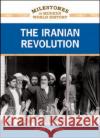
On January 16, 1979, the shah of Iran left the country he had ruled for more than 37 years. The streets of Tehran, Iran's capital, filled with celebration as the news spread that the hated monarchy had been overthrown. The revolution in Iran, led by Ayatollah Ruhollah Khomeini, was sparked by many factors, including a widening gap between the different classes of Iranian society, an aggressive campaign of modernization, an ambitious program of land reform, and the brutality of the shah's oppressive regime. In The Iranian Revolution, read about how the revolution's role in propelling Iran from...
On January 16, 1979, the shah of Iran left the country he had ruled for more than 37 years. The streets of Tehran, Iran's capital, filled with celebra...
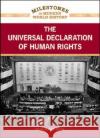
When the United Nations General Assembly approved the Universal Declaration of Human Rights in December 1948, it was hailed as a major advancement for humanity. In the aftermath of the horrors of World War II, the majority of nations around the world worked together for the first time in history to affirm the importance of human life and dignity. This new book details how the Declaration was written through the tireless efforts of the drafting committee and of the Human Rights Commission, composed of former first lady Eleanor Roosevelt of the United States, Rene Cassin of France, Charles...
When the United Nations General Assembly approved the Universal Declaration of Human Rights in December 1948, it was hailed as a major advancement for...
On the morning of June 6, 1944, the largest and most powerful armada of warships the world had ever seen left southern England bound for the beaches of Normandy. The thousands of American, British, Canadian, Polish, and Norwegian soldiers on board had one mission: invade France and liberate it from the occupation by Nazi Germany. Over the course of the next three months, that is precisely what they, and the Free French troops who would later join them, did. From the sands of beaches code-named Utah, Omaha, Gold, Juno, and Sword, through the nearly impenetrable hedgerows of the Norman...
On the morning of June 6, 1944, the largest and most powerful armada of warships the world had ever seen left southern England bound for the beaches o...
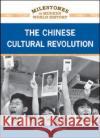
As one of history's most horrific political upheavals, the Cultural Revolution began in 1966, when the Chinese Communist Party officially launched the radical movement on the orders of its autocratic chairman, Mao Zedong. He intended for the movement to revitalize China's revolutionary fervor while simultaneously accelerating the country's evolution into a true communist utopia. China's young people became the advance guard for this new revolution, forming themselves into paramilitary Red Guard units. These adolescent shock troops humiliated, beat, and murdered teachers, intellectuals,...
As one of history's most horrific political upheavals, the Cultural Revolution began in 1966, when the Chinese Communist Party officially launched ...
It was a revolution that would change the world by bringing about the global transition from capitalism to communism in a single generation--or so its supporters believed. Vladimir Lenin and the Bolshevik Party hoped to carry humanity into a new day of equality, justice, and freedom. Toward this end, they brought down the Russian tsarist government in October 1917 and began a vast political experiment that ended more than 70 years later in a way neither Lenin nor his followers would have ever anticipated. The Bolshevik Revolution not only marked the end of Old Russia, but it also set in...
It was a revolution that would change the world by bringing about the global transition from capitalism to communism in a single generation--or so its...
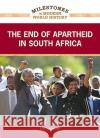
In 1948, the Parliament of South Africa passed a series of laws designed to systematically strip the nation's black majority of all political, economic, and human rights. The result was apartheid, a legislative program that made the South African government one of the most oppressive of the 20th century. The End of Apartheid in South Africa describes the impact apartheid had on South African society and the emergence of the powerful protest movement that fought to combat it. Anti-apartheid leaders such as Stephen Biko and Nelson Mandela inspired a worldwide campaign against their government....
In 1948, the Parliament of South Africa passed a series of laws designed to systematically strip the nation's black majority of all political, economi...
The dissolution of the Union of Soviet Socialist Republics on December 31, 1991, stunned the world. The communist empire--which had been a dominant force in global politics for 74 years, influencing world events from World War II to issues of nuclear weapons and defense--was suddenly gone. The Collapse of the Soviet Union highlights major events in Soviet history, such as the rise of communism in Russia, the terror and expansionist policies of Joseph Stalin, the election of Mikhail Gorbachev, the explosion at the Chernobyl nuclear reactor, and the rivalry between Gorbachev and Boris Yeltsin...
The dissolution of the Union of Soviet Socialist Republics on December 31, 1991, stunned the world. The communist empire--which had been a dominant fo...