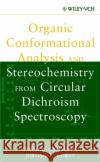
A unique guide to variable temperature CD spectroscopy and its application in organic chemistry This timely, original, thought-provoking work looks at organic stereochemistry from the perspective of circular dichroism (CD), using variable temperature CD spectroscopy to determine the conformation or absolute configuration of chiral molecules. With an emphasis on the analysis of optically active ketones and the carbonyl chromophore, the authors demonstrate the advantages of this highly sensitive spectroscopic tool for obtaining stereochemical information in diverse areas of organic...
A unique guide to variable temperature CD spectroscopy and its application in organic chemistry This timely, original, thought-provoking work lo...
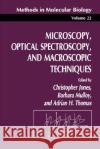
This is the second of three volumes of Methods in Molecular Biology that deal with Physical Methods of Analysis. The first of these, Spectroscopic Methods and Analyses dealt with NMR spec- troscopy, mass spectrometry, and metalloprotein techniques, and the third will cover X-ray crystallographic methods. As with the first volume. Microscopy, Optical Spectroscopy, and Macroscopic Techniques is intended to provide a basic understand- ing for the biochemist or biologist who needs to collaborate with spe- cialists in applying the techniques of modern physical chemistry to biological...
This is the second of three volumes of Methods in Molecular Biology that deal with Physical Methods of Analysis. The first of these, Spectroscopic Met...
Here is an in-depth presentation of current research and theory on the chemistry of three-dimensional polycyclic molecules, or 'cage molecules, ' synthesized compounds with closed structures. Internationally known scientists introduce their areas of expertise, ranging from general principles to highly specialized perspectives on this fascinating branch of pure chemistry
Here is an in-depth presentation of current research and theory on the chemistry of three-dimensional polycyclic molecules, or 'cage molecules, ' synt...
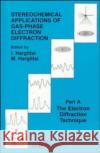
This collection of twenty-six articles by leading experts is the first truly comprehensive account of the gas-phase electron diffraction technique. It is written for the non-specialist users of structural information.
Part A discusses the development and present capabilities of gas electron diffraction. Several contributions deal with the combined application of various techniques. Part B contains the structural information and also presents trends and interpretations of structural variations.
This collection of twenty-six articles by leading experts is the first truly comprehensive account of the gas-phase electron diffraction technique. It...