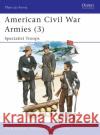
An unrivalled source of information on the uniforms, insignia and appearance of the world's fighting men of past and present. The 'Men-At-Arms' titles cover subjects as diverse as the Imperial Roman army, the Napoleonic wars and German airborne troops in a popular 48-page format including some 40 photographs and diagrams, and eight full-colour plates.
An unrivalled source of information on the uniforms, insignia and appearance of the world's fighting men of past and present. The 'Men-At-Arms' titles...
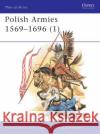
Few people will realise that at one time the Polish state was one of Europe's great powers. One of the chief instruments of her success was undoubtedly her army, which though small can claim many accomplishments and major successes in the 16th and 17th centuries. Richard Brzezinski redresses this imbalance by providing a portrait of Polish armies from 1569-1696, detailing their history, organisation, arms, armour, insignia and dress, accompanied by numerous illustrations and eight superb full page colour plates by Angus McBride.
Few people will realise that at one time the Polish state was one of Europe's great powers. One of the chief instruments of her success was undoubtedl...
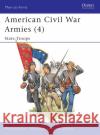
"The War between the States" is the term used for the American Civil War (1861-1865)throughout much of the South even today. Many on both sides - not just the South - felt that they were serving their states as much, if not more, than their central governments. Many of the states agreed; the state governments raising their own units, commissioning their officers, and supplying their men. Indeed, many of the units that fought the Civil War were supplied in large part by their own states rather than by the central government's quartermasters. Philip Katcher's fascinating text explores the...
"The War between the States" is the term used for the American Civil War (1861-1865)throughout much of the South even today. Many on both sides - not ...
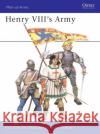
Military affairs occupied a very significant place during Henry VIII's reign, with English armies seeing action against two main enemies: the French and the Scots, of which France was undoubtedly viewed as the principal foe. Henry nursed grandiose ambitions to be acclaimed as the arbiter of European politics, and whilst intervention in European affairs did not necessarily dictate a policy of hostility towards France; England was invariably to be found in league with her enemies in time of war. This absorbing text by Paul Cornish deals with the history, uniforms and equipment of King Henry...
Military affairs occupied a very significant place during Henry VIII's reign, with English armies seeing action against two main enemies: the French a...
Although not widely studied in the West, the medieval history of south-eastern Europe is both fascinating and complex. The Kingdom of Hungary was a vast realm, at least the size of France, that endured throughout the Middle Ages whilst the Byzantine Empire was even more extensive and enduring. The Serbians won themselves a brief but extensive local empire in the 14th century; while the Bulgarians established an effective and cultured state. Other players in the confusing Balkan scene included the Albanians; Wallachians; Moldavians; Transylvanians; Croatians and many others. How did they...
Although not widely studied in the West, the medieval history of south-eastern Europe is both fascinating and complex. The Kingdom of Hungary was a va...
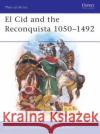
The very name El Cid sums up much of the special character of medieval Spanish warfare. It comes from the Arabic al sayyid, master or chieftain, and seems to have been given to Rodrigo de Vivar by his Muslim foes. But was it given in recognition of El Cid's victories against Islam in the 'Reconquista' - or because this Castilian nobleman was as content to serve beside the Muslims as to fight them? The story of the Christian conquest of the Iberian peninsula which gave rise to the legend of El Cid, is here examined by David Nicolle, who outlines the history, tactics, arms and armour of the...
The very name El Cid sums up much of the special character of medieval Spanish warfare. It comes from the Arabic al sayyid, master or chieftain, and s...
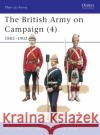
The Army of 1882 had just emerged from the many modernizing reforms effected between 1856-81. These included: opening of schools of instruction; abolition of the purchase of commissions; improvements in pay, living conditions and disciplinary measures and new weapons and tactics. By these later years of the 19th century the British Army had become the policeman of a vast global Empire. This volume in the acclaimed British Army on Campaign mini-series details the uniforms, organisation and equipment used in a succession of campaigns across the face of the globe. Michael Barthorp's splendid...
The Army of 1882 had just emerged from the many modernizing reforms effected between 1856-81. These included: opening of schools of instruction; aboli...
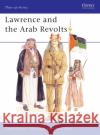
The Great War of 1914-18 is often seen as one major battleground - the Western Front - with numerous 'side-shows'. The other battle zones were not side-shows to those involved, however, although the local inhabitants often fought for motives which remained a closed book to their European allies or foes. David Nicolle relates the story of the Arab Revolts (1916-18), and discusses just how important (or unimportant) was the role of T. E. Lawrence in the affair, in a fascinating text backed by a fine collection of contemporary photographs and eight full page colour plates by Richard Hook.
The Great War of 1914-18 is often seen as one major battleground - the Western Front - with numerous 'side-shows'. The other battle zones were not sid...
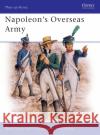
When the French Revolution broke out in 1789, France possessed numerous colonies spread over three continents. To defend and keep the peace in these territories, a small army of colonial troops, distinct from the metropolitan line regiments or marines, had existed since the days of Louis XIV. This book examines the history and uniforms of the often-overlooked French armies in Saint-Domingue, Guadeloupe, Martinique, St Lucia, Tobago, Ile-de-France, La Reunion, Pondichery, Guiana, Senegal and Saint-Pierre-et-Miquelon. The text is backed by numerous illustrations offering a rare glimpse into...
When the French Revolution broke out in 1789, France possessed numerous colonies spread over three continents. To defend and keep the peace in these t...
The military policeman must be one of the least appreciated yet most indispensable military figures in modern history. In the mobile warfare of the 20th century no army could keep its vital supply routes open without the military policeman. This book documents the organisation, uniforms and insignia of the many and varied German military police units of World War II. Their duties included traffic control; maintaining military order and discipline; collection and escorting prisoners of war; prevention of looting; disarming civilians; checking captured enemy soldiers for documents; collection...
The military policeman must be one of the least appreciated yet most indispensable military figures in modern history. In the mobile warfare of the 20...