Until recently, our view of the later prehistory of the Eurasian steppe was that of nomadic pastoralist warriors riding out of the grasslands to destroy peaceful agriculturalist communities left lying in their wake. Recent research, however, has revealed a much more complex picture. The authors' first-hand experience of the data has permitted them to reassess our knowledge of later prehistory in a region in which, unitl recently, it was almost impossible for Western scientists to work.
Until recently, our view of the later prehistory of the Eurasian steppe was that of nomadic pastoralist warriors riding out of the grasslands to destr...
The Palaeolithic is the only period in archaeology that can be studied globally. In the last half century one prehistorian, Sir Paul Mellars, has changed the shape and direction of such studies, adding immeasurably to what we know about humanity's earliest origins and the timing of crucial transitions in the journey. The Upper Palaeolithic Revolution in global perspective is a collection of essays in his honour. Contributions cover both his own area of primary interest (Franco-Cantabria) as well as many other regions of the world, all of which he has considered while writing about the Human...
The Palaeolithic is the only period in archaeology that can be studied globally. In the last half century one prehistorian, Sir Paul Mellars, has chan...
This volume, number six in the Catalhoyuek Research Project series, draws on material from Volumes 3 to 5 to deal with broad themes. Data from architecture and excavation contexts are linked into broader discussion of topics such as seasonality, art and social memory. Rather than assuming that the work of the project is finished once the basic excavation and laboratory results have been presented in Volumes 3 to 5, it has been thought important to present more synthetic accounts that result from the high degree of integration and collaboration which the project has strived for at all stages....
This volume, number six in the Catalhoyuek Research Project series, draws on material from Volumes 3 to 5 to deal with broad themes. Data from archite...
Does it make sense to understand the prehistory, history and present-day patterns of life in Southeast Asia in terms of a distinction between two ways of life: "farming" and "foraging"? This is the central question addressed by the anthropologists and archaeologists contributing to this volume. Inherent within the question "Why Cultivate?" are people's relationships with the physical world: are they primarily to do with subsistence and economics or with social and/or cultural forces? The answers given by the contributors are complex. On a practical level they argue that there is a continuum...
Does it make sense to understand the prehistory, history and present-day patterns of life in Southeast Asia in terms of a distinction between two ways...
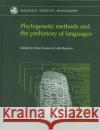
Evolutionary ('phylogenetic') trees were first used to infer lost histories nearly two centuries ago by manuscript scholars reconstructing original texts. Today, computer methods are enabling phylogenetic trees to transform genetics, historical linguistics and even the archaeological study of artefact shapes and styles. But which phylogenetic methods are best suited to retracing the evolution of languages? And which types of language data are most informative about deep prehistory? In this book, leading specialists engage with these key questions. Essential reading for linguists, geneticists,...
Evolutionary ('phylogenetic') trees were first used to infer lost histories nearly two centuries ago by manuscript scholars reconstructing original te...