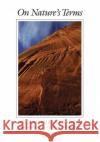
Outside, where the wind is blowing, we see the world on nature's terms, and we see that it is severely endangered. Turning inward, we seek a sense of connection with nature that could perhaps help us through the current environmental crisis. In this book, some of the most observant Americans of our day explore these outer and inner worlds in powerful pieces that show the vitality and range of contemporary nature writing. John Hay's "A Faire Bay," an original collection of thoughts on the pollution of the Chesapeake, opens the book, and Edward Hoagland's "A Year as It Turns," a group of short...
Outside, where the wind is blowing, we see the world on nature's terms, and we see that it is severely endangered. Turning inward, we seek a sense of ...
Armed with hand lenses and opera glasses, traveling on foot, by buggy, or model T, they explored thousands of miles of deserts, forests, beaches, and jungles. They were pioneering women naturalists who observed, studied, and experimented, then returned to write up their findings. What resulted were exquisitely written and scientifically accurate accounts of their explorations into natural science--a field long dominated by men. Marcia Myers Bonta has collected the most charming and sensitive writings of twenty-five women naturalists of the late nineteenth through early twentieth centuries...
Armed with hand lenses and opera glasses, traveling on foot, by buggy, or model T, they explored thousands of miles of deserts, forests, beaches, and ...
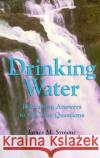
Is fluoridated water safe to drink? Should you buy a water softener or other home treatment device? How are germs kept out of drinking water? Should you buy bottled water? In a straightforward question-and-answer format, DRINKING WATER offers clear, easy-to-understand answers to 128 questions you may have about the water you drink.
Is fluoridated water safe to drink? Should you buy a water softener or other home treatment device? How are germs kept out of drinking water? Should y...
A valuable addition to anyone's wildlife collection, The White-Tailed Deer contains useful and enlightening information of one of our most graceful and swift, yet shy and elusive creatures. This handy tool reveals the whitetails' distribution worldwide, habitat, feeding habits, stages of appearance, reproduction cycle, behavior in various situations, biggest threats to their existence and importance to society. Written in a clear, engaging style, the book provides insight into the world and lifeways of the whitetail and makes a perfect gift for nature lovers, hunters, and wildlife enthusiasts.
A valuable addition to anyone's wildlife collection, The White-Tailed Deer contains useful and enlightening information of one of our most graceful an...
Rabies, one of humanity's most ancient and feared diseases, has swept through Texas in one of the most dangerous outbreaks in decades. Normally timid coyotes have become fearless, challenging ranch dogs twice their size, attacking an infant on her porch swing, menacing oil field workers. More ominously, they have infected hundreds of pet dogs, resulting in some fifteen hundred people in South Texas exposed to the dreaded disease. While South Texas copes with the effects of this outbreak, another has infected raccoons from Florida to New York, turning those toylike and benign creatures...
Rabies, one of humanity's most ancient and feared diseases, has swept through Texas in one of the most dangerous outbreaks in decades. Normally timid ...
The Big Bend region, outlined by the snakelike curve of the Rio Grande, is a land of deserts and mountains. The lowlands of the region, dominated by the desert sun, are the eastern margin of the Chihuahuan Desert, one of the most arid regions of the world. Rising above the desert floor are numerous mountain ranges, part of the Southern Sierras. These mountain islands of cooler and moister terrain above the sere desert give the Big Bend an incredible wealth of diverse biological communities. Together, the deserts and the mountains of the Big Bend are the largest and last wild area remaining in...
The Big Bend region, outlined by the snakelike curve of the Rio Grande, is a land of deserts and mountains. The lowlands of the region, dominated by t...
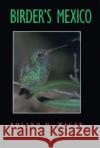
At the end of the twentieth century roughly 265 million people visited the 374 sites in the American National Park System. These places, designated and protected because of their significance to our nation's historical and natural heritage, contain some of the most beautiful landscapes in the United States--landscapes that naturally lend themselves to outdoor recreation. In this book, veteran parks interpreter Ro Wauer introduces the pleasures of birding in the national parks of the American Southwest. From California to Texas, from hugely popular destinations such as Arizona's Grand...
At the end of the twentieth century roughly 265 million people visited the 374 sites in the American National Park System. These places, designated an...
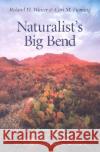
In southwest Texas where the Rio Grande arcs southward into Mexico lies Big Bend National Park, 708,221 acres of river floodplain, desert, grasslands, and majestic mountains, a richly varied environment that exist more or less as it did before man's arival. The wealth of the Big Bend is in its dramatic landscape, which provides natural habitats ranging form desert to alpine, and its consequently impressive variety of flora and fauna. Intended as a biological introduction to one of the nation's outstanding natural systems, "Naturalist's Big Bend" highlights the distinctive plants and...
In southwest Texas where the Rio Grande arcs southward into Mexico lies Big Bend National Park, 708,221 acres of river floodplain, desert, grasslands,...
Every spring paintbrush decorates Texas' highways with its colorful leaves, which look as if they have been dipped in paint. Native Americans reportedly made a weak tea from this flower to treat rheumatism, to use in food as a secret love charm, and to use as a poison for their enemies. This roadside delight, sprinkled in with the bluebonnet, creates spectacular scenery for Texas travelers. In Legends and Lore of Texas Wildflowers, Elizabeth Silverthorne offers a delightful selection of these botanical treasures explaining the significance and origin of the name, identifying where the...
Every spring paintbrush decorates Texas' highways with its colorful leaves, which look as if they have been dipped in paint. Native Americans reported...
In "Of Golden Toads and ""Serpents' Roads"," " readers are invited tojoin a seasoned researcher as he "goes herping." After nearly twenty years of traveling around the globe searching for toads, frogs, salamanders, snakes, lizards, and turtles, herpetologist Paul Freed pauses to tell stories of his adventures while finding and collecting reptiles and amphibians, from the tropics of Costa Rica to the deserts of Namibia. Whether confronting scorpions, beefworms, army ants, or venomous snakes, Freed conveys a contagious enthusiasm for the outdoors and all that lives in it. With humor and...
In "Of Golden Toads and ""Serpents' Roads"," " readers are invited tojoin a seasoned researcher as he "goes herping." After nearly twenty years of tra...