Fiction transports us. We inhabit new worlds in our imagination, adopt perspectives not our own, and even respond emotionally to persons and events that we know are not real.
The very nature of our emotional engagement with fiction, says E. M. Dadlez, attests to the possibility of its moral significance, just as the nature of our imaginative engagement makes us collaborators in the creation of the worlds we imagine.
This book engages contemporary debate over the seeming irrationality or inauthenticity of our emotional response to fiction, examining the many positions taken in...
Fiction transports us. We inhabit new worlds in our imagination, adopt perspectives not our own, and even respond emotionally to persons and events...
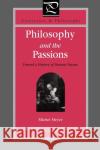
The subject of the passions has always haunted Western philosophy and, more often than not, aroused harsh judgments. For the passions represent a force of excess and lawlessness in humanity that produces troubling, confusing paradoxes.
Michel Meyer provides new insight into an age-old dilemma: Does passion torture people because it blinds them, or, on the contrary, does it permit them to apprehend who and what we really are?
The subject of the passions has always haunted Western philosophy and, more often than not, aroused harsh judgments. For the passions represent a f...
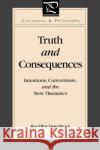
Contemporary literary theory takes truth and meaning to be dependent on shared conventions in a community of discourse and views authors' intentions as irrelevant to interpretation. This view, argues Reed Way Dasenbrock, owes much to Anglo-American analytic philosophy as developed in the 1950s and 1960s by such thinkers as Austin and Kuhn, but it ignores more recent work by philosophers like Davidson and Putnam, who have mounted a counterattack on this earlier conventionalism.
This book draws on current analytic philosophy to resuscitate the notion of objective truth and...
Contemporary literary theory takes truth and meaning to be dependent on shared conventions in a community of discourse and views authors' intention...
This book reconsiders the fate of the doctrine of mimesis in the eighteenth century. Standard accounts of the aesthetic theories of this era hold that the idea of mimesis was supplanted by the far more robust and compelling doctrines of taste and aesthetic judgment. Since the idea of mimesis was taken to apply only in the relation of art to nature, it was judged to be too limited when the focus of aesthetics changed to questions about the constitution of individual subjects in regard to taste. Tom Huhn argues that mimesis, rather than disappearing, instead became a far more pervasive idea...
This book reconsiders the fate of the doctrine of mimesis in the eighteenth century. Standard accounts of the aesthetic theories of this era hold t...