Paul Auster (b. 1947) is one of the most critically acclaimed and intensely studied authors in America today. His varied career as a novelist, poet, translator, and filmmaker has attracted scholarly scrutiny from a variety of critical perspectives. The steadily rising arc of his large readership has made him something of a popular culture figure with many appearances in print interviews, as well as on television, the radio, and the internet. Auster's best known novel may be his first, City of Glass (1985), a grim and intellectually puzzling mystery that belies its surface image as a...
Paul Auster (b. 1947) is one of the most critically acclaimed and intensely studied authors in America today. His varied career as a novelist, poet...
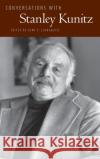
-He again tops the crowd--he surpasses himself, the old iron brought to the white heat of simplicity.- That's what Robert Lowell said of the poetry of Stanley Kunitz (1905-2006) and his evolving artistry. The interviews and conversations contained in this volume derive from four decades of Kunitz's distinguished career. They touch on aesthetic motifs in his poetry, the roots of his work, his friendships in the sister arts of painting and sculpture, his interactions with Lowell and Theodore Roethke, and his comments on a host of poets: John Keats, Walt Whitman, Randall Jarrell, Wallace...
-He again tops the crowd--he surpasses himself, the old iron brought to the white heat of simplicity.- That's what Robert Lowell said of the poetry...
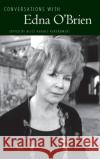
-Who's Afraid of Edna O'Brien?- asks an early interviewer in Conversations with Edna O'Brien. With over fifty years of published novels, biographies, plays, telecasts, short stories, and more, it is hard not to be intimidated by her. An acclaimed and controversial Irish writer, O'Brien (b. 1932) saw her early works, starting in 1960 with The Country Girls, banned and burned in Ireland, but often read in secret. Her contemporary work continues to spark debates on the rigors and challenges of Catholic conservatism and the struggle for women to make a place for themselves in the...
-Who's Afraid of Edna O'Brien?- asks an early interviewer in Conversations with Edna O'Brien. With over fifty years of published novels, bio...
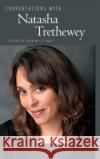
United States Poet Laureate Natasha Trethewey (b. 1966) describes her mode as elegiac. Although the loss of her murdered mother informs each book, Trethewey's range of forms and subjects is wide. In compact sonnets, elegant villanelles, ballad stanzas, and free verse, she creates monuments to mixed-race children of colonial Mexico, African American soldiers from the Civil War, a beautiful prostitute in 1910 New Orleans, and domestic workers from the twentieth-century North and South.
Because her white father and her black mother could not marry legally in Mississippi, Trethewey says she...
United States Poet Laureate Natasha Trethewey (b. 1966) describes her mode as elegiac. Although the loss of her murdered mother informs each book, ...
United States Poet Laureate Natasha Trethewey (b. 1966) describes her mode as elegiac. Although the loss of her murdered mother informs each book, Trethewey's range of forms and subjects is wide. In compact sonnets, elegant villanelles, ballad stanzas, and free verse, she creates monuments to mixed-race children of colonial Mexico, African American soldiers from the Civil War, a beautiful prostitute in 1910 New Orleans, and domestic workers from the twentieth-century North and South.
Because her white father and her black mother could not marry legally in Mississippi, Trethewey says she...
United States Poet Laureate Natasha Trethewey (b. 1966) describes her mode as elegiac. Although the loss of her murdered mother informs each book, ...
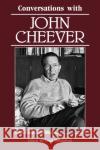
In this collection of thirty interviews compiled by John Cheever's biographer Cheever moves from gentlemanly reticence in the early pieces to forthright commentary upon a variety of subjects in the later ones. This admirably articulate author of The Wapshot Scandal, Bullet Park, Falconer, and many New Yorker stories gives answers that are satisfying to the curious, though the expression of his views is very much under his control. Cheever, the conversationalist, like his fiction, is always casually in good form, always respected for his expression and his art.
For most of...
In this collection of thirty interviews compiled by John Cheever's biographer Cheever moves from gentlemanly reticence in the early pieces to forth...







 7
7 





