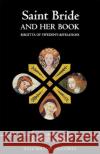
Saint Birgitta of Sweden (canonised in 1391) is one of the most important female figures of medieval Europe. She participated vigorously in its political life, attempting through her writings to end the Hundred Years War between England and France, and to strengthen the Papacy against the Schism; she also influenced other mystics, such as Julian of Norwich, Catherine of Siena, Chiara Gambacorta, Margery Kempe and Elizabeth Barton, leading a tradition in which women, despite being forbidden to preach, could act through writing visionary books. Birgitta was helped by cardinals, bishops, priors...
Saint Birgitta of Sweden (canonised in 1391) is one of the most important female figures of medieval Europe. She participated vigorously in its politi...
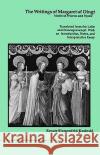
Margaret of Oingt was born around 1240 into a noble family in the French Beaujolais region, and became prioress of the Carthusian charterhouse of Poletains; visionary and mystic, her writings are intelligent and humorous. Included here are the Page of Meditations, on sin and salvation; the Mirror, a vision of Christ; the Life of the Virgin Saint Beatrice of Ornacieux, an exemplary text; and letters and stories, including comments on her problems as prioress. They are translated from the Latin and Francoprovencal with an introduction, notes, and interpretative essay.BR> Renate...
Margaret of Oingt was born around 1240 into a noble family in the French Beaujolais region, and became prioress of the Carthusian charterhouse of Pole...
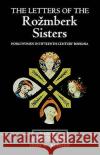
The letters of the Rozmberk sisters, Perchta and Anezka, give a vivid insight into how medieval women viewed themselves. Perchta's letters inform her father that his choice of a husband for her has caused her desperate sadness and sorrow in which death seems a better alternative. Despite her unhappiness and her almost total dependence on others, however, Perchta undertook to take control of her own fate and to improve the circumstances of her life. Her letters were the means whereby she informed her father and brothers of her misery and persuaded them to take action, and in the process they...
The letters of the Rozmberk sisters, Perchta and Anezka, give a vivid insight into how medieval women viewed themselves. Perchta's letters inform her ...
The Life of Douceline de Digne introduces to an English-speaking audience a 13th-century woman mystic (d.1274) of great significance in the study of female spirituality in the middle ages. Douceline combined an active life of community service (as Mother of the beguine community the Ladies of Roubaud) with vigorous mysticism, and was the focus of an intense cult in Provence after her death. The Life, probably written by Philippa de Porcellet, a member of Douceline's community in Marseilles, is complemented by a study of Douceline's importance in terms of her own spiritual experience, and also...
The Life of Douceline de Digne introduces to an English-speaking audience a 13th-century woman mystic (d.1274) of great significance in the study of f...
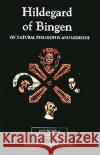
Hildegard of Bingen (1098-1179), an important figure in her own time, has come increasingly to critical attention in recent years. Cause et Cure, attributed to Hildegard, is both a cosmological text and a medical handbook; it is a densely layered work woven together from diverse threads. It begins with a chapter on cosmology which leads to consideration of the human being as a small-scale copy of the universe. From here the focus shifts to the diseases and disorders which afflict human beings. The sections on treatment which follow provide information on medieval pharmacology and herbal...
Hildegard of Bingen (1098-1179), an important figure in her own time, has come increasingly to critical attention in recent years. Cause et Cure, attr...
Christine de Pizan (1364-?1430) was the first French woman poet to make her living by the pen, and the first female interpreter of classical myths; she held enormous power in the French court and influenced late medieval culture in France and in England in a number of ways. The Letter of Othea to Hector, her most popular work, is a series of a hundred verse texts about a mythological figure or moment, with prose moral glosses explaining how to read the myth in order to improve human character. It is translated here with introduction, notes, and interpretative essay.
Christine de Pizan (1364-?1430) was the first French woman poet to make her living by the pen, and the first female interpreter of classical myths; sh...