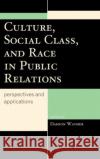
Culture, Race, and Class-Based Perspectives in Public Relations, edited by Damion Waymer, covers timely and understudied topics in the field of public relations (PR). Via research, case analysis, and theoretical discussion, the contributors to this volume explore the ways that scholars can address issues of voice (or the lack thereof) that marginalized publics have encountered in the past or are currently encountering in regard to matters of culture, race, and class. A central question this book asks is what role can and does a greater understanding of culture, race, and class play in helping...
Culture, Race, and Class-Based Perspectives in Public Relations, edited by Damion Waymer, covers timely and understudied topics in the field of public...
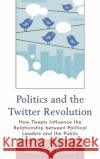
Politics and the Twitter Revolution: How Tweets Influence the Relationship between Political Leaders and the Public by John H. Parmelee and Shannon L. Bichard is the first comprehensive examination of how Twitter is used politically. Surveys and in-depth interviews with political Twitter users answer several important questions, including: Who follows the political leaders on Twitter, and why? How persuasive are political tweets? Is political Twitter use good for democracy? These and other questions are answered from theoretical perspectives, such as uses and gratifications, word-of-mouth...
Politics and the Twitter Revolution: How Tweets Influence the Relationship between Political Leaders and the Public by John H. Parmelee and Shannon L....
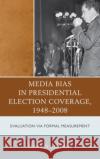
Accusations of partisan bias in Presidential election coverage are suspect at best and self-serving at worst. They are generally supported by the methodology of instance confirmation, tainted by the hostile media effect, and based on simplistic visions of how the news media are organized. Media Bias in Presidential Election Coverage 1948-2008 by Dave D'Alessio, is a revealing analysis that shows the news media have four essential natures: as journalistic entities, businesses, political actors, and property, all of which can act to create news coverage biases, in some cases in opposing...
Accusations of partisan bias in Presidential election coverage are suspect at best and self-serving at worst. They are generally supported by the meth...
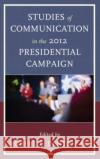
This diverse and unique collection of essays examines a wide range of communication elements and themes in the context of the 2012 election. Topics include the early campaign and Romney's nomination battle, candidate image, the rhetoric and campaigning of Michelle Obama and Ann Romney, issues of race, persuasive appeals to voters, the use of music and social media, and Obama's second inaugural address. Studies of Communication in the 2012 Presidential Campaign aims not only to expand the contributions and understandings of the various roles of communication in the 2012 presidential election,...
This diverse and unique collection of essays examines a wide range of communication elements and themes in the context of the 2012 election. Topics in...
New Media, Old Regimes: Case Studies in Comparative Communication Law and Policy, by Lyombe S. Eko, is a collection of novel theoretical perspectives and case studies which illustrate how different communication law regimes conceptualize and apply universal ideals of human rights and freedom of expression to media controversies in real space and cyberspace. Eko's investigation includes such controversial communication policy topics as North African regimes' failed use of telecommunications to suppress the social change of the Arab Spring, the Mohammad cartoon controversy in Denmark and...
New Media, Old Regimes: Case Studies in Comparative Communication Law and Policy, by Lyombe S. Eko, is a collection of novel theoretical perspectives ...
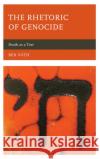
Genocide represents one of the deadliest scourges of the human experience. Communication practices provide the key missing ingredient toward preventing and ending this intensely symbolic activity. The Rhetoric of Genocide: Death as a Text reveals how strategic communication silences make this tragedy probable, and how a greater social ethic for communication openness repels and ends this great evil. Careful analysis of practical historical figures, such as the great debater James Farmer Jr., along with empirical policy successes in places such as Liberia provide a communication-based template...
Genocide represents one of the deadliest scourges of the human experience. Communication practices provide the key missing ingredient toward preventin...
There is considerable disagreement about whether the U.S. president has a direct and measurable influence over the economy. The analysis presented in Economic Actors, Economic Behaviors, and Presidential Leadership: The Constrained Effects of Rhetoric suggests that while presidents have increased their rhetoric regarding the economy, they have not had much success in shaping it. Considering this research, Arthur argues that the president's decision to address the economy so often must stem from a symbolic placation or institutional necessity that is intended to comfort constituencies or...
There is considerable disagreement about whether the U.S. president has a direct and measurable influence over the economy. The analysis presented in ...
This book rhetorically and historically examines the contextual and experiential dimensions of a wide range of public places from memorials to stadiums that are rife with political implications. Fourteen public places ranging from the national to local, from 9/11 memorials to a baseball park are analyzed. The authors investigate the histories of these public spaces, examine their designs, and discuss their political implications in order to outline their role within the public sphere. This book begins with a loose theoretical framework for understanding public places as rhetorically drawn...
This book rhetorically and historically examines the contextual and experiential dimensions of a wide range of public places from memorials to stadium...
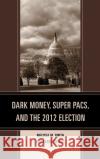
More than two billion dollars. That's how much money was spent in the 2012 presidential campaign--the most expensive campaign in history. Each party raised and spent more than one billion dollars as the traditional boundaries of campaign financing were ignored. Both parties could do so because they were playing in a game with new rules--rules that largely developed after the 2010 Supreme Court ruling known as Citizens United. That case removed many restrictions on donation limits, particularly for corporations and unions. The result was the development of a new set of political players called...
More than two billion dollars. That's how much money was spent in the 2012 presidential campaign--the most expensive campaign in history. Each party r...
Through the careful analysis of historical figures and empirical policy successes, The Rhetoric of Genocide: Death as a Text reveals how strategic communication silences make the tragedy of genocide probable and how a greater social ethic for communication openness repels and ends this great evil.
Through the careful analysis of historical figures and empirical policy successes, The Rhetoric of Genocide: Death as a Text reveals how strategic com...