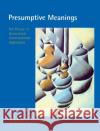
When we speak, we mean more than we say. In this book Stephen C. Levinson explains some general processes that underlie presumptions in communication. This is the first extended discussion of preferred interpretation in language understanding, integrating much of the best research in linguistic pragmatics from the last two decades. Levinson outlines a theory of presumptive meanings, or preferred interpretations, governing the use of language, building on the idea of implicature developed by the philosopher H.P. Grice. Some of the indirect information carried by speech is presumed by...
When we speak, we mean more than we say. In this book Stephen C. Levinson explains some general processes that underlie presumptions in communicati...
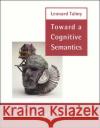
One of a two-volume set defining the field of cognitive semantics. Leonard Talmy approaches the question of how language organizes conceptual material both at a general level and by analyzing a crucial set of particular conceptual domains: space and time, motion and location, causation and force interaction, and attention and viewpoint. Talmy maintains that these are among the most fundamental parameters by which language structures conception. By combining these conceptual domains into an integrated whole, Talmy shows, we advance our understanding of the overall conceptual and semantic...
One of a two-volume set defining the field of cognitive semantics. Leonard Talmy approaches the question of how language organizes conceptual mater...