This memoir is a moving testament to the power of family. The Lucas clan was a close-knit, successful family of rural German Jews--butchers and meat dealers--whose strength and pride was challenged by the rise of Nazism. As the family grew, so did its prosperity and power, and the sons, daughter, and their relatives became known as the Sovereigns. But anti-Semites, under the protection of the Nazi regime, began to settle old scores, and targeted the economically successful rural Jews. New laws stripped Jewish meat dealers of their rights, and Aryan competitors eagerly forced them aside....
This memoir is a moving testament to the power of family. The Lucas clan was a close-knit, successful family of rural German Jews--butchers and meat d...
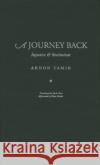
At the age of twenty-one, Arnon Tamir was deported to Poland from his home in Germany. "A Journey Back "describes Tamir's life in Germany, his deportation, and two return trips to Germany: in 1959 to clarify his reparations claim, and thirty years later, at the invitation of the city of Stuttgart. As Tamir interweaves memories from different times and places, he draws startling comparisons between his own experiences of oppression and exile, and his life as one of the new settlers in Palestine, themselves responsible for forcing the Arabs from their native land. Tamir's fluid narrative shows...
At the age of twenty-one, Arnon Tamir was deported to Poland from his home in Germany. "A Journey Back "describes Tamir's life in Germany, his deporta...
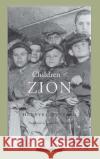
In "Children of Zion, " Henryk Grynberg takes an extraordinary collection of interviews conducted by representatives of the Polish government-in-exile in Palestine in 1943 and arranges them in such a way that their voices become unforgettable. The interviewees--all Polish children--tell of their wartime experiences. Rather than using traditional form, Grynberg has turned their voices into a large "choral" group. The children recall their lives before the war (most were well off), their memories of the war's outbreak and the arrival of the Germans and Russians, and their experiences after...
In "Children of Zion, " Henryk Grynberg takes an extraordinary collection of interviews conducted by representatives of the Polish government-in-exile...
Winner of 1998 Carl Sandburg Award Born into a middle-class Jewish family in 1932, Lala Weintraub grew up in Lvov, Poland. When the Nazis came, Lala--who had blond hair and blue eyes--survived by convincing them she was a Christian. This book tells her remarkable story. Fiercely determined and greatly aided by her Aryan looks, she managed to convince everyone-German soldiers, interrogators, fellow Poles-that she was a Polish gentile. Within a year after the Germans captured Lvov, many of Lala's family members were missing and presumed dead. "Lala's Story "follows her as she moves...
Winner of 1998 Carl Sandburg Award Born into a middle-class Jewish family in 1932, Lala Weintraub grew up in Lvov, Poland. When the Nazis came, L...
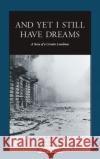
And Yet I Still Have Dreams is a departure from many Holocaust memoirs and biographies. Based on interviews with "Alex," an anonymous survivor of the Warsaw Ghetto and three concentration camps, the story follows him from his assimilated childhood to his coming to terms with his memories of the Holocaust as an older man. Alex is angry, pugnacious, and contemptuous of the stereotypes found in some survivor literature and honest about the shortcomings of other works. The book provides a connection to seldom discussed aspects of the Holocaust: the gulf between rich and poor Jews and...
And Yet I Still Have Dreams is a departure from many Holocaust memoirs and biographies. Based on interviews with "Alex," an anonymous survivor ...
Before the war, there had been 11 Jewish families, 50 people in all, in the small German town of Schmallenberg. But when Hans Frankenthal returned in 1945 at the age of 19, orphaned and robbed of his youth by the Nazis, he found that all the Jews of Schmallenberg had disappeared - no one who remained was interested in what had happened to them or to him. Here, Frankenthal tells his story of the horrors of the Holocaust survived by one man, and its aftermath.
Before the war, there had been 11 Jewish families, 50 people in all, in the small German town of Schmallenberg. But when Hans Frankenthal returned in ...
This epic tells the story of a Polish Jewish family struggling against nearly insurmountable odds. In "The Jewish War, " the family of a young Jewish boy hides throughout the countryside until the father is murdered. To escape, the mother and boy use forged papers and adopt a false life as the Catholic family of an officer captured by the Germans. "The Victory "picks up the story as the Red Army advances and the boy fights to reclaim his Jewishness amidst the horrors of the past and the choices of an agonizing present.
This epic tells the story of a Polish Jewish family struggling against nearly insurmountable odds. In "The Jewish War, " the family of a young Jewish ...
A mosaic of memories from a childhood in the Warsaw Ghetto and a life in hiding on the other side of the wall When six-year-old Michal Glowinski first heard the adults around him speak of the ghetto, he understood only that the word was connected with moving-and conjured up a fantastical image of a many-storied carriage pulled through the streets by some umpteen horses. He was soon to learn that the ghetto was something else entirely. A half-century later, Glowinski, now an eminent Polish literary scholar, leads us haltingly into Nazi-occupied Poland. Scrupulously attentive to the...
A mosaic of memories from a childhood in the Warsaw Ghetto and a life in hiding on the other side of the wall When six-year-old Michal Glowinski f...
Voices of the Diaspora offers, for the first time, representative works by major Jewish women writers from Austria, England, France, Germany, Italy, the Netherlands, Spain, and Russia. These stories and essays, written over the last twenty-five years, speak to the challenges confronting the post-Shoah generations of Jews living in Europe: a need to commemorate the lives extinguished in the camps; a desire to repair a ruptured culture; and a determination to reclaim a Jewish identity resistant to assimilation and the threats of anti-Semitism. At the same time, these writers address...
Voices of the Diaspora offers, for the first time, representative works by major Jewish women writers from Austria, England, France, Germany, I...
Victor Erlich was born in 1914, at the threshold of what the great Russian poet Anna Akhmatova called "the real twentieth century," in Petrograd, a place indelibly marked by that century's violent dislocations and upheavals. His story, begun on the eve of the First World War and taking him through Russia, Poland, Lithuania, Germany, and the U. S. Army, is in many ways a memoir of that "real twentieth century," reflecting its lethal nature and shaped by the "fearful symmetry" of the age of totalitarianism. Erlich's grandfather, the legendary Jewish historian Simon Dubnov, was felled in...
Victor Erlich was born in 1914, at the threshold of what the great Russian poet Anna Akhmatova called "the real twentieth century," in Petrograd, a pl...