John Maynard Keynes wrote to his grandchildren more than fifty years ago about their economic possibilities, and thus about our own: "I see us free, there- fore, to return to some of the most sure and certain principles of religion and traditional virtue - that avarice is a vice, that the exaction of usury is a misde- meanour. . . . We shall once more value ends above means and prefer the good to the useful" ("Economic Possibilities for Our Grandchildren," pp. 371-72). In the year 1930 Keynes regarded these prospects as realizable only after a time span ofone hundred years, ofwhich we have...
John Maynard Keynes wrote to his grandchildren more than fifty years ago about their economic possibilities, and thus about our own: "I see us free, t...
Here is the first examination of Socially Responsible Investing (SRI) since the fall of the recent financial bubble. It asks, Is this an opportunity to enhance SRI because of its strength and superiority, or will it vanish in the next wave of financial myopia?
Here is the first examination of Socially Responsible Investing (SRI) since the fall of the recent financial bubble. It asks, Is this an opportunity ...
This volume is one of the very few publications dedicated to the challenges that Continental philosophy poses to the field of Business Ethics. The authors want to draw attention to the work of Continental philosophers who have been relegated to the fringes of Business Ethics scholarship, and present some critical perspectives that have been ignored within Business Ethics practice. As such, this volume provides a critique of many of the assumptions that underpin traditional approaches to Business Ethics, and urges its readership to rethink moral agency and epistemology, as well as Business...
This volume is one of the very few publications dedicated to the challenges that Continental philosophy poses to the field of Business Ethics. The aut...
The Ethics of Banking analyzes the systemic and the ethical mistakes that led to the crisis. It keeps the middle ground between excusing all failures by the argument of a systemic crisis not to be taken responsibility for by the financial managers and the moralistic reproach that only moral failure is at the origin of the crisis. It investigates the role of speculation in the formation of the crisis and distinguishes between productive speculation for hedging and for securing market liquidity on the one hand, and unproductive and even detrimental hyper-speculation going far beyond of the...
The Ethics of Banking analyzes the systemic and the ethical mistakes that led to the crisis. It keeps the middle ground between excusing all failures ...
Business ethics as a discipline leans on cases but flourishes by thorough analysis and reflection. The present volume offers both. After three introductory chapters into business ethics eight recent European cases, mainly stemming from The Netherlands and Belgium and all of them with a clear moral impact, are extensively described and analysed. Among them are the Lernout and Hauspie speech technology disaster, Heineken's struggle with the promotion girls selling beer in Cambodia, cartels in the Dutch construction industry, the pharmaceutical industry and the Aids crisis, and Unilever...
Business ethics as a discipline leans on cases but flourishes by thorough analysis and reflection. The present volume offers both. After three intr...
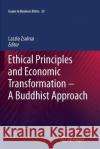
Buddhism points out that emphasizing individuality and promoting the greatest fulfillment of the desires of the individual conjointly lead to destruction. The book promotes the basic value-choices of Buddhism, namely happiness, peace and permanence.
Happiness research convincingly shows that not material wealth but the richness of personal relationships determines happiness. Not things, but people make people happy. Western economics tries to provide people with happiness by supplying enormous quantities of things and today's dominating business models are based on and cultivates...
Buddhism points out that emphasizing individuality and promoting the greatest fulfillment of the desires of the individual conjointly lead to destr...
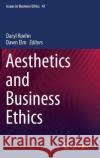
Ludwig Wittgenstein famously said, "Ethics is aesthetics." It is unclear what such a claim might mean and whether it is true. This book explores contentious issues arising at the interface of ethics and aesthetics. The contributions reflect on the status of aesthetic en ethical judgments, the relation of aesthetic beauty and ethical goodness and art and character development. The book further considers the potential role art could play in ethical analysis and in the classroom and explores in what respects aesthetics and ethics might be intertwined and even mutually supportive.
Ludwig Wittgenstein famously said, "Ethics is aesthetics." It is unclear what such a claim might mean and whether it is true. This book explores conte...
As we move forward into the Third Millennium AD the perennial problem of unmanageable debt is still with us. As if to prove the point, in late November 1997, the Tokuyo City Bank in Japan closed down its business, reminding the world that default still stalks families, institutions and governments. It seems that little has been achieved in handling debt since 1216 when the Magna Carta limited the actions of bailiffs against debtors willing and able to make payment. Current literature about consumer credit, business finance and mortgages reveals the urgent need to tackle the ethics of...
As we move forward into the Third Millennium AD the perennial problem of unmanageable debt is still with us. As if to prove the point, in late Novembe...
Corporations, and the environments in which they operate, are complex, with changing multiple dimensions, and an inherent capacity to evolve qualitatively. A central premise of this study is that a postmodern reading of ethics represents an expression of, and an engagement with, the ethical complexities that define the business landscape. In particular, the deconstructive philosophy of Jacques Derrida offers a non-trivial reading of a complex notion of ethics, and thereby helps us to develop the skills necessary to critique and intervene in our practices, and to develop robust strategies for...
Corporations, and the environments in which they operate, are complex, with changing multiple dimensions, and an inherent capacity to evolve qualitati...
This book provides the foundations of trust amidst radical uncertainty. Specifically, it addresses the question of under what condition it is possible to trust relative strangers. As the first logical investigation of its kind, the book breaks with many preconceived ideas we have about trust and the scientific method that leads to its clarification. It builds on the insight that, contrary to widespread belief, it is not risk but freedom that is most fundamental for explaining trust. In fact, trust is the giving of freedom, out of freedom, and one’s consciousness of the potential risks...
This book provides the foundations of trust amidst radical uncertainty. Specifically, it addresses the question of under what condition it is pos...