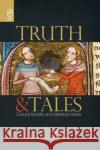
In the medieval period, as in the media culture of the present, learned and popular forms of talk were intermingled everywhere. They were also highly mobile, circulating in speech, writing, and symbol, as performances as well as in material objects. The communication through and between different media we all negotiate in daily life did not develop from a previous separation of orality and writing, but from a communications network not unlike our own, if slower, and similarly shaped by disparities of access. Truth and Tales: Cultural Mobility and Medieval Media, edited by Fiona...
In the medieval period, as in the media culture of the present, learned and popular forms of talk were intermingled everywhere. They were also highly ...
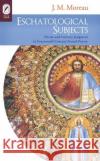
Eschatological Subjects: Divine and Literary Judgment in Fourteenth-Century French Poetry takes an innovative approach to medieval eschatology by examining how poets cast themselves in the scene of judgment as defendants summoned to answer to the Almighty for the sins of their writing. Since medieval Europeans lived in perpetual anxiety of divine judgment, constantly surrounded by reminders in art and literature, author J. M. Moreau shows that this is a natural extension of medieval life. But Eschatological Subjects goes even further to demonstrate the largely unrecognized...
Eschatological Subjects: Divine and Literary Judgment in Fourteenth-Century French Poetry takes an innovative approach to medieval eschatology ...
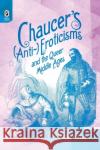
Using queer theory to untangle all types of nonnormative sexual identities, Tison Pugh uses Chaucer's work to expose the ongoing tension in the Middle Ages between an erotic culture that glorified love as an ennobling passion and an anti-erotic religious and philosophical tradition that denigrated love and (perhaps especially) its enactments. Chaucer's (Anti-)Eroticisms and the Queer Middle Ages considers the many ways in which anti-eroticisms complicate the conventional image of Chaucer. With chapters addressing such topics as mutual masochism, homosocial brotherhood, necrotic...
Using queer theory to untangle all types of nonnormative sexual identities, Tison Pugh uses Chaucer's work to expose the ongoing tension in the Middle...
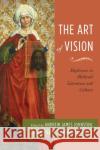
One of the most common ways of setting the arts in parallel, at least from the literary side, is through the popular rhetorical device of ekphrasis. The original meaning of this term is simply an extended and detailed, lively description, but it has been used most commonly in reference to painting or sculpture. In this lively collection of essays, Andrew James Johnston, Ethan Knapp, and Margitta Rouse offer a major contribution to the study of text-image relationships in medieval Europe. Resisting any rigid definition of ekphrasis, The Art of Vision is committed to reclaiming...
One of the most common ways of setting the arts in parallel, at least from the literary side, is through the popular rhetorical device of ekphrasis...