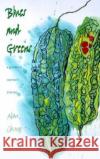
Alan Chong Lau's poetic memoir of his days as a produce worker in Seattle's Chinatown reveals a microcosm of grassroots, working-class Asian America--a world where customers, workers, and fruits and vegetables intersect in exchanges that crackle with energy and brim over with humor.
With the simple profundity of a Zen koan, the poems bear witness to people's humanity. Lau portrays in words and pictures a community in constant flux as it moves to the push and pull of immigration. Blues and Greens has a lot to say about Asian Americans. What emerges is an acutely observed, nuanced...
Alan Chong Lau's poetic memoir of his days as a produce worker in Seattle's Chinatown reveals a microcosm of grassroots, working-class Asian Americ...
In this age of rapid transition, Asian American studies and American studies in general are being reconfigured to reflect global migrations and the diverse populations of the United States. Asian American literature, in particular, has embodied the crisis of identity that is at the heart of larger academic and political debates surrounding diversity and the inclusion and exclusion of immigrant and refugee groups. These issues underlie the very principles on which literature, culture, and art are produced, preserved, taught, and critiqued.
Words Matter is the first collection of...
In this age of rapid transition, Asian American studies and American studies in general are being reconfigured to reflect global migrations and the...
Alan Chong Lau's poetic memoir of his days as a produce worker in Seattle's Chinatown reveals a microcosm of grassroots, working-class Asian America--a world where customers, workers, and fruits and vegetables intersect in exchanges that crackle with energy and brim over with humor.
With the simple profundity of a Zen koan, the poems bear witness to people's humanity. Lau portrays in words and pictures a community in constant flux as it moves to the push and pull of immigration. Blues and Greens has a lot to say about Asian Americans. What emerges is an acutely observed, nuanced...
Alan Chong Lau's poetic memoir of his days as a produce worker in Seattle's Chinatown reveals a microcosm of grassroots, working-class Asian Americ...
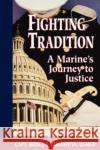
Determined to be a U.S. Marine Corps officer, Bruce Yamashita enrolled in Officer Candidate School, where he was the target of persistent racial harassment by officers and staff. After enduring nine weeks of emotional and physical abuse, Yamashita was disenrolled in April 1989--kicked out of the Marine Corps because of the color of his skin. Fighting Tradition is Yamashita's own story of his courageous struggle to expose a pattern of racial discrimination against minorities that has existed at various levels of the Corps.
With the support of a broad coalition of community and civil...
Determined to be a U.S. Marine Corps officer, Bruce Yamashita enrolled in Officer Candidate School, where he was the target of persistent racial ha...
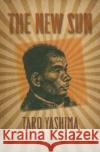
In 1939 the painter Iwamatsu Jun (1908-1994) and his artist wife, Tomoe, arrived in the U.S. as political refugees. During World War II, Iwamatsu used his artistic talents for the U.S. war effort, and he adopted a pseudonym, Taro Yashima, to protect his young son, whom he left behind in Japan. The New Sun, which was published in the U.S. in 1943, is an account of his life in prewar Japan.
In its depiction of ordinary Japanese, The New Sun is both an indictment of Japanese militarism and a plea for American understanding of the enemy. Told mainly though Yashima's powerful artwork, it...
In 1939 the painter Iwamatsu Jun (1908-1994) and his artist wife, Tomoe, arrived in the U.S. as political refugees. During World War II, Iwamatsu u...